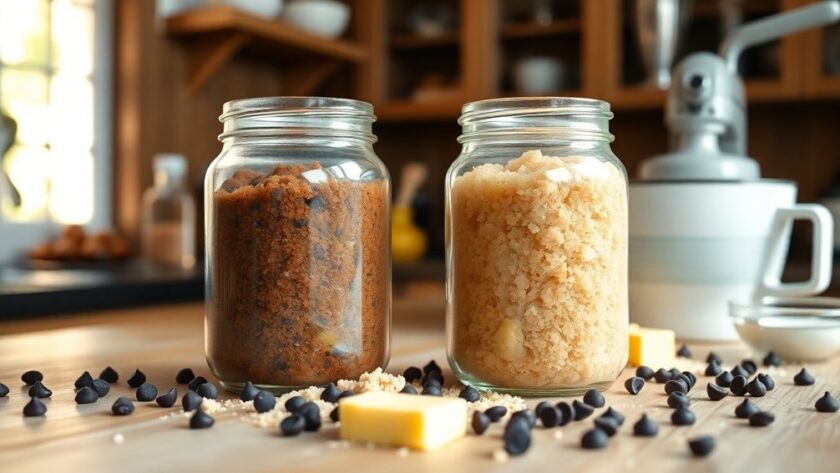
When it comes to chocolate chip cookies, the choice between light and dark brown sugar can make a big difference. Light brown sugar gives your cookies a balanced sweetness and moisture, while dark brown sugar adds rich, complex flavors from its higher molasses content. For the best results, a mix of both sugars creates a perfect balance of texture and taste. Make sure to reflect on your preferences, and there’s more to uncover about sugar’s impact on your baking.
The Role of Sugar in Chocolate Chip Cookies
Sugar plays an essential role in chocolate chip cookies, affecting everything from sweetness to texture. In your recipe, granulated sugar delivers crunch and spread, while brown sugar adds moisture and a rich flavor thanks to its molasses content. Protein cookies can also utilize various types of sugar to enhance their texture and flavor profile, making them a delicious alternative for health-conscious snackers. Additionally, opting for healthier ingredient swaps can elevate your baking while maintaining deliciousness.
If you want softer, chewier cookies, brown sugar is your best bet. Dark brown sugar, with its higher molasses content, intensifies both flavor and moisture, resulting in a deeper taste.
For a balanced cookie, consider mixing light and dark brown sugar in a 50/50 ratio; this combination enhances chewiness and provides a well-rounded flavor. Ultimately, the type of sugar you choose greatly impacts the cookie’s final texture and flavor, catering to your personal preferences and baking goals. Additionally, using gluten-free flour ensures that everyone can enjoy these delicious treats without dietary concerns.
Types of Sugar Tested
In a quest to discover the best sugar for chocolate chip cookies, several types were put to the test. The experiment included 100% granulated sugar, 100% light brown sugar, 100% dark brown sugar, a 50/50 mix of light and dark brown sugar, and a 50/50 mix of dark brown sugar and granulated sugar.
Each sugar type was baked under identical conditions. Granulated sugar produced taller cookies with a one-note flavor profile, while both light and dark brown sugars added moisture and complexity due to their molasses content. Dark brown sugar created denser, chewier cookies, whereas light brown sugar resulted in airier cookies with a milder flavor. Ultimately, the 50/50 mix of light brown sugar and granulated sugar yielded the best overall results. Additionally, experimenting with natural sweeteners can enhance the nutritional value of baked goods while reducing sugar intake. Incorporating gluten-free ingredients can also cater to those with dietary restrictions, offering a delicious alternative without compromising flavor. Using gluten-free flour options can result in cookies that are both tasty and suitable for those with gluten sensitivities.
Results of Sugar Tests
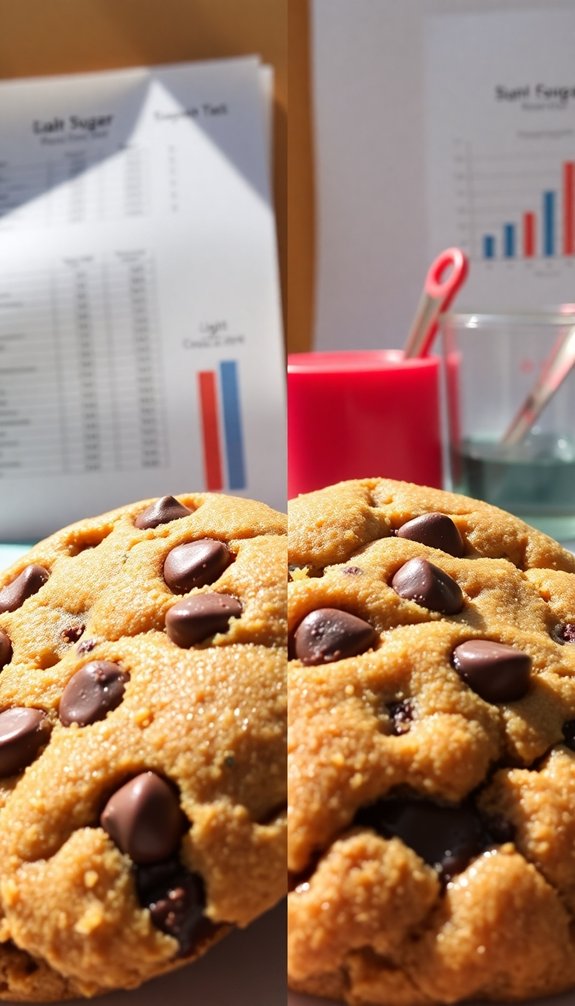
While testing various sugars for chocolate chip cookies, the results highlighted significant differences in flavor, texture, and appearance.
Cookies made with 100% granulated sugar had a pale look and a one-note flavor, earning a B grade. In contrast, 100% dark brown sugar cookies delivered a rich caramel flavor and chewy texture but settled quickly, also receiving a B. The use of healthier sweeteners can further enhance the nutritional profile of cookies.
The standout was the combination of 50% light brown sugar and 50% granulated sugar, which produced cookies that scored an A across the board, showcasing a golden-brown color and balanced taste. This combination mirrors the importance of sugar selection observed in many traditional dessert recipes.
These tests clearly demonstrate how different sugars influence the final product, emphasizing the importance of sugar selection in creating your ideal chocolate chip cookies. Notably, the classic recipe created by Ruth Graves Wakefield has inspired countless variations that cater to diverse palates.
Optimal Sugar Combination
When crafting the perfect chocolate chip cookie, finding the right sugar combination is essential for achieving the ideal taste and texture.
The best sugar combination is 50% light brown sugar and 50% white sugar. This mix not only enhances the flavor but also creates the best cookie regarding visual appeal. Light brown sugar adds moisture and a hint of caramel, while white sugar provides structure and crispness. The result? A beautifully balanced cookie with a golden-brown color, just the right spread, and a texture featuring a crisp exterior and slightly chewy interior. Adding unique flavor combinations to your cookie recipe can also elevate the overall taste experience. Incorporating high-protein vegan options can further support your nutritional goals while enjoying delicious cookies. Taste tests confirm that this combination yields good cookies that are favored for their delicious, balanced flavor, encouraging you to savor each bite. Additionally, using gluten-free flour can cater to those with dietary restrictions while maintaining great taste.
Community Insights
Bakers across various forums consistently share their insights on the sugar debate for chocolate chip cookies, revealing a strong preference for light brown sugar due to its balanced sweetness and moisture.
Many note that dark brown sugar can enrich the flavor profile with deeper, more complex notes thanks to its higher molasses content. Additionally, some bakers explore sugar-free options to accommodate health-conscious choices while still enjoying delicious cookies. Using natural sweeteners can further enhance the nutritional value of baked goods.
You’ll also find bakers experimenting with combinations of both light and dark brown sugars, creating unique textures and flavors in their cookies.
Community insights emphasize the flexibility in sugar choices; some advocate for using dark brown sugar for added chewiness, while others enjoy the milder sweetness of light brown sugar.
Ultimately, it boils down to personal taste, showcasing the diverse baking preferences within the community. Additionally, some bakers incorporate gluten-free options to accommodate dietary restrictions while still achieving delicious results.
Conclusion
So, whether you’re Team Light Brown or Team Dark Brown, remember: it’s all about that sweet, sweet sugar magic. If you want a cookie that’s chewy and caramel-kissed, go dark. If you’re craving a classic, light and fluffy delight, stick with light. But hey, if you really can’t decide, just throw a bit of both in there and call it a “new trend.” Who needs culinary expertise when you can wing it and still end up with cookies?