
Shortbread cookies are rich, dense treats made mostly of butter and flour, while sugar cookies are lighter and sweeter, with a higher flour-to-fat ratio. This gives sugar cookies a firmer texture, allowing them to hold shapes better during baking. Shortbread crumbles more easily due to its lower flour content and lack of leavening agents. Each cookie brings unique flavors and textures that can inspire your baking. Stick around to uncover more about their similarities and baking tips!
What Is a Sugar Cookie?
When you think of a sugar cookie, you might picture a sweet, buttery treat that’s perfect for decorating.
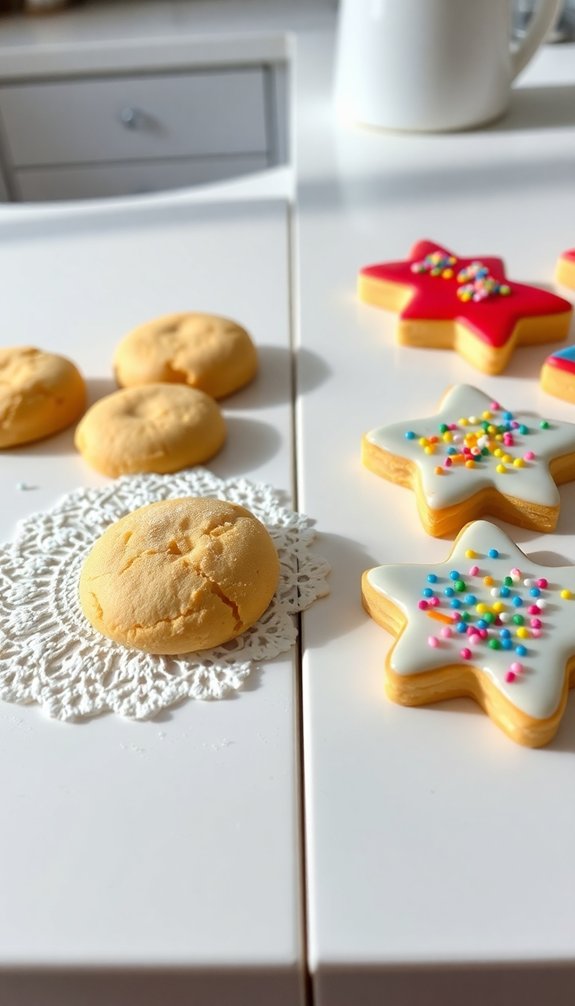
These cookies are made with five main ingredients: sugar, flour, butter, eggs, and a leavening agent like baking powder or baking soda. The high flour-to-butter ratio results in a sturdier texture, allowing the dough to hold its shape well during baking. Additionally, sugar cookies are often enhanced with vibrant royal icing for a festive finish. Mastering royal icing consistency is essential for achieving clean and beautiful decorations.
You can easily roll out the dough and cut it into fun shapes with cookie cutters, making them ideal for any occasion. Often flavored with vanilla extract, sugar cookies can be enjoyed plain or adorned with icing and sprinkles.
Originally known as Nazareth cookies, they’ve become a beloved staple in holiday baking and celebrations. The versatility of sugar cookies allows for various adaptations that cater to different tastes and dietary needs.
What Is Shortbread?
Shortbread is a classic Scottish cookie with roots tracing back to the 12th century, originally called “biscuit bread.”
Its key ingredients—primarily butter and flour—create a rich, melt-in-your-mouth texture that’s dense and crumbly. Additionally, shortbread can be made using gluten-free flour, which caters to those with dietary restrictions while maintaining the traditional essence of shortbread. With no leavening agents, shortbread delivers a unique flavor and tender consistency that sets it apart from other cookies. Shortbread can also provide a healthier dessert option for those seeking to enjoy treats without gluten.
Origin and History
Originating in 12th-century Scotland, shortbread has a rich history that traces back to what was initially called “biscuit bread.” This delightful treat evolved from leftover bread dough, combined with butter and sugar, transforming it into a luxurious dessert reserved for special occasions.
Here are some key points about shortbread’s origin and history:
- Evolved from leftover bread dough
- Traditionally made with a high butter-to-flour ratio
- Initially enjoyed on special occasions
- Symbol of Scottish culinary heritage
- Gained popularity and regional adaptations over centuries
Today, you can savor shortbread in its simplest form or lightly dusted with powdered sugar, showcasing its traditional roots without elaborate decorations.
The classic recipe remains beloved, continuing the legacy of this iconic treat.
Key Ingredients
The unique charm of shortbread lies in its simplicity, characterized by just three key ingredients: butter, flour, and sugar. The ratio of butter to flour is remarkably high, giving shortbread cookies their rich flavor and crumbly texture.
Unlike sugar cookies, which often use granulated sugar, shortbread typically incorporates powdered sugar. This choice contributes to its tender consistency, making each bite melt in your mouth.
Shortbread doesn’t contain any leavening agents, resulting in a denser structure compared to the softer sugar cookies that are easier to roll and cut.
While the basic ingredients stand out, a pinch of salt or optional flavorings like vanilla can elevate the taste, making shortbread a delightful treat in its own right.
Texture and Flavor
Delightfully rich and indulgent, shortbread cookies boast a unique texture that sets them apart from other treats. With a high butter-to-flour ratio, these cookies deliver a dense, crumbly, and tender experience that melts in your mouth.
Unlike sugar cookies, which can vary in softness, shortbread remains consistently crisp. Here’s what defines their texture and flavor:
- High butter-to-flour ratio guarantees a rich taste.
- Dense and crumbly texture melts in your mouth.
- No leavening agents create a simple, rustic appeal.
- Indulgent buttery richness shines through with minimal ingredients.
- Served plain or with powdered sugar, enhancing their flavor.
Enjoy the simplicity and depth of flavor that make shortbread cookies a timeless favorite!
Key Differences Between Sugar Cookies and Shortbread Cookies
When you compare sugar cookies and shortbread cookies, several key differences stand out that affect their texture and flavor.
Sugar cookies have a higher flour content, creating a firmer dough that you can roll and cut into shapes. In contrast, shortbread cookies typically lack eggs, resulting in a denser, crumblier texture due to the use of powdered sugar. Additionally, using healthier sweeteners like honey can enhance the overall nutritional profile of both cookie types. Incorporating nutritious ingredients like dark chocolate chips can elevate the flavor while adding health benefits.
While sugar cookies can range from soft to crisp, shortbread cookies consistently offer a crisp and crumbly bite thanks to their high butter content.
Additionally, sugar cookies often include leavening agents like baking powder, which affects their rise during baking, while shortbread cookies remain flat. This difference in high butter content contributes to the rich flavor profile that defines shortbread cookies.
These differences make each type of cookie unique in its own right.
Are Shortbread Cookies the Same as Butter Cookies?

You might think shortbread and butter cookies are the same, but they actually differ quite a bit. Shortbread has a higher butter-to-flour ratio, giving it a denser, crumbly texture, while butter cookies are softer and more pliable. The high moisture content in the dough is key to creating the perfect texture for both types of cookies. Additionally, shortbread can be enhanced with unique flavors like Earl Grey tea for a sophisticated twist. Let’s explore how their ingredient ratios and textures set them apart. Additionally, cookies made with almond flour can offer a gluten-free alternative while maintaining a delightful texture.
Ingredient Ratios Comparison
Shortbread cookies and butter cookies differ considerably in their ingredient ratios, affecting their texture and structure. Here’s a quick comparison:
- Shortbread cookies: Higher butter-to-flour ratio, resulting in a denser, crumblier texture.
- Butter cookies: More flour and sugar, leading to a sturdier structure.
- Sugar cookies: Highest flour-to-fat ratio, providing a firmer consistency for cutting shapes.
- Leavening agents: Not used in shortbread cookies, unlike butter and sugar cookies, which may include baking powder.
- Shape-holding: Butter and sugar cookies hold their shape better during baking, while shortbread is more fragile.
Understanding these ratios helps you appreciate the unique qualities of each cookie type, making your baking experience even more enjoyable!
Texture and Flavor Differences
While both shortbread and butter cookies share a rich, buttery flavor, their textures and overall characteristics set them apart.
Shortbread cookies are denser and crumblier, thanks to their high butter content, creating a melt-in-the-mouth experience. In contrast, sugar cookies have a softer, chewier texture due to a higher flour content and often include eggs and leavening agents.
The flavor differences are notable as well; shortbread cookies boast a more indulgent buttery taste, while sugar cookies present a sweeter, simpler flavor profile, often enhanced with vanilla or almond extracts.
Although butter cookies sit between the two, they combine high butter content with more flour for a slightly softer texture, making them distinct in both texture and flavor.
Similarities Between Sugar Cookies and Shortbread Cookies
Although sugar cookies and shortbread cookies have distinct flavors and textures, they share several key similarities that make them beloved treats in the baking world.
Both types of cookies are foundational butter cookies, relying on the same essential ingredients and methods. Here are some similarities you’ll appreciate:
- Both use a high proportion of butter for richness.
- The amount of flour is similar, giving them structure.
- They’re great for rolling out and shaping.
- Each requires basic baking tools like a stand mixer and rolling pin.
- Adaptable to various dietary needs, including gluten-free options, sugar cookies can also be made with sugar substitutes for a healthier twist. Many bakers enjoy gluten-free flours to create safe versions of these classic cookies.
These shared traits make sugar cookies and traditional Scottish shortbread a joy to bake and enjoy, whether you’re a novice or a seasoned baker. Additionally, gluten-free options allow those with dietary restrictions to indulge in these classic favorites.
Tips for New Bakers
Are you ready to plunge into the world of baking? If you’re a new baker, start with a simple shortbread recipe; it requires fewer ingredients and no leavening agents.
Sugar cookies can be more complex since you’ll need to roll and cut the dough for sugar cookies into shapes. To avoid tough cookies, mix just until combined, as overworking the dough can ruin your results.
Remember, the ratios are a bit different between the two types, so follow your recipe closely. Using high-quality, organic butter will enhance the flavor of both cookies, making them even tastier.
Finally, don’t forget to chill the dough for sugar cookies to maintain their shape while baking. Happy baking!
Ways to Experiment at Home
To truly make your baking adventures exciting, experimenting with your cookie recipes can lead to delightful discoveries. Here are some ways to get started:
- Adjust the butter-to-flour ratio in your shortbread cookies and sugar for different textures.
- Add flavorings like vanilla or almond extract to your sugar cookie dough while keeping shortbread simple.
- Try various sugars—brown sugar for chewy sugar cookies and powdered sugar for smooth shortbread.
- Test different baking temperatures; remember, shortbread requires lower temperatures for a tender crumbly texture.
- Decorate with royal icing or colored sugar to enhance your sweet treat’s visual appeal.
Grab your baking sheet and immerse yourself in these experiments. You’ll discover new favorites in no time!
Conclusion
In the delightful world of baking, sugar cookies and shortbread each have their own charm. While sugar cookies bring a touch of sweetness and versatility, shortbread offers a rich, buttery embrace that’s hard to resist. So, whether you’re whipping up a festive batch or indulging in a quiet moment, both cookies have their unique allure. Embrace the joy of experimenting with these treats, and you’ll discover the magic that happens when flour, butter, and sugar come together!