
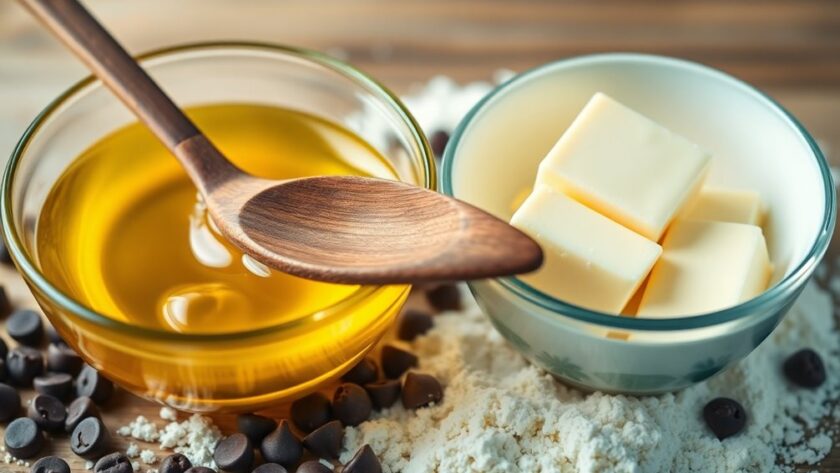
You can definitely make great cookies with oil! Many bakers appreciate how oil yields a tender, chewy texture that butter can’t always replicate. While butter adds rich flavor, oil creates softer cookies that stay moist. Plus, using oil can cater to dietary restrictions. It’s all about personal preference and experimenting with different recipes. If you’re curious about specific cookie recipes that highlight oil’s benefits, there’s more to explore on how to achieve your perfect treat.
Understanding the Role of Fats in Baking
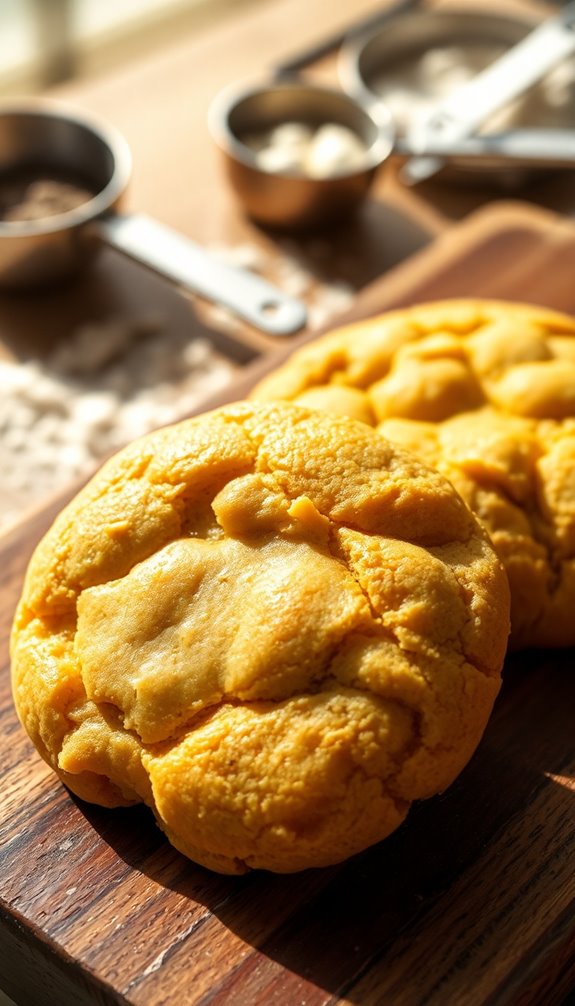
When you bake, the type of fat you choose plays an essential role in the final texture and flavor of your cookies. Different fat types, like butter and oil, interact with other ingredients in unique ways due to baking science. Butter, for instance, not only adds moisture but also contributes to a rich flavor and a tender crumb. Oil, on the other hand, can create a softer, chewier cookie since it’s liquid at room temperature. This difference affects the spread of your cookies as well. Understanding how these fats impact your baked goods is vital for achieving your desired results, especially considering that using a combination of sugars can influence the chewiness and crispness of your cookies. Additionally, incorporating brown sugar into your recipe can enhance moisture retention and create chewier cookies. For instance, using almond flour as a gluten-free option can also contribute to a unique texture and flavor profile in your cookies.
The Flavor Profile: Butter vs. Oil
While both butter and oil are popular choices for cookie recipes, they bring distinct flavor profiles that can greatly influence the final product.
Butter adds a rich, creamy taste that enhances sweetness and creates a comforting, nostalgic flavor. This butter richness can elevate your cookies, making them feel indulgent and satisfying. Additionally, using browned butter can enhance the nutty depth in cookies, adding complexity to the overall flavor. The softened unsalted butter used in many cookie recipes also contributes to a delightful texture that complements the sweetness.
Butter brings a rich, creamy taste that enhances sweetness, making cookies feel indulgent and nostalgic.
On the other hand, oil offers a more neutral flavor, allowing other ingredients to shine through. With oil neutrality, you can experiment with spices, extracts, or mix-ins without overwhelming the overall taste. Additionally, using gluten-free flour as an alternative in oil-based recipes can cater to various dietary restrictions while still providing great texture. Using oil in place of butter can yield cookies that are slightly chewier due to the different fat composition.
Depending on the flavor you’re aiming for, choosing the right fat can make a significant difference in your cookies.
Texture Differences in Cookies Made With Oil or Butter
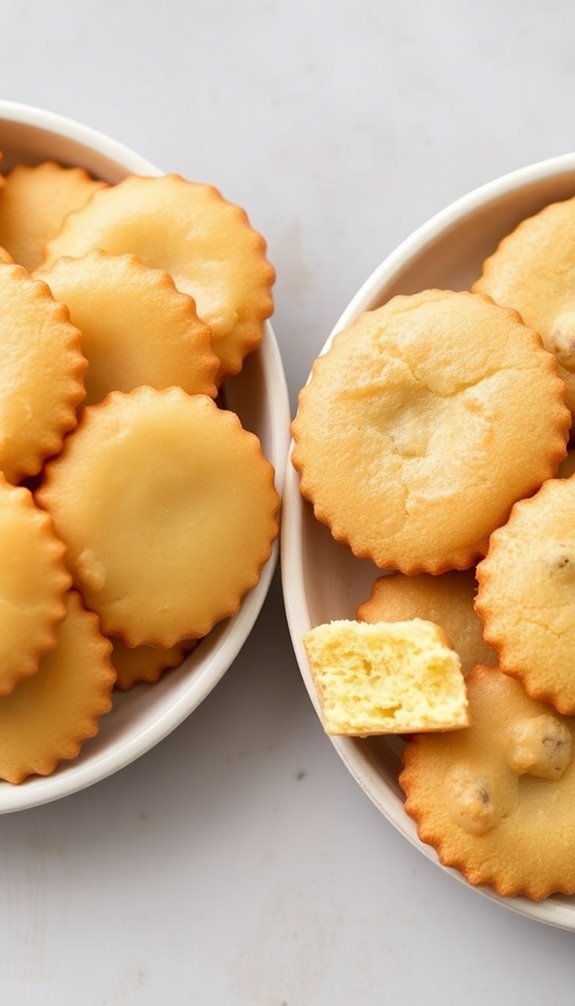
Cookies made with butter typically have a firmer cookie structure, thanks to its ability to provide dough elasticity. You’ll notice crisp edges and a delightful chewiness factor that many bakers love. Additionally, the use of butter allows for a richer flavor compared to oil, contributing to the overall taste and texture of the cookies. Furthermore, using granulated sugar in recipes without brown sugar can enhance the balance between crispness and chewiness.
In contrast, using oil results in a softer texture due to its oil consistency, which influences moisture retention. This makes cookies spread more during baking, leading to greater baking spread and a different texture variance. While oil can create tender cookies, they might lack the same chewiness and structure you get from butter. Ultimately, your choice will determine whether you favor crisp edges or a softer, chewier bite. Additionally, accurate flour measurement plays a crucial role in achieving the desired texture in baked goods.
How Moisture Content Affects Cookie Consistency
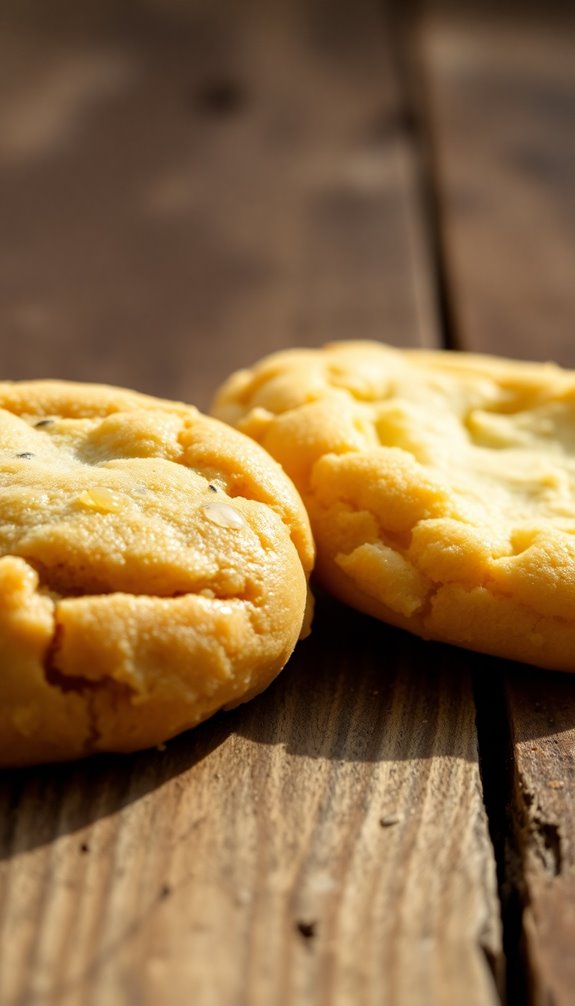
Moisture content plays an essential role in determining cookie consistency, as it directly influences how your cookies turn out regarding texture and structure.
When you use oil instead of butter, the moisture levels change, affecting the final product. Oil generally adds more fat but less water than butter, leading to denser cookies.
If you want soft and chewy cookies, maintaining the right moisture levels is vital. Too much moisture can result in overly soft cookies, while too little can cause them to be dry and crumbly.
You’ll notice these consistency changes in every batch you bake, so adjusting your ingredients to achieve the desired moisture content is key to perfecting your cookies. Additionally, understanding caloric breakdown by ingredient can help you fine-tune your recipes for better results.
Nutritional Considerations: Oil vs. Butter
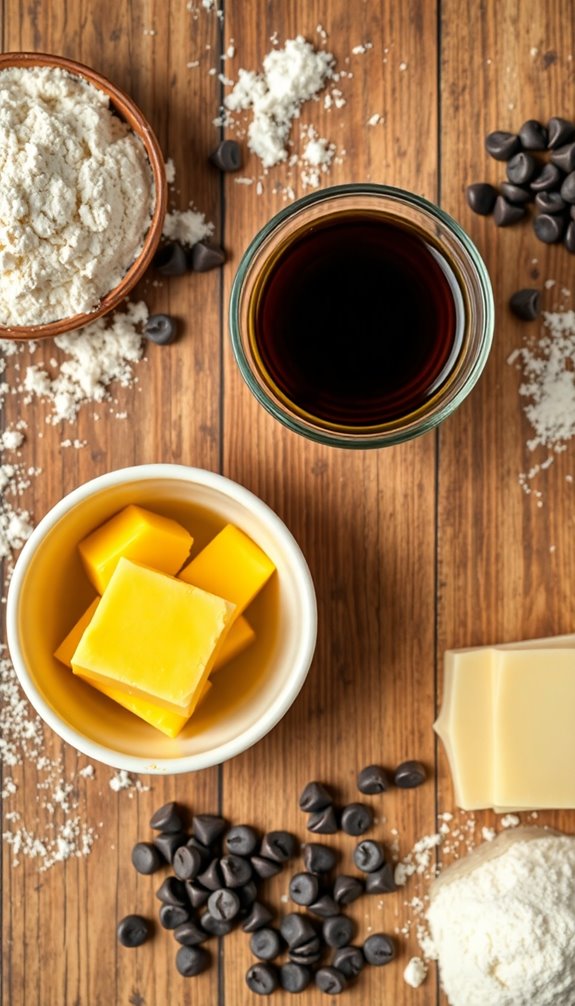
When you choose between oil and butter for cookies, it’s crucial to evaluate their nutritional profiles.
Oil often contains healthy fats and fewer calories, while butter adds rich flavor but comes with higher saturated fat.
Understanding these differences can help you make a more informed decision for your baking needs.
Health Benefits Comparison
While both oil and butter can enhance your cookie recipes, their nutritional profiles offer distinct health benefits worth considering. Here’s a quick comparison analysis:
- Heart Health: Oils, especially olive and canola, contain healthy fats that can lower cholesterol levels, while butter is high in saturated fats.
- Vitamins: Butter is a source of fat-soluble vitamins like A and D, while some oils provide vitamin E and K.
- Caloric Density: Oil is generally more calorie-dense, which might affect portion control in your baking.
- Allergies: If you’re baking for someone with dairy allergies, oil is a safe alternative to butter.
Choosing between oil and butter can influence not just taste but also the health benefits of your cookies.
Caloric Content Differences
Understanding the caloric content differences between oil and butter is essential for crafting cookies that align with your dietary goals.
Oil typically has a higher caloric density than butter, packing around 120 calories per tablespoon compared to butter’s approximately 102 calories. However, the fat composition varies considerably; oils are generally unsaturated fats, while butter contains saturated fats.
This difference matters not just for calorie counting but also for how your body processes these fats. If you’re watching your caloric intake, you might choose oil, but keep in mind how it affects taste and texture.
Ultimately, knowing these caloric contrasts helps you make informed choices for delicious cookies that fit your nutritional needs.
The Science Behind Creaming Butter vs. Mixing Oil
Although both butter and oil can be used to create delicious cookies, the science behind creaming butter versus mixing oil reveals key differences in texture and flavor.
When you cream butter, you’re incorporating air, which leads to a light and fluffy texture. In contrast, oil doesn’t trap air in the same way.
Here’s what you should know:
- Creaming Process: Butter’s solid state allows for aeration, enhancing structure.
- Texture: Cookies made with butter are often chewy, while oil-based ones can be denser.
- Flavor: Butter adds richness; oil contributes a neutral taste.
- Emulsification Techniques: Mixing oil requires different methods for blending, affecting the final outcome.
Understanding these differences can help you choose the right fat for your cookies!
When to Choose Oil for Your Cookie Recipe?
If you’re looking to create a cookie that’s moist and tender, choosing oil over butter can be a smart decision.
Oil advantages include its ability to keep cookies soft and chewy, thanks to a higher fat content that won’t solidify as much upon cooling. This can be especially beneficial in recipes that require a more delicate texture, like cake-like cookies.
Additionally, oil blends seamlessly into the dough, eliminating the need for creaming, which saves time.
On the flip side, butter limitations include its tendency to create a firmer texture when cooled.
If you want to experiment with flavors, oils can also incorporate easily with extracts, enhancing your cookie without the constraints of butter’s flavor profile.
Popular Cookie Recipes That Use Oil
If you’re looking to bake cookies with oil, you’re in for a treat!
There are some fantastic recipes that highlight the unique texture and flavor oil can bring.
Plus, I’ll share some baking tips to help you get the best results every time.
Best Oil Cookie Recipes
When it comes to baking cookies, using oil can lead to some surprisingly delicious results. You can create a range of oil cookie variations that are both easy and flavorful.
Here are some fantastic recipes to try:
- Coconut Oil Chocolate Chip Cookies – Enjoy the rich flavor of coconut while keeping them soft and chewy.
- Olive Oil Citrus Cookies – Experimenting flavors with olive oil adds a unique twist to traditional citrus cookies.
- Sunflower Oil Peanut Butter Cookies – These are nutty, soft, and perfect for peanut butter lovers.
- Avocado Oil Oatmeal Cookies – Healthy and delicious, these cookies are packed with oats and a hint of avocado.
Give these recipes a shot, and you might just find your new favorite cookie!
Baking Tips For Oil
While many people stick to butter for their cookie recipes, using oil can yield fantastic results and bring a unique texture to your baked goods.
To get the most out of your oil baking techniques, choose a neutral oil like canola or vegetable for a versatile flavor. Remember that oil measurement accuracy is vital; use a liquid measuring cup for precise amounts.
When substituting oil for butter, replace it at a 1:1 ratio, but consider reducing it slightly for a lighter texture. Mix the wet ingredients thoroughly to guarantee even distribution of oil.
Finally, don’t forget to experiment with flavors—adding extracts or spices can elevate your cookies and make them uniquely yours! Happy baking!
Tips for Baking Cookies With Oil
Although you might be used to baking cookies with butter, using oil can yield deliciously chewy and moist results. Here are some tips to assist you in making the most of cookie oil as a baking substitute:
- Choose the Right Oil: Opt for neutral oils like canola or vegetable oil for a milder flavor.
- Adjust Measurements: Use slightly less oil than butter; typically, ¾ cup of oil replaces 1 cup of butter.
- Add an Egg: Including an extra egg can help bind the ingredients and enhance texture.
- Mix Well: Combine your wet ingredients thoroughly before adding dry ones to guarantee even distribution.
With these tips, you’ll find that baking with oil can lead to wonderful cookie creations!
How to Substitute Oil for Butter in Cookies
Substituting oil for butter in cookies can be an easy way to achieve a different texture and flavor.
Start by choosing the right oil types; canola, vegetable, or coconut oil work well. Generally, you can use about ¾ cup of oil for every cup of butter, since oil is 100% fat, while butter contains some water.
Choosing the right oil, like canola or coconut, is key—use about ¾ cup for every cup of butter.
If you’re looking for butter alternatives that add flavor, consider using flavored oils like olive or nut oils, but remember they can alter the cookie’s taste.
When measuring, be mindful of the consistency; you might need to adjust other ingredients slightly.
Experimenting with oils can lead to delicious results, giving your cookies a unique twist while keeping them moist and chewy.
Common Mistakes When Using Oil in Baking
When you switch from butter to oil in your baking, picking the wrong type of oil can really impact your cookies.
Plus, over-measuring your ingredients might lead to unexpected results.
Let’s explore these common mistakes so you can bake with confidence!
Incorrect Oil Type
Choosing the wrong type of oil can greatly impact your cookie’s flavor and texture.
Using an incorrect oil type can lead to unexpected results, so it’s crucial to choose wisely. Here are some oils to take into account and avoid:
- Canola Oil: Mild and versatile, but may lack richness.
- Olive Oil: Adds unique oil flavor; use sparingly for a Mediterranean twist.
- Coconut Oil: Gives a sweet, tropical taste but can alter texture if solid.
- Vegetable Oil: Neutral flavor, but verify it’s refined to avoid strong tastes.
Over-Measurement of Ingredients
While it might seem harmless to pour oil directly into your mixing bowl, over-measuring can lead to greasy, flat cookies that lack the desired structure.
Using measuring cups accurately is vital when baking with oil. Unlike butter, oil doesn’t provide the same aeration, so precise ingredient ratios are essential to achieve the right texture. If you pour too much oil, your cookies won’t hold their shape and may spread excessively during baking.
Always double-check your measurements and consider using a kitchen scale for accuracy. Remember, a little oil goes a long way, and sticking to the recipe will help you create cookies that are both delicious and visually appealing.
Don’t let over-measurement ruin your baking experience!
The Impact of Oil Type on Cookie Flavor and Texture
Although many bakers mightn’t consider it, the type of oil you use can greatly affect your cookies’ flavor and texture. Choosing the right oil can enhance your baking experience.
Here’s how different oil types influence your cookies:
- Oil Flavor: Olive oil can add a fruity note, while coconut oil brings a subtle sweetness.
- Oil Consistency: Liquid oils create a softer texture, whereas solid oils like coconut provide a chewy bite.
- Oil Advantages: Oils often yield a longer shelf life for cookies compared to butter.
- Oil Substitutes: You can swap butter for oil in many recipes without compromising taste.
Experimenting with oil recipes can lead to delightful surprises, transforming your baked goods in unexpected ways!
Experimenting With Blends: Combining Oil and Butter
Have you ever tried blending oil and butter in your cookie recipes?
This combination can lead to interesting flavor profiles and unique textures that you mightn’t expect.
Let’s explore how these blends can enhance your baking experience!
Flavor Profile Comparison
When it comes to baking cookies, the choice between oil and butter can considerably impact the flavor profile. Blending both can create a delightful balance, enhancing the overall taste experience.
Consider these factors for your cookie experiments:
- Flavor Intensity: Oil types like coconut or olive add distinct oil nuances that can elevate your cookies.
- Butter Richness: The creamy texture of butter contributes a depth of flavor that many baking traditions celebrate.
- Taste Preference: Personal preferences often dictate the ideal blend; some lean towards oil’s lightness while others crave butter’s richness.
- Ingredient Pairing: Different cookie varieties might benefit from specific combinations, creating unique flavor profiles that surprise the palate.
Experimenting with blends can lead to delicious discoveries!
Texture Experimentation Results
The choice between oil and butter not only affects flavor but also greatly influences the texture of your cookies.
In your baking experiments, you might find that using oil can enhance cookie softness, resulting in a chewier bite.
When you blend oil and butter, you get the best of both worlds: the rich flavor from butter and the moisture from oil.
This combination can lead to delightful texture outcomes, making your cookies both tender and flavorful.
You’ll notice that cookies made with this blend often have a more satisfying mouthfeel.
Reader Favorites: Best Cookie Recipes With Oil
Whether you’re looking to whip up a quick batch of cookies or experiment with healthier alternatives, using oil can yield some of the best results.
Here are four reader favorites that showcase delicious cookie oil alternatives:
Discover four reader-favorite cookie recipes featuring delightful oil alternatives for a delicious twist on classic treats.
- Coconut Oil Chocolate Chip Cookies – These are rich and chewy, with a hint of coconut flavor.
- Olive Oil Oatmeal Raisin Cookies – The olive oil adds depth, making these cookies uniquely tasty and moist.
- Avocado Oil Sugar Cookies – These cookies are light and fluffy, perfect for decorating.
- Sunflower Oil Peanut Butter Cookies – With a nutty flavor, these cookies are easy to make and incredibly satisfying.
Conclusion: Which Fat Should You Use for Cookies?
Deciding between oil and butter for your cookies ultimately comes down to the texture and flavor you desire.
If you prefer a chewy, rich cookie, butter’s creamy consistency and flavor might be your best bet, reflecting classic baking traditions. On the other hand, if you’re after a lighter, more cake-like cookie, using oil can provide that moistness without the heaviness.
Consider your cookie preferences: oil can create a softer texture, while butter contributes to a crisp edge and buttery taste.
Experimenting with different fats can lead to delightful surprises, allowing you to find the perfect balance for your baking.
Ultimately, whether you choose oil or butter, enjoy the process of creating delicious cookies tailored to your taste!
Conclusion
In the world of cookies, oil and butter are like two dancers, each bringing their unique flair to the stage. While butter offers rich depth and a creamy embrace, oil introduces a lighter, more flexible rhythm. Ultimately, the choice between them shapes your cookie’s character. So, whether you opt for the classic or venture into the oil domain, remember that every ingredient tells a story—one that’s waiting for you to discover with each delicious bite.