
To achieve a stable, no-weep meringue topping for your modern meringue pie, start with fresh egg whites, as they whip better and provide more volume. Use granulated sugar for smoothness and incorporate stabilizers like cornstarch or cream of tartar. Whip egg whites to stiff peaks, and bake at a low temperature to maintain structure. Let it cool in the oven to prevent cracking. If you’re curious about creative flavor variations and storage tips, keep going!
Understanding the Basics of Meringue

Understanding the basics of meringue can elevate your baking game, especially when it comes to creating that perfect topping for your pie.
Meringue has a rich history, dating back to the 17th century in Europe, where it became a popular dessert element. You’ll find three main meringue types: French, Swiss, and Italian. French meringue is the simplest, made by whipping egg whites with sugar until stiff peaks form. Swiss meringue is heated gently over a double boiler, creating a silkier texture. Additionally, humidity affects texture in meringue, so it’s important to choose a dry day for baking. Italian meringue involves pouring hot sugar syrup into whipped egg whites, resulting in a stable and glossy finish. Knowing these types will help you choose the right meringue for your pie, ensuring a delightful and impressive presentation. Additionally, incorporating nutritious ingredients can enhance the overall quality of your desserts while keeping them healthy. Using fresh cinnamon in your meringue can add a subtle warmth and enhance flavor that complements the pie filling beautifully.
The Importance of Fresh Ingredients for Stability
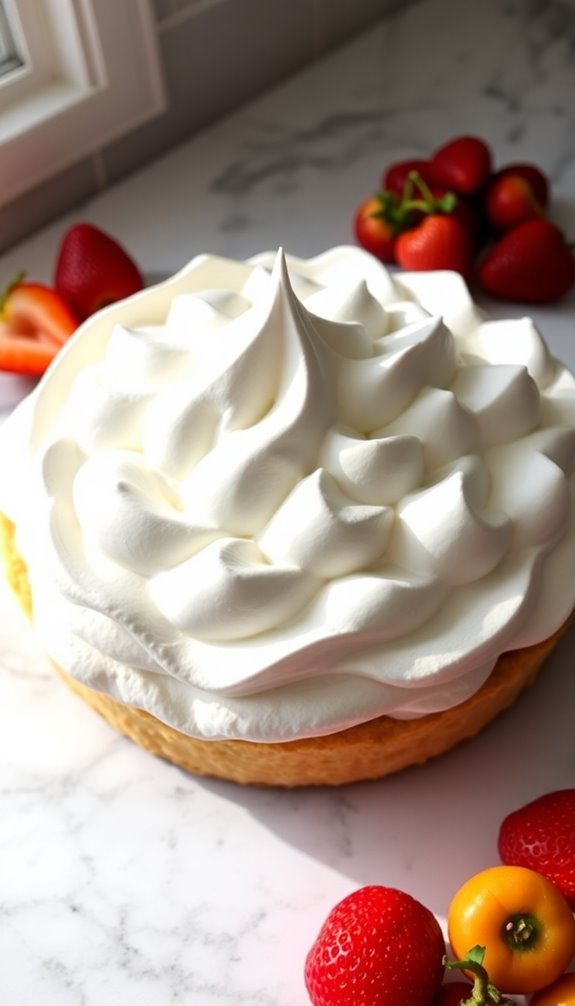
When you’re whipping up meringue for your pie, using fresh ingredients is vital for achieving the best stability and texture. Quality egg whites play an important role; fresh eggs whip up to a greater volume and provide a more stable foam. Additionally, properly mixed dry ingredients are essential for achieving the desired texture in baked goods like meringue. Older egg whites can result in a watery consistency, leading to a weepy meringue that doesn’t hold its shape. Always crack your eggs and separate the whites right before you plan to use them. Moreover, using cream cheese frosting can provide a smooth and tangy contrast to the sweetness of your meringue.
Additionally, incorporating fresh ingredients like cream of tartar can help strengthen the meringue, adding to its stability. By prioritizing freshness, you’ll guarantee your meringue not only looks beautiful but also maintains its integrity, giving you that perfect, luscious topping for your pie. The right type of sugar can also enhance the overall texture of your dessert, providing a delightful balance to the meringue.
Mastering Egg Whites: Techniques for Perfect Peaks
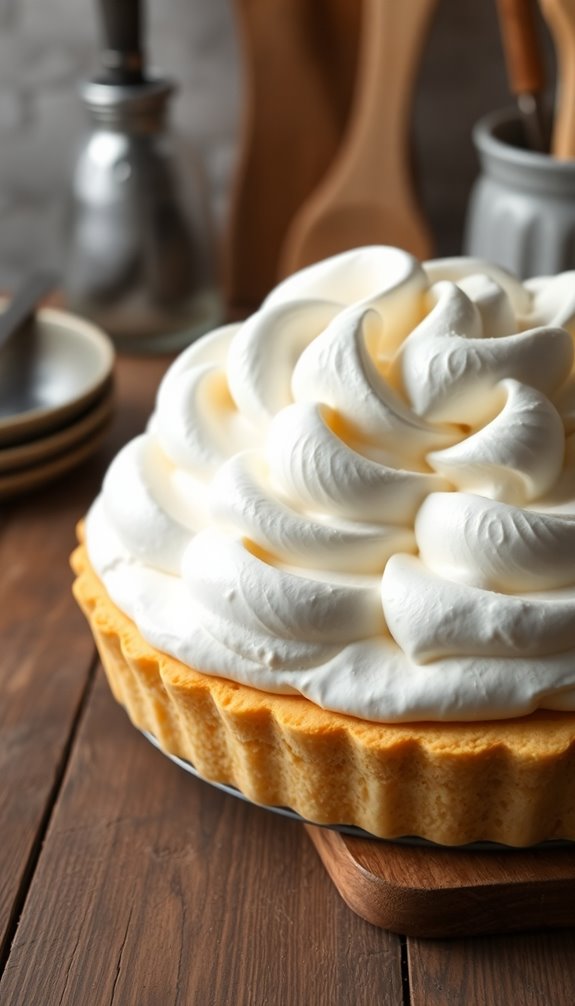
To achieve perfect peaks in your meringue, mastering the technique of whipping egg whites is essential.
Start with room temperature eggs; they whip up better than cold ones. Use a clean, dry mixing bowl—any grease can hinder your progress. Additionally, incorporating high-quality ingredients can enhance the overall flavor of your meringue. Remember to use softened butter for better mixing and spreading if you’re making cookies alongside your meringue.
For the best meringue, use room temperature eggs and a spotless, dry mixing bowl to ensure optimal whipping.
Begin whipping at a low speed, gradually increasing to medium. Pay attention to the foam’s texture; you’re aiming for soft peaks first.
Once you see soft peaks, switch to high speed and add any stabilizers you like, such as cornstarch or cream of tartar, to help with peak consistency. Incorporating cream of tartar adds strength and stability to your meringue.
Continue whipping until you reach stiff peaks; the meringue should hold its shape firmly.
Choosing the Right Sugar for Your Meringue
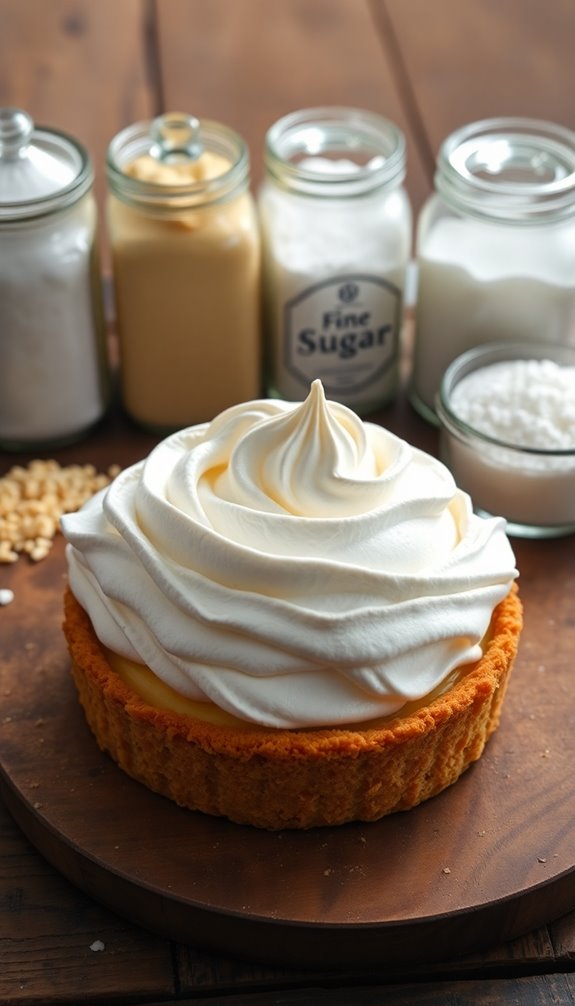
Choosing the right sugar for your meringue can make all the difference in achieving that perfect texture and flavor.
When it comes to sugar types, granulated sugar is your best bet. It dissolves easily, helping to create a smooth and glossy meringue. If you’re looking for an even more stable option, consider superfine sugar. This type dissolves faster than granulated sugar, resulting in a lighter meringue with less risk of weeping.
Avoid using powdered sugar, as it contains cornstarch, which can affect the texture.
Remember, the right sugar not only impacts the taste but also the stability of your meringue, so choose wisely to guarantee your meringue pie stands tall and proud. Accurate measurements ensure precision and consistency in your baking.
Happy baking!
Temperature Matters: How to Properly Whip Meringue
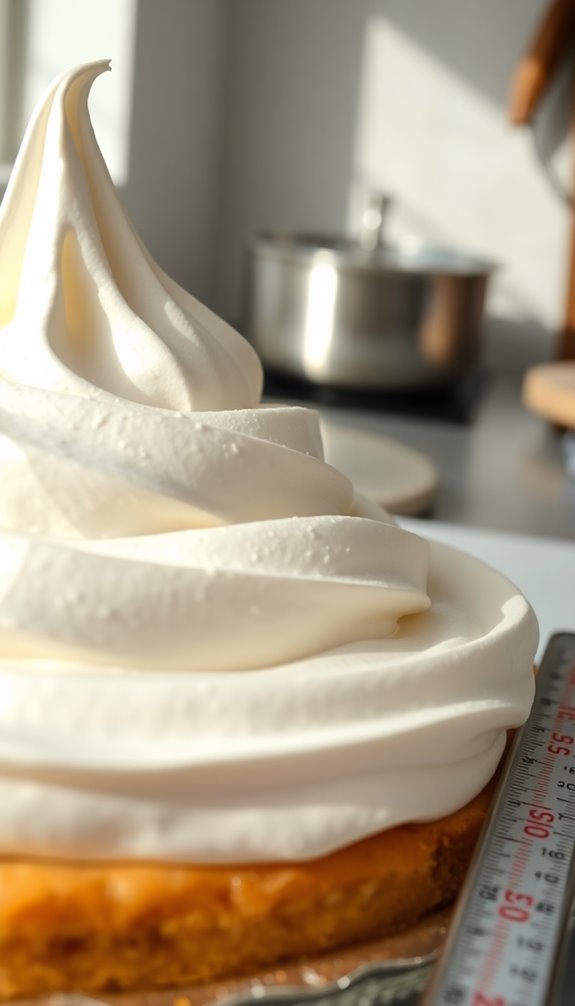
To whip meringue successfully, start with room temperature egg whites; this helps achieve the best volume and stability.
You’ll also want to keep an eye on humidity, as moisture can prevent your meringue from reaching its full potential.
With these tips in mind, you’re on your way to creating a perfect meringue pie!
Room Temperature Egg Whites
Room temperature egg whites are vital for achieving the perfect meringue. When you let your egg whites sit out for about 30 minutes before whipping, you’ll notice the room temperature benefits. They whip up to a greater volume and create a more stable structure, which is essential for that lofty texture you want.
For ideal egg white preparation, crack your eggs and separate the whites from the yolks carefully, ensuring no yolk gets in. Using a clean, dry bowl helps too, as any grease can hinder whipping.
Avoiding Humidity Issues
Humidity can wreak havoc on your meringue, even if you’ve started with room temperature egg whites. To achieve perfect peaks, pay close attention to humidity control, especially on those rainy days. High humidity can prevent your meringue from whipping up properly, leading to a soggy topping.
When the weather’s unpredictable, consider whipping your meringue in the early morning or late evening when humidity levels are typically lower.
If you can’t avoid a humid day, try adding a bit of cornstarch or cream of tartar to stabilize your meringue. These ingredients help absorb moisture and maintain structure.
Always monitor weather considerations, and if it feels damp outside, it might be best to wait for a drier day to tackle your meringue pie.
Common Mistakes to Avoid When Making Meringue
When making meringue, it’s easy to fall into a few common traps.
Overwhipping the egg whites can lead to a grainy texture, while improper sugar incorporation might prevent that perfect glossy finish.
Let’s look at these mistakes so you can achieve meringue perfection.
Overwhipping The Egg Whites
Overwhipping egg whites can turn a promising meringue into a grainy disaster, so it’s essential to know the signs of overbeating.
When you’re aiming for that perfect egg white consistency, be cautious as you whip. Watch for these overwhipping effects:
- Stiff peaks that don’t hold shine
- Grainy texture instead of smoothness
- Dryness rather than a glossy finish
- Separation of liquid from the meringue
To achieve a stable topping, stop whipping as soon as you reach soft to medium peaks.
This way, your meringue retains that desired smoothness and stability, ensuring a delightful finish for your pie.
Improper Sugar Incorporation
While it might seem straightforward, incorporating sugar into your meringue can be tricky if you’re not careful. One common mistake is using the wrong sugar types. Granulated sugar is ideal, but if you opt for powdered sugar, it can create a grainy texture.
Pay attention to your incorporation methods, too. Adding sugar too quickly can deflate your egg whites, so introduce it gradually while whipping. Aim for a fine, steady stream, allowing the sugar to dissolve completely before adding more.
Also, make certain your mixing bowl and utensils are grease-free, as any fat can hinder sugar incorporation. By following these tips, you’ll achieve a stable, glossy meringue that holds up beautifully on your pie.
Adding Stabilizers: Cornstarch, Cream of Tartar, and More
To achieve a perfectly stable meringue, incorporating stabilizers like cornstarch and cream of tartar can make all the difference.
Incorporating stabilizers like cornstarch and cream of tartar is essential for achieving a perfectly stable meringue.
These ingredients not only enhance the structure but also improve the overall texture. Here are some key stabilizers to take into account:
- Cornstarch benefits: Helps absorb moisture, preventing weeping.
- Cream of tartar: Adds acidity, strengthening the egg whites.
- Vinegar addition: Enhances stability, especially in chocolate meringue.
- Powdered sugar: Contains cornstarch and helps maintain a smooth consistency.
If you’re looking for gelatin alternatives, consider whipped cream or flavor extracts to elevate your meringue’s taste.
With these tips, your meringue will shine, ensuring a delightful topping for your pie!
Perfecting the Bake: How to Prevent Weeping and Collapsing
Achieving a stable meringue isn’t just about the ingredients; how you bake it matters too. To prevent weeping and collapsing, focus on your meringue consistency.
Start by ensuring your egg whites are whipped to stiff peaks before baking. A low and slow approach works wonders—bake at a lower temperature, around 200°F, for a longer time. This gentle heat allows moisture to escape without compromising the structure.
Avoid opening the oven door during baking, as temperature fluctuations can weaken your meringue. Once baked, turn off the oven and let the meringue cool inside, preventing sudden temperature changes.
Tips for Storing Meringue Pie Without Compromise
To keep your meringue pie fresh and flawless, proper cooling techniques are essential.
Once it’s cooled, make sure to store it in an airtight container to prevent any moisture from ruining that perfect meringue.
With these tips, you can enjoy your pie without compromise.
Proper Cooling Techniques
While meringue pie can be a showstopper at any gathering, ensuring it cools properly is essential for maintaining its delicate texture and flavor.
To achieve the best results, follow these cooling methods and be mindful of cooling times:
- Room Temperature: Allow the pie to cool gradually on the counter for about 1-2 hours.
- Avoid Drafts: Keep the pie away from air vents or open windows to prevent cracking.
- Refrigeration: Once it’s at room temperature, refrigerate for at least 2 hours to set the filling.
- Cover Carefully: If you need to cover it, use a loose layer of plastic wrap to avoid sticking.
Airtight Storage Solutions
If you want to keep your meringue pie fresh without sacrificing its light and airy texture, proper storage is key.
Start by letting your pie cool completely before storing. Once it’s cooled, place it in an airtight container to prevent air exposure, which can lead to weeping.
If you don’t have an appropriate container, wrap the pie tightly with plastic wrap, ensuring it’s sealed to control moisture effectively.
Avoid placing it in the refrigerator for long periods, as humidity can compromise the meringue’s structure. Instead, store it in a cool, dry place if you plan to enjoy it within a day.
With these moisture control tips, you can preserve your meringue pie’s delightful texture and flavor.
Creative Variations: Flavoring Your Meringue for Extra Appeal
Adding creative flavors to your meringue can elevate a classic pie into a truly memorable dessert. By experimenting with different flavorings, you can enhance the taste profile and wow your guests.
Here are some delightful options to contemplate:
- Citrus zest for an invigorating zing
- Chocolate infusion to satisfy your sweet tooth
- Herbal notes like rosemary or thyme for a unique twist
- Fruit purees to complement the pie’s filling
You might also explore spice blends for warmth, coffee essence for depth, or nut extracts like almond or hazelnut for richness.
With these variations, your meringue won’t only look stunning but also tantalize taste buds with every bite!
Conclusion
Now that you’ve mastered the art of meringue, your pie can shine like a golden sunset on a summer evening. With fresh ingredients, perfectly whipped egg whites, and the right stabilizers, you’ll create a topping that holds its shape and delights the palate. Remember to store it carefully, like a treasure, to keep its beauty intact. So go ahead, slice into that pie, and let your meringue take center stage—your taste buds will thank you!