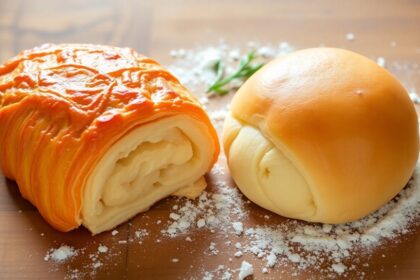

Crescent dough and puff pastry aren’t the same; they have distinct ingredients and textures. You’ll find that crescent dough includes yeast, making it soft and chewy, while puff pastry is layered with butter for a flaky texture. Each one suits different culinary uses, like breakfast items for crescent dough and intricate pastries for puff pastry. Curious about how to use them in your cooking or baking? There’s plenty more to discover about these versatile doughs!
Understanding Crescent Dough and Puff Pastry
When it comes to baking, understanding the differences between crescent dough and puff pastry is essential for achieving the right texture and flavor in your dishes.
Crescent dough uses a yeasted mixture that results in a softer, bread-like texture, while puff pastry is a laminated dough made with layers of butter and flour, creating an incredibly flaky exterior. The traditional recipes for puff pastry emphasize the importance of layering to achieve the desired flakiness, much like the layering technique used in the creation of chocolate chip cookies, which allows for unique textures in baked goods.
Puff pastry relies on steam from its many layers to achieve its crispness, needing at least six folds during preparation. In contrast, crescent dough has fewer layers and isn’t traditionally laminated.
This key difference means puff pastry is often preferred in desserts and savory dishes, while crescent dough shines in breakfast items and rolls, providing distinct culinary experiences in each use. Additionally, the lightweight and airy texture of puff pastry enhances dessert experiences, making it a favorite among dessert lovers.
Key Differences in Ingredients
When you compare crescent dough and puff pastry, the ingredients really set them apart. Crescent dough uses yeast and sugar, giving it a sweeter flavor and a bread-like texture, while puff pastry relies on butter and water for its neutral taste and flakiness. This difference in ingredients directly impacts the overall texture of the final baked product. Understanding these key differences in composition helps you choose the right dough for your recipes. Additionally, using doughs with lower glycemic index sweeteners can enhance the nutritional profile of your baked goods. For example, incorporating natural sweeteners like honey or maple syrup can provide healthier alternatives in your baking.
Dough Composition Variations
Although both crescent dough and puff pastry are popular in baking, they differ greatly in their ingredients and composition. Here are three key dough composition variations:
- Yeast Presence: Crescent dough contains yeast, allowing it to rise and achieve a softer texture, while puff pastry has no yeast, relying instead on steam for its flaky layers.
- Butter Content: Puff pastry boasts a higher butter content, making it richer in calories and fat compared to crescent dough, which includes sugar and yeast for extra carbohydrates.
- Layering Methods: Puff pastry undergoes an intricate lamination process with multiple folds, while crescent dough utilizes a simpler layering method, resulting in distinct textures and flavors.
These differences contribute to the unique baking properties and nutritional differences between the two doughs.
Key Ingredient Differences
Crescent dough and puff pastry are fundamentally different in their key ingredients, impacting their flavor and texture.
Crescent dough contains yeast, giving it a softer, bread-like texture and a sweeter flavor profile due to its higher sugar content.
In contrast, puff pastry relies solely on layers of butter and dough, without yeast, to achieve its signature flaky texture.
The ingredient list for crescent dough typically includes flour, water, butter, yeast, sugar, and sometimes eggs or milk.
Meanwhile, puff pastry is simpler, composed of flour, butter, salt, and cold water.
The complex lamination process in puff pastry creates distinct layers, while crescent dough is layered but not traditionally laminated, leading to different baking outcomes.
The Dough-Making Process Explained

Understanding the dough-making process is essential to appreciating the differences between crescent dough and puff pastry.
- Crescent Dough: Made from yeasted dough, it’s layered but not traditionally laminated, resulting in a softer texture. The use of healthier sweeteners can enhance the flavor profile of baked goods made with crescent dough. This dough can also be used as a base for almond sponge cake, adding a unique twist to traditional recipes.
- Puff Pastry: Created through a meticulous laminated dough process, involving multiple folds to incorporate butter layers, leading to flaky layers.
- Preparation Methods: Crescent dough requires kneading and proofing, while puff pastry demands precise techniques for best results. Additionally, the baking process for puff pastry releases enticing aromas that enhance the overall sensory experience.
These different approaches define their textures. Crescent dough’s fewer steps result in a denser structure, whereas puff pastry’s complexity yields a light, airy finish.
Understanding these methods helps you appreciate each pastry’s unique qualities and culinary applications.
Texture and Flavor Profiles
When you compare crescent dough to puff pastry, you’ll notice a stark difference in texture and flavor. Crescent dough offers a soft, chewy bite, while puff pastry impresses with its flaky, crispy layers. Additionally, the buttery richness of puff pastry contrasts with the sweeter, enriched taste of crescent dough, making each a unique choice for different dishes. For those interested in experimenting with different textures, layered sponge cake can provide an elegant alternative to both doughs. The luxurious chocolate coating on treats like madeleines also showcases how texture can enhance overall flavor and create an indulgent experience. Moreover, the espresso-infused sponge cake used in desserts like opera cake highlights how various cake textures can elevate a dish’s profile.
Flaky vs. Soft Texture
Although both crescent dough and puff pastry are popular options for baking, they offer distinctly different textures and flavor profiles. Here’s what sets them apart:
- Crescent Rolls: Made with yeast, they’ve a soft texture and thicker layers, resembling a dinner roll.
- Puff Pastry: Without yeast, it features a flaky pastry texture, achieved through extensive lamination and a higher butter content.
- Texture Contrast: Puff pastry puffs up considerably, resulting in a light, airy feel, while crescent dough remains compact and chewy due to its sugar and egg inclusion.
Keep these differences in mind when choosing between the two for your next baking adventure!
Buttery Flavor Differences
Buttery flavor plays an essential role in distinguishing crescent dough from puff pastry.
Puff pastry boasts a higher butter content, lending it a distinctly rich and buttery flavor profile. This high butter content is vital for creating the crispy, flaky texture and light and airy structure that puff pastry is known for.
In contrast, crescent dough has a milder taste, enriched by added sugar, which gives it a more pronounced sweetness. While puff pastry leans towards savory or neutral, making it versatile for various dishes, crescent dough’s sweetness makes it ideal for breakfast and desserts.
Ultimately, the buttery layers of puff pastry elevate its flavor, setting it apart from the softer, sweeter crescent dough.
Baking Techniques for Each Dough
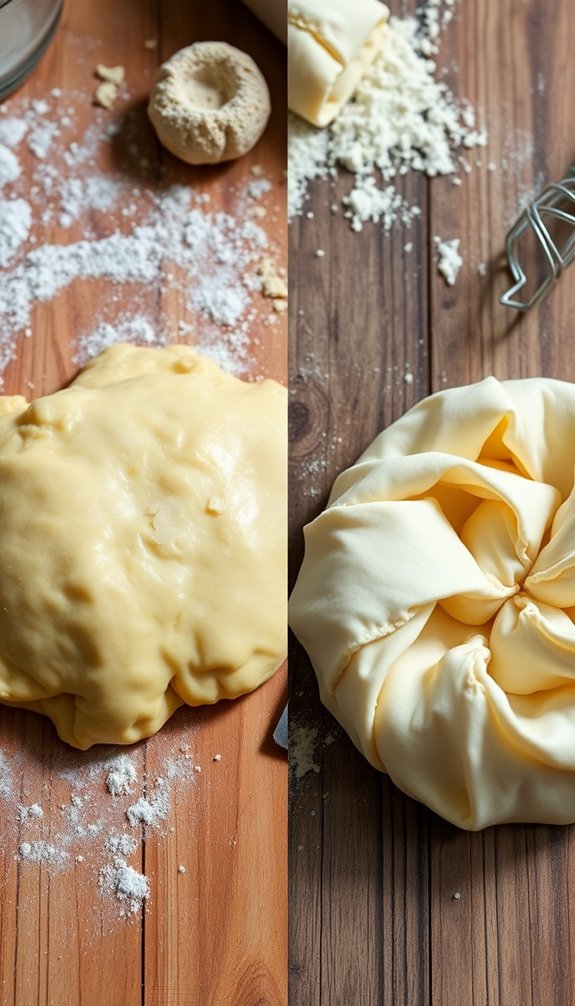
Understanding the baking techniques for crescent dough and puff pastry can greatly enhance your culinary skills.
Here are three key differences to keep in mind:
- Lamination Process: Puff pastry requires a precise lamination process with multiple folds to create flaky layers. Crescent dough, on the other hand, has fewer folds and relies on yeast for lift. The tempering techniques used in making puff pastry ensure a smooth texture and a light, flaky result. Additionally, the use of high-quality ingredients in puff pastry contributes to its superior flavor and texture.
- Baking Time: Puff pastry needs around 15 minutes to achieve that perfect flaky texture, while crescent dough typically bakes in just 5 minutes.
- Texture: Puff pastry results in a crispy bite, whereas crescent dough offers a softer, bread-like texture. Additionally, using a combination of butter and shortening in crescent dough can enhance its flakiness.
Common Uses for Crescent Dough and Puff Pastry
What makes crescent dough and puff pastry so popular in the kitchen? Their versatility is key! You can whip up delicious crescent rolls for breakfast pastries or create stuffed options like pigs in a blanket.
When you think of puff pastry dough, picture its lighter texture making intricate pastries like mille-feuille and vol-au-vents. While crescent dough is often used for quick snacks or holiday side dishes, puff pastry excels in both sweet and savory types of pastries, from fruit tarts to pot pies.
The common uses for these two differ greatly; crescent dough is simpler to use, whereas puff pastry requires more preparation. Understanding these differences can help you choose the right dough for your baked goods!
Nutritional Comparisons
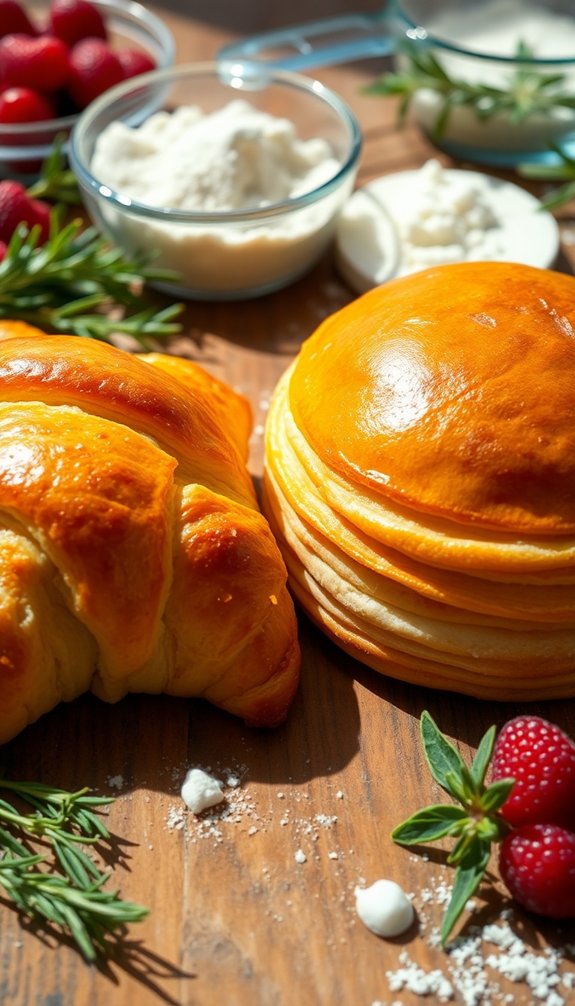
When comparing the nutritional profiles of crescent dough and puff pastry, you’ll find notable differences that can influence your baking choices. Here are three key points to take into account:
- Calories and Fat: Puff pastry packs around 600 calories and 40g of fat per 4 oz serving, while crescent rolls contain about 500 calories and 27g of fat.
- Ingredients: Crescent dough includes sugar, eggs, and yeast, boosting its carbohydrate and protein content, unlike the simpler puff pastry made mostly of flour, butter, and salt.
- Serving Size: Due to its richness, puff pastry is often consumed in smaller amounts, whereas crescent rolls are typically enjoyed in larger, softer servings.
Understanding these nutritional aspects can help you make informed choices for your baking needs.
Can You Substitute Crescent Dough for Puff Pastry?
Wondering if you can swap crescent dough for puff pastry in your recipes? While both doughs can serve similar purposes, there’s a significant difference in texture and flavor.
Crescent rolls contain yeast and sugar, giving them a softer, bread-like consistency, whereas puff pastry is similar to croissants and puff pastries, made from a laminated dough that doesn’t contain yeast. This lamination creates the flaky layers you’re looking for.
If you use crescent dough instead, expect a denser result with less flakiness. Plus, crescent dough generally bakes faster than puff pastry, which needs more time to achieve its characteristic rise.
Conclusion
In conclusion, while crescent dough and puff pastry may seem similar, they have distinct differences that affect your baking. As the saying goes, “you can’t make an omelet without breaking eggs,” and understanding these variations guarantees your culinary creations shine. Whether you choose the buttery layers of puff pastry or the convenience of crescent dough, each has its own charm and purpose. So, pick your dough wisely and let your creativity flourish in the kitchen!