
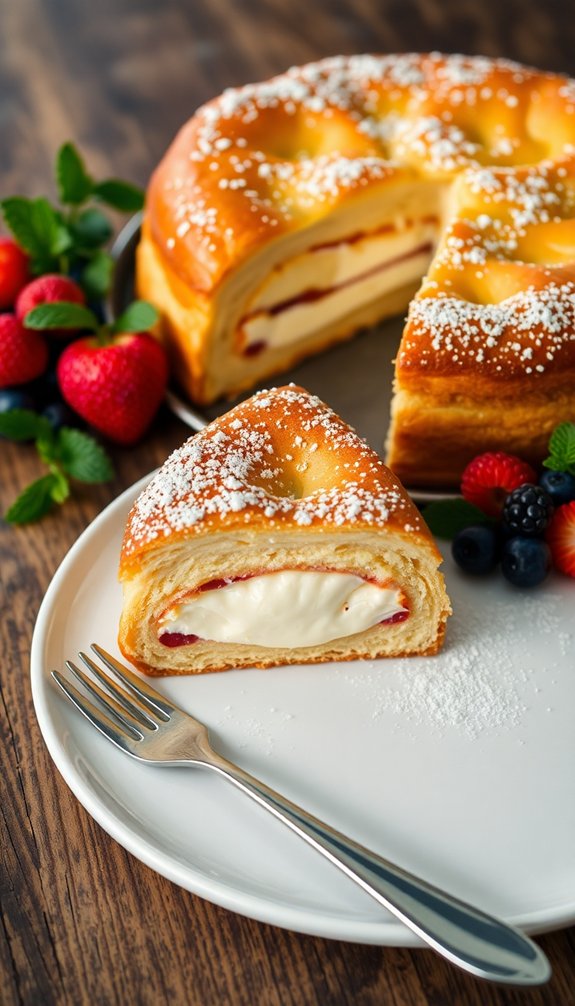
To make a classic Gâteau Basque, start by preparing a buttery sablé dough with flour, butter, and sugar. Chill it, then roll out and fit into a springform pan. Fill it with rich pastry cream or cherry jam, cover with another layer of dough, and seal the edges. Bake until golden brown. Let it cool before serving, dusted with sugar. There’s so much more to discover about variations and serving suggestions!
Understanding Gâteau Basque
When you think of classic French desserts, Gâteau Basque mightn’t be the first that comes to mind, yet it’s a delightful treat worth discovering. Originating from the Basque region of France, this traditional cake showcases a sweet, buttery crust that encases a creamy filling, often made with cherry jam or custard. Each bite offers a delightful contrast between the crispy outer layer and the soft interior. The cake is typically crafted using sablé dough, flavored with rum, and can feature variations like ground nuts or different fruit preserves. With its rustic appearance, often adorned with a simple lattice pattern, Gâteau Basque is celebrated for its rich flavor and authenticity, making it a hidden gem in French pastry culture. Additionally, its creation shares similarities with classic Italian Cassata Cake, highlighting the cultural exchange within European desserts. The harmonious blend of creamy, tangy, and sweet flavors in both desserts showcases their culinary heritage and the importance of high-quality ingredients, as seen in traditional Cassata recipes.
Key Ingredients for Gâteau Basque
When making Gâteau Basque, you’ll want to focus on the essential dough components and filling options that create its signature taste. You can choose between a rich vanilla pastry cream or a fruity black cherry jam to elevate your dessert. Additionally, the history of chocolate chip cookies serves as a reminder of how culinary innovations can inspire bakers to experiment with flavors and textures. The use of almond flour in some variations of Gâteau Basque adds a unique depth and richness to the dough, making it a versatile base similar to the almond sponge cake found in desserts like Gateau Opera. Don’t forget to reflect on optional garnishes and flavor enhancements for that perfect finishing touch!
Essential Dough Components
To create the classic dough for Gâteau Basque, you’ll need a few key ingredients that come together to form a rich, buttery crust.
These essential dough components give the cake its unique texture and flavor:
- All-purpose flour: This forms the base of your dough, providing structure.
- Unsalted butter: Adds richness and enhances the buttery flavor.
- Granulated sugar: Sweetens the dough and contributes to its cookie-like texture.
The dough is soft, so handle it carefully and chill it for at least an hour. This helps with rolling and shaping.
Once baked, the crust will be crispy outside and moist inside, perfectly holding your creamy vanilla pastry cream or fruit preserves filling. Enjoy the delightful contrast!
Flavorful Filling Options
While the classic Gâteau Basque is often filled with black cherry jam, there are plenty of flavorful filling options that can elevate your dessert.
You might opt for a rich vanilla pastry cream, which adds a creamy texture and balances the crispy exterior beautifully. For a twist, consider using homemade cherry jam spiked with a splash of rum or brandy for a deeper flavor.
You can also experiment by incorporating seasonal fruits, like raspberries or strawberries, or even almond flour in the custard.
If you’re feeling adventurous, try filling your Gâteau Basque with Nutella, citrus zests, or flavored liqueurs.
The possibilities are endless, and each filling can create a unique and delicious experience!
Optional Garnishes and Enhancements
Enhancing your Gâteau Basque with optional garnishes can take this classic dessert to the next level. Here are three suggestions to elevate your creation:
- Toasted slivered almonds: Sprinkle these on top for a nutty flavor and crunchy texture that pairs beautifully with the buttery crust and pastry cream filling.
- Fresh raspberries: Serve these alongside the cake for a tart contrast that balances the sweetness of the filling.
- Cherry sauce: Drizzle this vibrant sauce over individual slices to add a burst of fruity flavor and a pop of color.
Don’t forget a light dusting of confectioners’ sugar to enhance the presentation without overpowering the dessert.
These garnishes will make your Gâteau Basque truly unforgettable!
Preparing the Pastry Cream
Start by heating a mixture of whole milk, heavy cream, and vanilla in a saucepan until it’s very hot. This helps the flavors meld together for rich pastry cream. Infusing cream with vanilla beans is a technique that enhances the flavor profile. The evolution of desserts like cheesecake demonstrates how culinary innovation can lead to delightful new creations.
In a separate bowl, whisk together granulated sugar, cornstarch, all-purpose flour, egg yolks, and whole eggs until smooth.
Gradually incorporate the hot milk mixture into the egg mixture while whisking continuously to prevent curdling.
Return the combined mixture to the saucepan and cook over medium heat, whisking constantly until it becomes bubbly and thickens, which takes about 3-5 minutes.
Once thickened, remove the saucepan from the heat and allow the pastry cream to cool to room temperature for about an hour before using it as a filling for your Gâteau Basque. Additionally, the preparation process is crucial for achieving the perfect texture in your pastry cream.
Making the Cake Dough
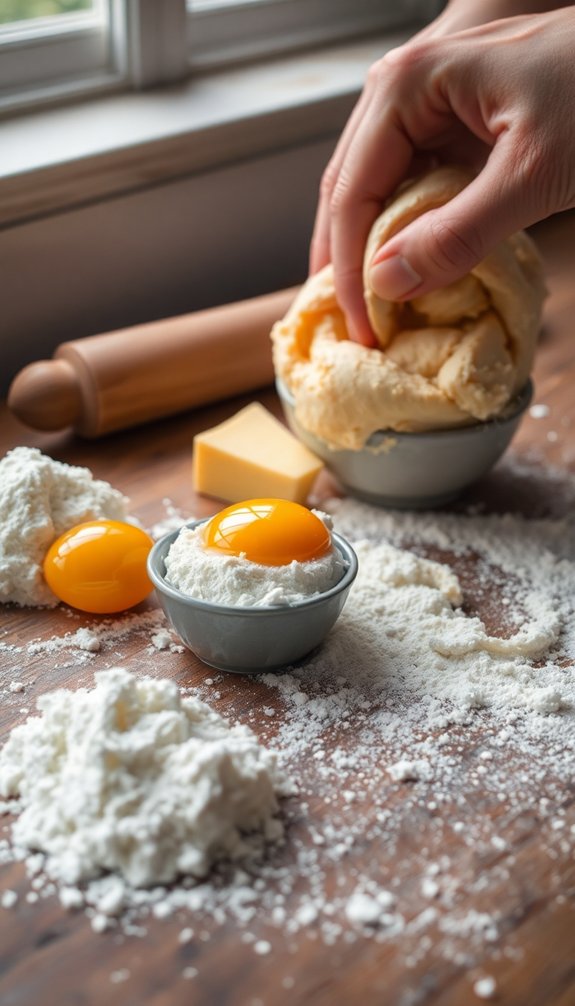
To make the cake dough for Gâteau Basque, you’ll start by gathering your ingredients and measuring them accurately. Combine all-purpose flour, baking powder, and salt in a bowl before mixing in the butter and sugar for that perfect texture. Properly measured dry ingredients are vital for achieving the right texture and rise in cakes. Additionally, keeping butter cold is essential in pie-making, as it contributes to a flaky texture in doughs. Once you shape the dough into disks, refrigerate them to firm up before rolling out. The importance of ingredient balance ensures that your dough maintains the right consistency for optimal results.
Ingredients and Measurements
Creating the perfect gâteau Basque dough requires a few essential ingredients and precise measurements. Follow this list to guarantee your dough turns out just right:
- 2 cups of all-purpose flour – This forms the base of your crust.
- 1 cup of unsalted butter, softened – You’ll beat this with sugar for a rich texture.
- 2 large egg yolks and 1 whole egg – These add moisture and depth to the flavor.
Start by combining the flour, baking powder, and a pinch of salt.
In another bowl, cream the butter and 1 cup of granulated sugar until fluffy.
Gradually mix the dry ingredients into the wet blend, being careful not to overwork the dough.
Form it into disks, wrap, and refrigerate for at least an hour.
Mixing and Shaping Dough
Mixing the dough for your gâteau Basque is an essential step that sets the foundation for its flavor and texture.
Start by whisking together all-purpose flour, baking powder, and salt in a large bowl. In a separate bowl, beat unsalted butter and granulated sugar until fluffy—about 3-4 minutes. Gradually add egg yolks and whole eggs, mixing well after each addition. This keeps your dough moist and well-emulsified.
Slowly incorporate the dry mixture into the wet ingredients, forming a soft, slightly sticky dough. Be careful not to overwork it. Shape the dough into two disks, wrap them in plastic wrap, and refrigerate for at least 1 hour.
This chilling process helps firm up the dough for easy rolling and shaping.
Assembling the Gâteau Basque
Assembling the Gâteau Basque involves several straightforward steps that guarantee your dessert turns out perfectly. Here’s how you can do it:
- Roll one disk of dough into a 12-inch circle and press it into a greased and floured 9-inch springform pan, covering the bottom and sides evenly.
- Pour cooled pastry cream into the crust and refrigerate for 30-60 minutes to set. This will help ensure a smooth texture that complements the crust, allowing the filling to meld beautifully with the gluten-free ingredients used in the dough.
- Roll the second disk into another 12-inch circle, place it over the filling, and seal the edges tightly.
Before you bake, brush the top crust with an egg wash made from 1 tablespoon of water and 1 egg. This gives it that golden finish. Additionally, ensure that your chilled layers are well-set for optimal texture in the final product.
Now you’re ready to bake your delicious Gâteau Basque!
Baking Instructions

Once you’ve sealed the edges of your Gâteau Basque, it’s time to bake it to perfection.
Preheat your oven to 400°F. Begin by rolling out one disk of dough into a 12-inch circle to line a greased springform pan. Pour the cooled pastry cream into the crust, then cover it with the second rolled-out disk.
Bake the assembled Gâteau Basque for 20 minutes at the higher temperature. After that, reduce the heat to 350°F and continue baking until the crust turns golden brown and the filling is set.
Make sure the crust is crispy and the whole eggs blend seamlessly with the pastry cream for a delightful texture.
Follow these baking instructions, and you’ll have a delicious treat!
Cooling and Serving Suggestions
How can you guarantee your Gâteau Basque is served at its best? Start by cooling it properly and presenting it beautifully. Follow these steps:
- Let the gâteau cool in the pan for 10 minutes before removing the ring, then place it on a wire rack to cool completely.
- Once cooled, dust the top with confectioners’ sugar for an elegant touch.
- For ideal freshness, store any leftovers in an airtight container for up to three days.
Enjoy your Gâteau Basque with coffee or tea to enhance its rich buttery flavor.
For a delightful twist, consider serving it alongside fresh raspberries or a sweet cherry sauce, perfectly complementing its traditional black cherry jam filling.
Nutritional Information
When indulging in Gâteau Basque, it’s essential to be aware of its nutritional profile. A typical serving contains approximately 712 calories, making it a rich treat for special occasions.
You’ll find around 92 grams of carbohydrates per portion, providing a hefty energy boost. Each slice includes about 13 grams of protein, primarily from the eggs and dairy, which helps balance the dessert’s richness.
However, with 33 grams of total fat—19 grams of which are saturated—it’s wise to enjoy this delicacy occasionally. Additionally, keep in mind it packs 332 mg of cholesterol, mainly due to the egg yolks and butter.
If you’re monitoring your cholesterol intake, this is important to take into account when savoring your slice.
Exploring Variations and Tips
While enjoying Gâteau Basque‘s rich flavors, you might want to explore the many variations and tips that can elevate your baking experience. Here are three ideas to get you started:
- Filling Options: Experiment with pastry cream, Nutella, or seasonal fruit preserves for exciting flavor profiles beyond the classic black cherry jam.
- Flavor Enhancements: Consider adding rum or mahrab to your dough and filling for a unique twist.
- Texture Variations: Use alternative flours like wholemeal or buckwheat for a different texture and a nutty flavor.
For a rustic appearance, roll the dough carefully without overworking it.
Keep an eye on your tart while baking to guarantee the crust is crisp and golden. Happy baking!
Conclusion
With your Gâteau Basque now baked to perfection, you’ve created a dessert that could make the gods weep with joy! Each slice reveals a luscious pastry cream encased in buttery dough that practically sings with flavor. As you serve this masterpiece, your friends will bow down in reverence, declaring it the eighth wonder of the world! So, take a moment to bask in your culinary glory, because you’ve just whipped up a slice of pure bliss!