
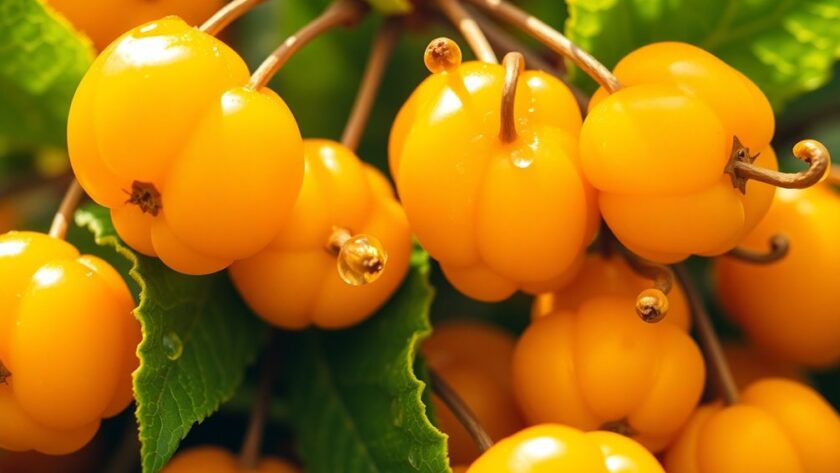
Goldenberries are sticky because their glycosides create a unique mouthfeel that enhances your taste experience. This stickiness is most pronounced when the berries are fresh, due to their high sugar and pectin content. You can enjoy them fresh as a snack, in fruit salads, or even dipped in chocolate for a treat. If you want to learn more about the nutritional benefits and creative ways to incorporate goldenberries into your meals, keep exploring!
The Unique Texture of Goldenberries
Goldenberries offer a fascinating texture that sets them apart from other fruits. Their naturally sticky skin, thanks to the glycosides, creates a unique mouthfeel that you won’t find in many other berries.
Goldenberries boast a unique texture with their naturally sticky skin, delivering a mouthfeel unlike any other berry.
This stickiness is most pronounced when the berries are fresh, attributed to their high sugar and pectin content. When you bite into a goldenberry, you’ll experience a delightful sweet-tart flavor, reminiscent of tropical fruits.
The outer layer not only protects the fruit but also enhances the overall taste experience, making it similar to enjoying giant blueberries or cherries. Additionally, incorporating nutrient-rich foods like goldenberries into your diet can enhance overall health and wellness.
Remember to wash your goldenberries before eating, though their sticky skin is safe and adds to their charming appeal. Enjoy this distinctive texture and flavor in your next fruit adventure!
Nutritional Benefits of Goldenberries
You’ll be pleased to know that goldenberries pack a powerful nutritional punch.
These little golden gems offer 9g of dietary fiber per serving, which aids digestion and promotes gut health.
You’ll also benefit from their impressive vitamin A content, providing 60% of your daily value—much higher than dried apricots.
Plus, with 8% of your daily iron needs met, goldenberries are a fantastic choice compared to many other dried fruits.
Their low glycemic index of 25 makes them a smart snack for those monitoring blood sugar levels.
Finally, goldenberries are loaded with antioxidants like vitamin C and carotenoids, supporting your immune function and helping combat oxidative stress. Incorporating healthier ingredient swaps can further enhance your diet when enjoying these nutritious fruits.
Discover the health benefits of these nutritious fruits today!
Culinary Uses for Goldenberries
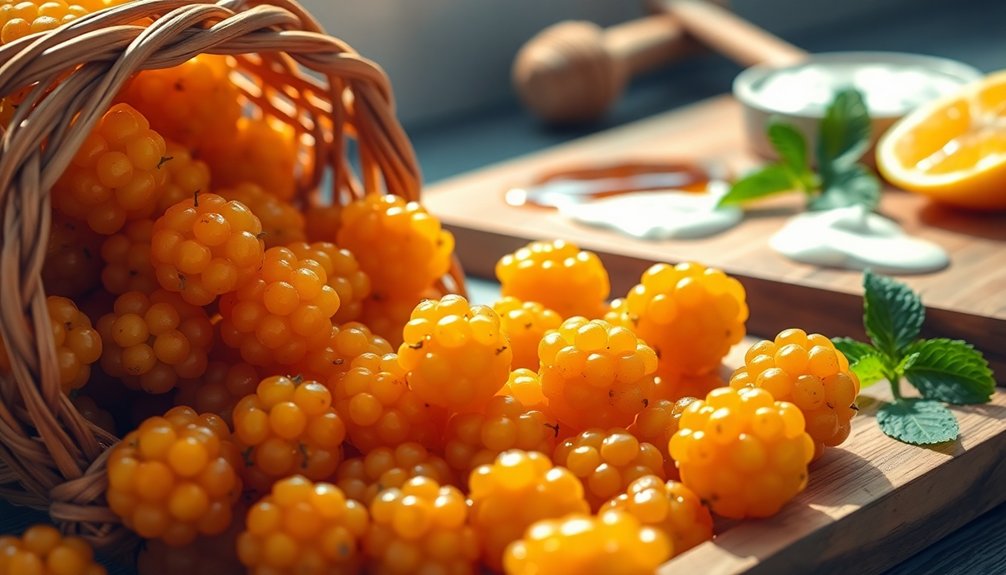
While exploring new flavors, you’ll find that goldenberries add a delightful sweet-tart taste to a variety of dishes.
These Cape Gooseberries can be enjoyed fresh as a snack or tossed into fruit salads with blueberries, pineapple, and mango for an exciting twist.
Slice them up and sprinkle them on savory salads; their unique tangy flavor enhances any combination.
Blend goldenberries into smoothies for a nutritious boost, or dip them in chocolate for a gourmet dessert.
You can also turn them into jams, adding a special touch to your breakfast.
Their sticky outer texture makes them perfect as a topping for yogurt or granola, elevating your dishes with their vibrant taste and health benefits. Enjoy this tropical fruit in countless ways! Additionally, incorporating sugar-free vegan options into your meals can provide satisfying treats that align with many dietary needs.
How to Store Goldenberries
To keep your goldenberries fresh and flavorful, refrigerate them right after purchase. This helps extend their shelf life, allowing you to enjoy their rich vitamin C content for up to two weeks.
The sticky texture you notice is normal due to their natural sugars and glycosides, which you can wash off if you prefer.
If you opt for dried goldenberries, store them in a cool, dry place in an airtight container to prevent moisture absorption and maintain quality.
While fresh goldenberries are best enjoyed soon after buying, dried ones can last much longer.
Just remember, keeping them in the refrigerator or proper storage will guarantee you savor their delightful taste without spoilage. Additionally, incorporating goldenberries into desserts like traditional Julekage can enhance their flavor profile and add a unique twist to your culinary creations.
The History of Goldenberries
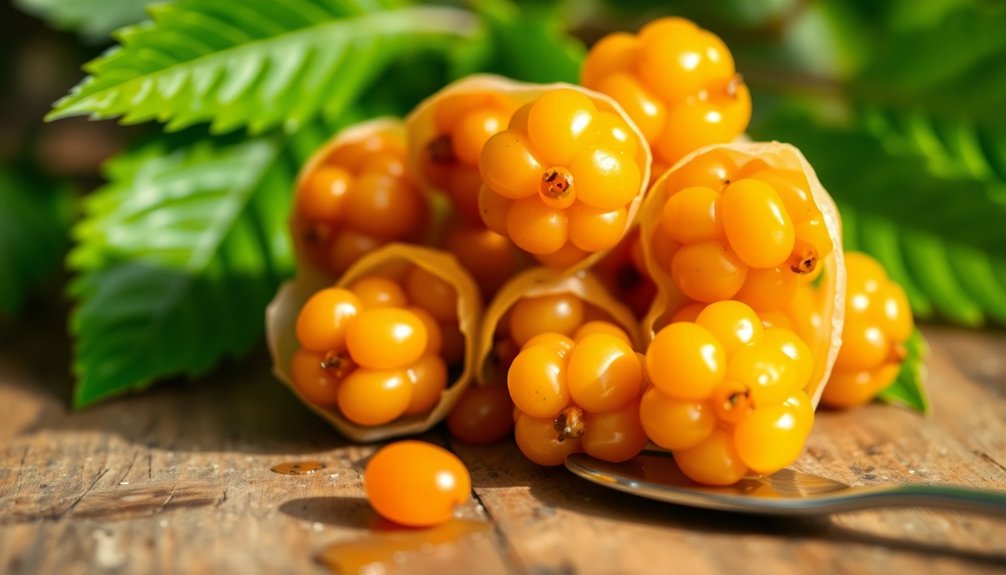
Goldenberries, or Cape Gooseberries, have a rich history that traces back to the Andean highlands of Peru, Ecuador, Colombia, Chile, and possibly Brazil.
These small, golden fruits, scientifically known as Physalis peruviana, were once a staple in local diets due to their unique sweet-tart flavor and impressive nutritional benefits.
Their popularity spread to the Cape of Good Hope in South Africa, where they earned their common name.
Goldenberries belong to the Nightshade family and thrive as herbaceous perennials, producing shoots, leaves, flowers, and fruit year-round under suitable conditions.
The fruit’s protective calyx, reminiscent of a Chinese lantern, allowed for safe storage during long sea voyages, making them a valuable food source throughout history.
Enjoying their legacy connects you to centuries of cultural significance, as these fruits serve as a reminder of the joy found in traditional homemade recipes.
Health Myths and Facts About Goldenberries
As you explore the world of goldenberries, it’s essential to separate fact from fiction regarding their health benefits. Here are some key points to evaluate:
- Superfruit Status: Goldenberries are often labeled as a “superfruit,” but claims of detoxification and immunity boosting lack solid scientific support.
- Nutritional Profile: They’re rich in antioxidants and nutrients, including vitamins A, B, C, iron, and zinc, but they don’t outshine common fruits and veggies.
- Glycemic Index: With a low glycemic index of 25, they may help with blood sugar control, but that doesn’t make them a miracle food.
- Balanced Diet: Focusing too much on goldenberries can lead to an unhealthy relationship with food—it’s hard to say if they’re worth the hype without dietary variety. Incorporating low-sugar alternatives can enhance your overall health while enjoying various fruits and treats.
Creative Recipes Featuring Goldenberries
Enjoy them fresh as a tangy snack or slice them into fruit salads with blueberries, pineapple, and mango for a burst of flavor.
Blend goldenberries into smoothies for an antioxidant-rich boost, or sprinkle them over yogurt and granola for a unique sweet-tart taste.
For a decadent treat, dip them in chocolate or craft homemade jams that highlight their natural sweetness.
You can even incorporate their sticky texture into desserts like pies or ice cream.
Add goldenberries to savory dishes, like salads or fish tacos, to enhance those flavor profiles with a little bit sweet and tart experience. Additionally, try incorporating goldenberries into Coconut and Pineapple Oatmeal Delights to create a unique twist on traditional recipes that combines tropical flavors.
Conclusion
Incorporating goldenberries into your diet is like adding a burst of sunshine to your meals, brightening both flavor and health. Their sticky charm reveals a world of culinary possibilities, from vibrant salads to sweet desserts. As you explore these little gems, remember the ancient cultures that revered them for their nourishing properties. So, go ahead and savor the sweet and tangy essence of goldenberries—your taste buds and body will thank you, echoing the wisdom of generations past.