
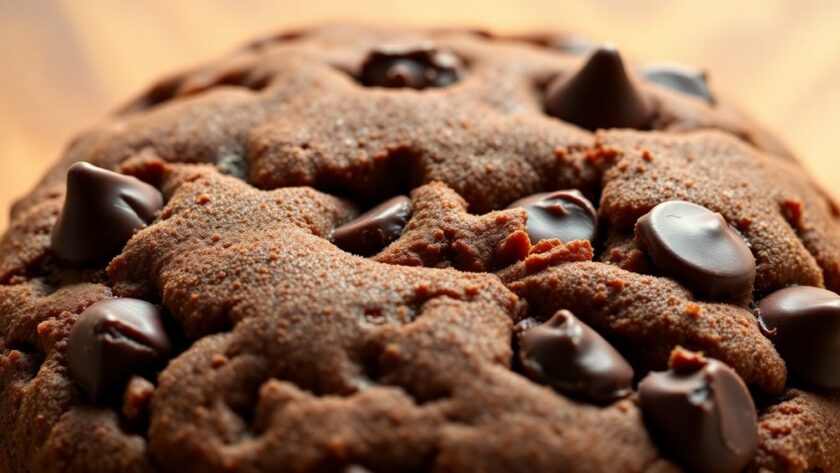
Double chocolate chip cookies are a delicious treat that blend rich cocoa flavors with gooey melted chocolate chips, creating a chocolate lover’s dream. The type of cocoa powder you use greatly impacts the cookie’s texture, whether it’s chewy or cakey. Choosing quality chocolate chips and balancing cocoa with sugar is essential for flavor enhancement. As you explore baking techniques and creative variations, you’ll uncover more secrets to elevating your cookie game to perfection.
The Allure of Double Chocolate Chip Cookies

When you take a bite of a double chocolate chip cookie, it’s hard not to be captivated by the rich, velvety flavor that envelops your senses. These cookies are the ultimate indulgent treats, satisfying your cookie cravings with every mouthful. The combination of dark cocoa and melted chocolate chips creates an intense chocolate experience that’s hard to resist. As you chew, the gooey texture contrasts with the soft, chewy dough, making each bite an unforgettable delight. Whether you’re enjoying them fresh out of the oven or stored in a jar, double chocolate chip cookies hold a unique charm. They’re perfect for celebrations, after-school snacks, or even a late-night treat, ensuring that your sweet tooth is always happily fulfilled. Incorporating fair trade ingredients not only enhances the flavor but also supports sustainable farming practices. To achieve the perfect chewy texture, remember to avoid overmixing the dough after adding flour for optimal tenderness. Additionally, using granulated sugar as the sole sweetener contributes to a well-balanced texture.
Understanding Cocoa: Types and Flavors
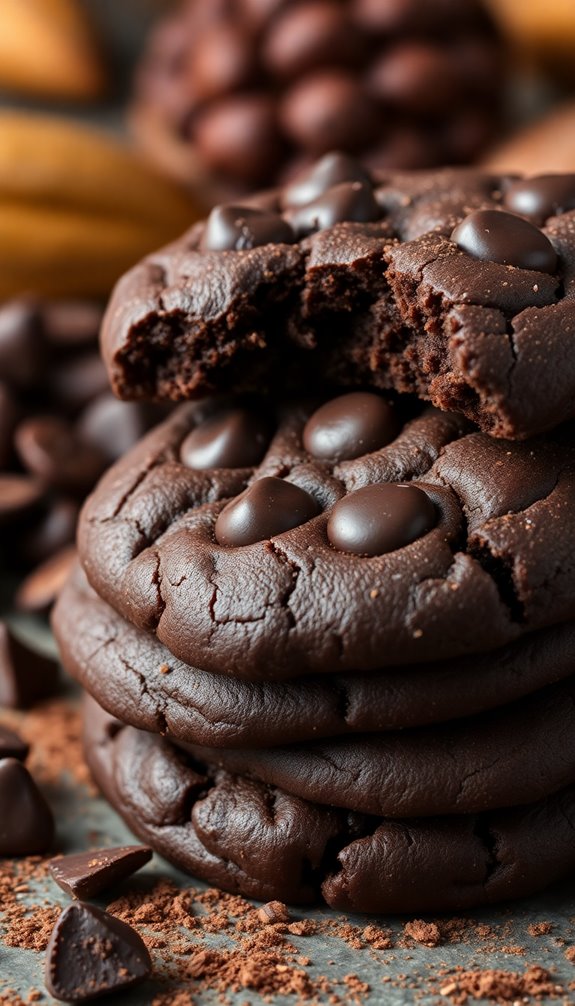
The richness of double chocolate chip cookies largely comes from the cocoa used in their creation. When choosing cocoa, consider its origins, as they play a crucial role in developing distinct flavor profiles. For instance, cocoa from Madagascar offers bright, fruity notes, while West African cocoa tends to have a deeper, earthier taste. You might also encounter Dutch-processed cocoa, which has a milder, smoother flavor due to its alkalization process. Each type of cocoa brings its unique characteristics, enhancing the overall experience of your cookies. By experimenting with different cocoa varieties, you can discover the perfect blend that complements the sweetness of chocolate chips and creates a decadent treat that’s truly unforgettable. Additionally, incorporating Grand Marnier into your cookie dough can add a delightful citrus undertone that elevates the chocolate flavors. Moreover, using light molasses can enhance the moisture and softness of your cookies, making them irresistibly chewy. Using high-quality dark chocolate chips alongside cocoa can further enhance the richness and provide a satisfying texture contrast in your cookies.
How Does Cocoa Powder Affect Cookie Texture?
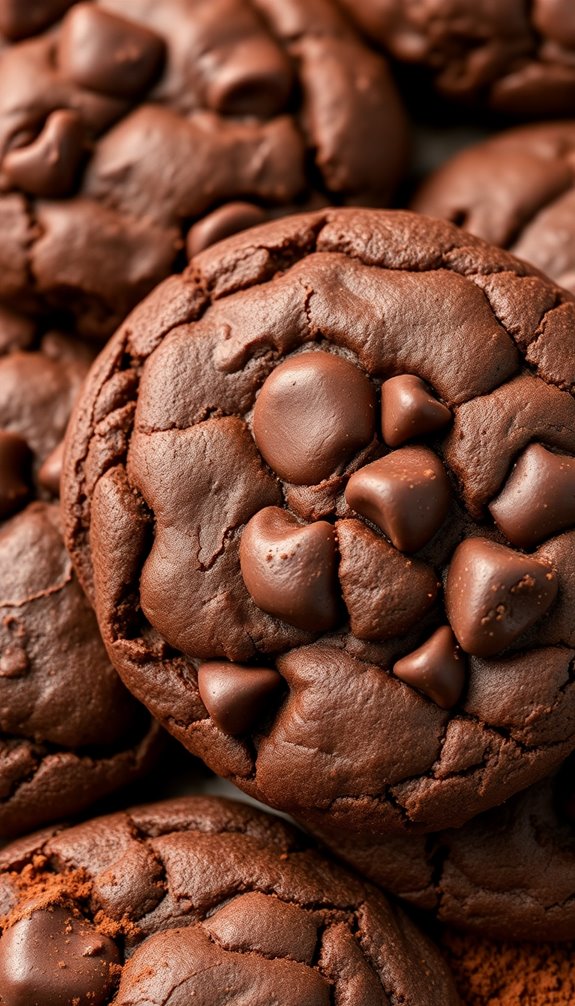
When you choose cocoa powder for your cookies, the type you pick can really change the texture.
Different cocoa powders absorb moisture differently, which affects how chewy or cakey your cookies turn out. Additionally, using browned butter can enhance the flavor profile and contribute to a more satisfying texture. This is because self-rising flour can simplify the baking process and help achieve the perfect balance of chewiness and fluffiness. Plus, the flavor depth and richness can enhance your overall cookie experience. Additionally, using organic all-purpose flour can complement the cocoa’s characteristics, leading to a more balanced cookie texture.
Cocoa Powder Types Impact
Although you mightn’t realize it, the type of cocoa powder you choose can considerably influence the texture of your double chocolate chip cookies.
Different cocoa varieties provide unique cocoa flavor profiles and impact the final texture in distinct ways. Here’s how:
- Natural Cocoa Powder: Offers a light, airy texture and a pronounced cocoa flavor but can lead to a drier cookie.
- Dutch-Processed Cocoa Powder: Creates a smoother, denser cookie with a milder cocoa flavor, resulting in a fudgier texture.
- Special Dark Cocoa Powder: Combines the best of both worlds, providing a rich cocoa flavor while keeping the cookie soft and chewy.
- Raw Cocoa Powder: Delivers a slightly gritty texture but enhances the overall depth of cocoa flavor.
Choose wisely to achieve your ideal cookie! Additionally, the chilling dough process can significantly enhance the texture and flavor of your cookies, making them even more delightful.
Moisture Absorption Characteristics
Cocoa powder’s moisture absorption characteristics play a significant role in shaping the texture of your double chocolate chip cookies.
It’s essential to achieve the right moisture balance; too much cocoa powder can lead to dry, crumbly cookies, while too little may result in a cake-like texture.
Cocoa powder has varying absorption rates depending on its fat content and processing method. Natural cocoa tends to absorb more moisture, which can enhance chewiness, whereas Dutch-processed cocoa might yield a softer cookie due to its lower absorption.
When you adjust your cocoa levels, keep an eye on the overall liquid ingredients to guarantee your cookies stay tender and rich.
Balancing these factors is key to achieving that perfect double chocolate chip cookie texture.
Flavor Depth and Richness
While you might think of cocoa powder primarily for its chocolate flavor, it also greatly impacts the overall depth and richness of your double chocolate chip cookies.
The right cocoa powder can enhance flavor intensity while maintaining a perfect chocolate balance. Here’s how it works:
- Cocoa Type: Dark cocoa adds a deeper, more robust flavor.
- Quantity: Using more cocoa can intensify the chocolate experience but may require adjustments in other ingredients.
- Quality: High-quality cocoa brings out rich, complex notes that elevate your cookies.
- Mixing Method: Incorporating cocoa properly can influence the texture, making your cookies fudgier or cakier.
Choosing the Right Chocolate Chips

When it comes to chocolate chips, the type you choose can make all the difference in your double chocolate chip cookies.
You’ll want to focus on quality over quantity to guarantee a rich, indulgent flavor.
Let’s explore the best options to elevate your baking game.
Types Of Chocolate Chips
Choosing the right chocolate chips can make all the difference in your double chocolate chip cookies. With so many options available, you’ll want to select the chips that best suit your taste and dietary preferences.
Here are four popular types to contemplate:
- Semi-sweet chocolate: Perfect for a classic cookie flavor, balancing sweetness and richness.
- Dark chocolate: Offers a deeper flavor and pairs well with the sweetness of the dough.
- White chocolate: Adds a creamy, sweet touch, though it lacks cocoa content.
- Vegan chocolate: A delicious alternative for those avoiding dairy, often made with organic ingredients.
Experiment with chocolate chunks or flavored chips to elevate your cookies even further!
Quality Over Quantity
Finding the right chocolate chips can truly elevate your double chocolate chip cookies, so it’s essential to prioritize quality over quantity.
When sourcing ingredients, consider using high-quality chocolate chips that enhance the overall flavor profile. Look for brands that use real cocoa and minimal additives. The richness of the chocolate directly impacts your cookie’s taste, so don’t skimp on this vital component.
Instead of tossing in a whole bag of generic chips, choose a smaller amount of gourmet options. Dark chocolate chips, for instance, can provide a deep, complex flavor that balances perfectly with the sweetness of the cookie.
Balancing Cocoa and Sugar for Flavor
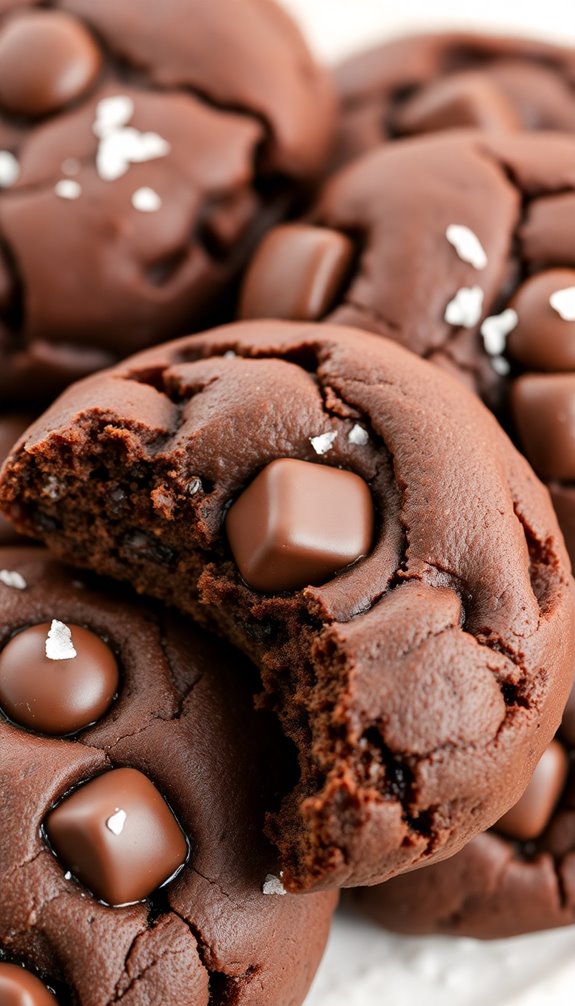
To achieve the perfect balance of cocoa and sugar in your double chocolate chip cookies, you need to understand how these ingredients interact. Cocoa adds depth and richness, while sugar brings out cocoa sweetness and enhances the overall flavor balance.
Achieving the perfect balance of cocoa and sugar enhances the richness and sweetness of your double chocolate chip cookies.
Here are four tips to help you master this harmony:
- Choose your cocoa wisely: Use high-quality cocoa powder for a more intense flavor.
- Adjust sugar levels: Experiment with different sugar ratios to find your ideal sweetness.
- Incorporate brown sugar: It adds moisture and a slight caramel flavor, complementing the cocoa.
- Taste as you go: Always sample your dough to guarantee it meets your flavor preferences.
Finding the right balance will elevate your cookies to new heights!
The Role of Butter in Cookie Texture
Butter plays an essential role in your cookie’s texture, contributing moisture that keeps them soft and chewy.
By adjusting the amount and technique of how you incorporate butter, you can create variations in texture that elevate your cookies.
Let’s explore how to master this key ingredient for the perfect double chocolate chip cookie.
Butter’s Moisture Contribution
In baking, the secret to achieving that perfect cookie texture often lies in the role of butter. The right butter type can greatly affect the moisture balance in your double chocolate chip cookies, leading to a delightful chewiness.
Here are some key points to contemplate:
- Salted vs. Unsalted: Unsalted butter gives you better control over flavor, while salted can add a nice contrast.
- Temperature Matters: Room temperature butter creams better, incorporating air for a lighter texture.
- Fat Content: High-fat butters contribute more moisture, enhancing richness.
- Melted vs. Softened: Melted butter can create denser cookies, while softened butter helps achieve a tender crumb.
Texture Variation Techniques
Achieving the desired texture in your double chocolate chip cookies involves more than just choosing the right kind of butter; it’s about how you manipulate it during the mixing process.
Start with softened butter for a creamy consistency, which helps create a thicker cookie. If you want a chewier texture, consider using melted butter instead; this will affect your cookie thickness and spread on the baking surface.
You can also experiment with chilling the dough, allowing the butter to solidify slightly, which leads to a denser cookie.
Ultimately, the way you handle the butter directly influences the final texture, so don’t hesitate to adjust your methods to get those perfect, chewy, and decadent double chocolate chip cookies.
How Does Egg Size Impact Your Cookies?
While you mightn’t think about it much, the size of the eggs you use can greatly impact your double chocolate chip cookies.
Egg size affects the moisture and fat content, which in turn influences the cookie structure. Here’s how:
- Large Eggs: Typically, recipes call for large eggs, balancing moisture and richness.
- Extra-Large Eggs: These can make your cookies more cakey due to added liquid, potentially changing the texture.
- Medium Eggs: Using these might lead to denser cookies, as they contain less moisture and fat.
- Small Eggs: If you opt for small eggs, your cookies may end up drier and less flavorful.
The Science of Baking Soda vs. Baking Powder
When you’re baking cookies, understanding the difference between baking soda and baking powder is essential.
These leavening agents work through unique chemical reactions, impacting your cookies’ texture in different ways.
Let’s explore how each one contributes to that perfect double chocolate chip cookie you crave.
Chemical Reactions Explained
Understanding the differences between baking soda and baking powder can greatly impact the outcome of your double chocolate chip cookies.
These leavening agents trigger chemical reactions that affect texture and rise, so it’s essential to know when to use each one. Here are some key points about their baking chemistry:
- Baking Soda: A base that needs an acid (like vinegar or yogurt) to activate and produce carbon dioxide.
- Baking Powder: Contains both an acid and a base, so it only requires moisture and heat to activate.
- Single-acting Powder: Reacts once when mixed with moisture, perfect for quick recipes.
- Double-acting Powder: Reacts twice, providing a better rise during baking.
These differences can make or break your cookie’s success!
Leavening Agent Differences
Baking soda and baking powder play distinct roles in the science of leavening your double chocolate chip cookies.
Baking soda, a pure alkaline compound, reacts with acidic ingredients in your dough, creating carbon dioxide that helps your cookies rise. This reaction can enhance flavor profiles, giving your cookies a slightly nutty taste.
On the other hand, baking powder contains both an acid and a base, allowing it to leaven without needing additional acidic ingredients. This means it can produce a more consistent cookie rise.
Understanding these leavening agents and their chemistry not only affects the texture effects of your cookies but also influences the overall taste experience, making your double chocolate chip cookies perfectly delicious every time.
Impact on Texture
The choice between baking soda and baking powder can greatly affect the texture of your double chocolate chip cookies. Each leavening agent contributes differently to the final product, impacting chewiness factors and creating a delightful texture contrast.
Consider these points:
- Baking Soda: It provides a quick rise and can lead to a chewier cookie due to its alkaline nature.
- Baking Powder: This adds a lighter texture, making cookies more cake-like, thanks to its dual-action leavening.
- Acidic Ingredients: Adding ingredients like yogurt or brown sugar can enhance the chewiness when using baking soda.
- Mixing Time: Over-mixing can deflate the air pockets, affecting texture; aim for just combined.
Choose wisely, and enjoy your deliciously textured cookies!
Mixing Techniques for Chewy vs. Crunchy Cookies
While mixing techniques might seem trivial, they play an essential role in determining whether your double chocolate chip cookies turn out chewy or crunchy.
To achieve that perfect chewiness, use chewy techniques like creaming the butter and sugar until light and fluffy. This method incorporates air, which helps create a tender texture.
On the other hand, if you’re aiming for crunchiness, opt for crunchy techniques such as mixing your dough minimally and using cold butter. This reduces air incorporation and results in a denser cookie.
Remember, the way you mix influences the final outcome, so choose your technique based on whether you crave a soft, gooey center or a satisfying, crispy bite.
Happy baking!
Chilling Dough: Why Does It Matter?
Chilling your cookie dough is essential if you want to enhance flavor and texture.
Chilling your cookie dough is crucial for enhancing both flavor and texture in your baked treats.
When you let your dough rest, you’re allowing the ingredients to meld, creating a richer taste. Plus, cooler dough helps control spreading during baking, giving you that perfect cookie shape.
Here are four reasons to chill your dough:
- Improved Flavor: The resting period intensifies flavors as the ingredients interact.
- Better Texture: Lower dough temperature results in a chewier, denser cookie.
- Controlled Spreading: Chilled dough spreads less, leading to thicker cookies.
- Easier Handling: Cold dough is firmer, making it easier to portion and shape.
Baking Times: Achieving the Perfect Finish
Achieving the perfect finish on your double chocolate chip cookies hinges on getting the baking time just right.
Start by preheating your oven to 350°F (175°C). Using proper baking techniques, place your dough on a lined baking sheet, leaving space for spreading.
Bake for about 10-12 minutes, but keep an eye on them. You’ll know they’re done when the edges are set, yet the centers appear slightly soft. This is essential for that gooey texture you crave.
Remember, cookies continue to cook on the baking sheet after you remove them from the oven. For ideal cookie doneness, let them cool for a few minutes before transferring to a wire rack.
Perfect timing makes all the difference!
Creative Variations of Double Chocolate Chip Cookies
If you’re looking to elevate your double chocolate chip cookies beyond the classic recipe, experimenting with creative variations can add a delightful twist. Here are some ideas to inspire you:
- Unique Mix-Ins: Try adding dried fruits like cherries or apricots for a sweet surprise.
- Gourmet Toppings: Finish your cookies with a sprinkle of sea salt or a drizzle of caramel for a luxurious touch.
- Vegan Alternatives: Substitute eggs with flaxseed meal and use dairy-free chocolate chips for a plant-based treat.
- Nutty Additions: Incorporate chopped nuts like walnuts or pecans for a satisfying crunch.
Don’t hesitate to explore flavor infusions, seasonal twists, and health-conscious swaps to make your cookies truly unique!
Common Mistakes to Avoid When Baking Cookies
When you bake cookies, even a small oversight can lead to disappointing results, so it’s essential to be mindful of common mistakes.
One major error isn’t letting your cookie dough chill properly. Chilling helps prevent spreading and enhances texture.
One crucial step in baking is chilling your cookie dough, which prevents spreading and improves texture.
Another mistake is ignoring the baking temperature; every oven is different. If your oven runs hot or cold, you might end up with overbaked or underbaked cookies. Always use an oven thermometer for accuracy.
Also, don’t skip measuring ingredients precisely; too much flour can make your cookies dry.
Finally, avoid overcrowding the baking sheet. Give each cookie enough space to spread and rise properly.
Storing Your Cookies for Freshness and Flavor
To keep your double chocolate chip cookies fresh and flavorful, proper storage is essential. Here are some tips to help you maintain their deliciousness:
- Use airtight cookie containers: Store your cookies in containers that seal tightly to keep air out, preventing them from becoming stale.
- Control humidity: Place silica gel packs or rice in your container to absorb excess moisture. This helps maintain the perfect texture.
- Separate flavors: If you have different types of cookies, store them separately to avoid flavor contamination.
- Refrigerate or freeze: For longer storage, consider refrigerating or freezing your cookies. Just make sure to use freezer-safe containers or bags for ideal freshness.
With these tips, you’ll enjoy your cookies at their best!
Conclusion
As you savor each bite of your double chocolate chip cookies, remember they’re more than just a treat—they’re a warm embrace of comfort and indulgence. The rich cocoa and melty chocolate chips symbolize the sweet moments in life, reminding you to cherish simplicity and joy. By mastering the art of these cookies, you’re not just baking; you’re crafting memories, one delicious cookie at a time. So, enjoy the process, and let each batch be a celebration of flavor!