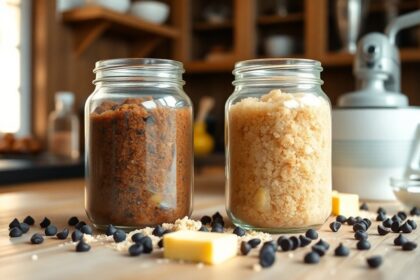
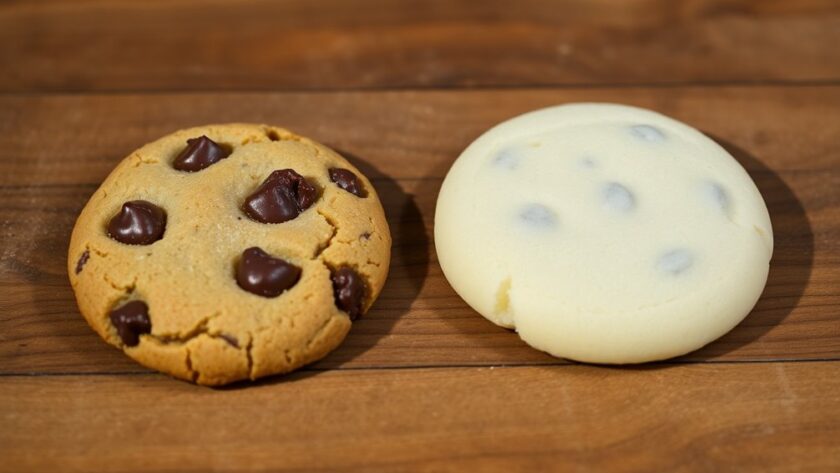
When you choose brown sugar, you get moist, chewy cookies thanks to its molasses content, which adds depth and keeps them soft. On the other hand, white sugar gives you a light, crisp finish with delightful crunch. Mixing both can enhance flavor and texture, offering a perfect balance. Understanding these differences can help you create your ideal cookie. There’s more to learn about the role of sugar in baking and how it affects your treats!
The Role of Sugar in Baking: A Foundation for Texture
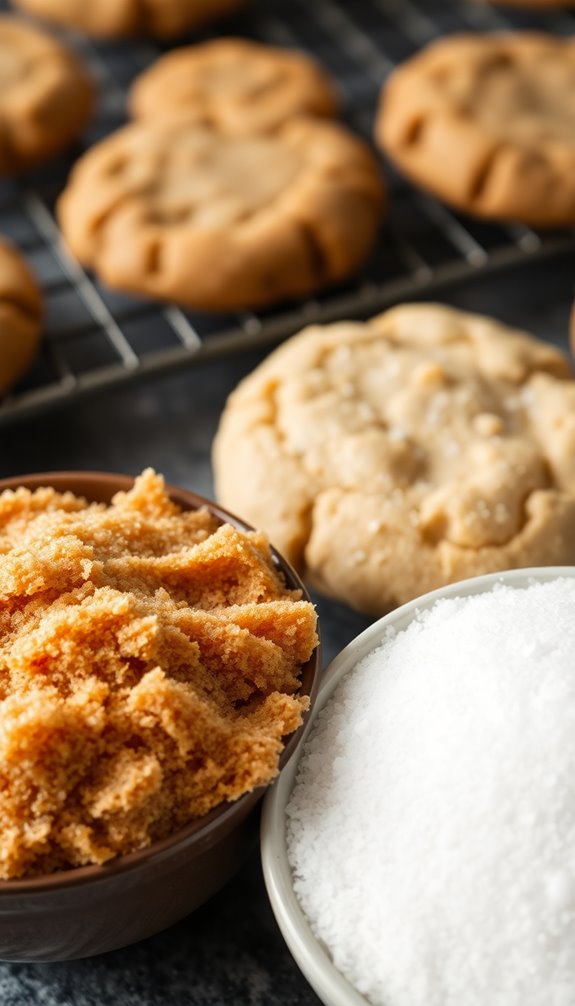
When you bake cookies, sugar plays an essential role in determining their texture. It’s one of the baking fundamentals that can make or break your treats. By using sugar, you’re not just sweetening your dough; you’re also enhancing its structure. Sugar helps to aerate the dough, creating a light and tender crumb. It also interacts with fats to improve texture, leading to a delightful contrast between crispy edges and soft centers. Natural sweeteners can also be used to replace traditional sugars, offering unique flavors and health benefits. The type of sugar you choose can also affect the overall calorie content, as sugar contributes significantly to the total calories in cookies. White sugar typically contributes to a crispier texture, while brown sugar adds moisture, affecting how your cookies spread during baking. Understanding these nuances allows you to make informed choices for texture improvement. Additionally, the type of sugar you choose can greatly influence the overall flavor and moisture content of your cookies. Experimenting with different sugars lets you find the perfect balance for your cookie creations.
How Brown Sugar Affects Cookie Moisture and Chewiness
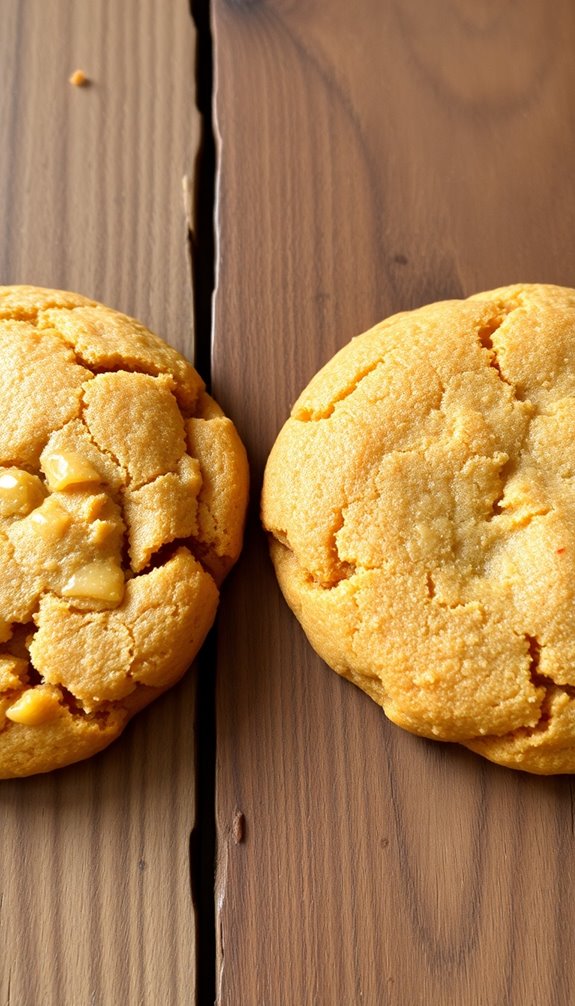
Since brown sugar contains molasses, it greatly affects cookie moisture and chewiness. This ingredient helps maintain a perfect moisture balance in your cookies, preventing them from drying out during baking. The added moisture creates that soft, pliable texture you crave. When you use brown sugar, you’re also enhancing the chewiness factor, giving your cookies that delightful, satisfying bite. The combination of sugar and molasses works together to trap moisture, so your cookies stay fresher longer. If you prefer a chewy cookie that’s rich in flavor, brown sugar is the way to go. Additionally, substituting brown sugar with granulated sugar can lead to a lighter, crispier texture in your cookies. Just remember, the more brown sugar you include, the more pronounced these effects will be, resulting in cookies that are irresistibly soft and chewy. Cookies made without brown sugar can still achieve a soft, chewy texture by using granulated sugar and accurate baking times. Furthermore, old-fashioned rolled oats can enhance the chewiness and nutritional value of your cookies, making them even more satisfying.
The Crispiness Factor: What White Sugar Brings to the Table
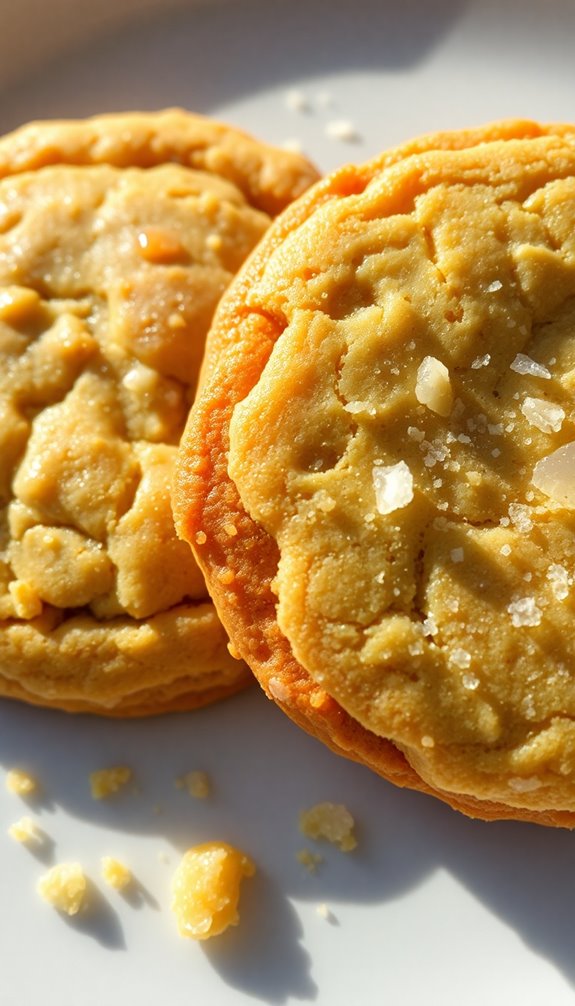
While brown sugar is known for its moist and chewy cookies, white sugar plays an essential role in achieving that perfect crispiness. When you use white sugar, you’re enhancing the crispiness levels of your cookies, giving them that delightful crunch you crave.
This happens because white sugar dissolves faster during mixing, leading to a more even distribution throughout the dough. The sugar reactions that occur during baking create a caramelization effect, which contributes to that golden-brown exterior. Additionally, baking at the right temperature is crucial for achieving the desired texture. Using browned butter in your cookie recipe can also enhance the overall flavor profile, making the crispiness even more enjoyable.
Plus, the lack of molasses in white sugar helps prevent excess moisture, ensuring your cookies stay light and crispy. If you’re aiming for that ideal texture, don’t underestimate the power of white sugar in your cookie recipes! Additionally, incorporating a 50/50 mix of light brown sugar and granulated sugar can further enhance the flavor and texture of your cookies.
Swapping Sugars: What Happens When You Replace One With the Other?
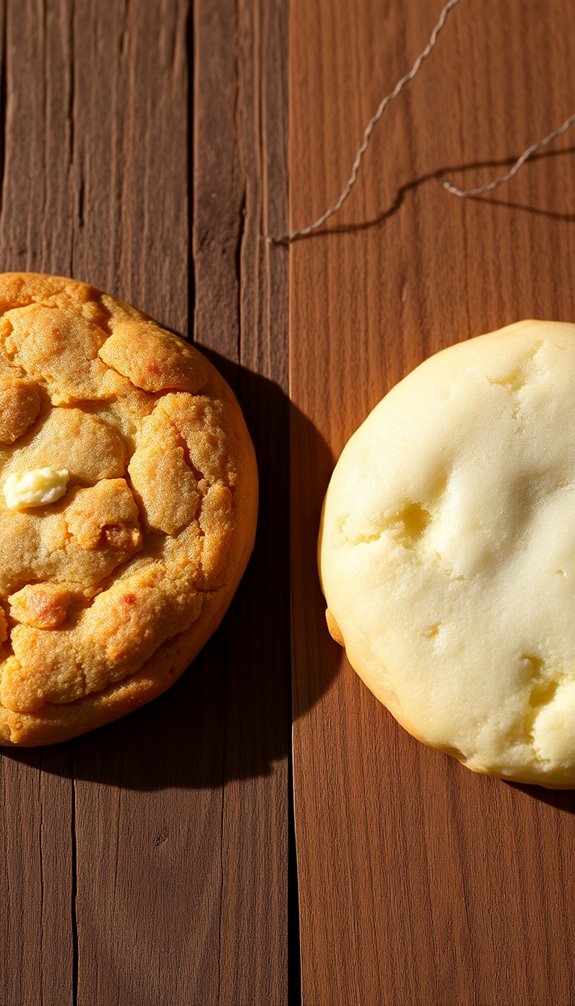
When you swap brown sugar for white sugar in your cookie recipe, you’re changing more than just the color.
Each type of sugar has a unique composition that affects moisture retention and flavor.
Understanding these differences can help you achieve the cookie texture and taste you desire. Additionally, incorporating accurate measurements when using different sugars is crucial to ensuring your cookies maintain their intended texture.
Sugar Composition Differences
Swapping brown sugar for white sugar in cookie recipes can lead to noticeable differences in texture and flavor. The two sugar types differ mainly in their chemical structure.
Brown sugar contains molasses, which adds moisture and a hint of caramel flavor, while white sugar is more refined and has a higher sweetness balance. When you replace one with the other, you’ll alter the cookie’s structure.
For instance, using brown sugar often results in a chewier texture due to its moisture content, whereas white sugar can create a crispier cookie. Understanding these sugar composition differences helps you achieve the desired cookie outcome, whether you prefer a soft, chewy treat or a crunchy delight.
Moisture Retention Impact
Replacing brown sugar with white sugar in your cookie recipe greatly impacts moisture retention.
Brown sugar contains more moisture, thanks to its molasses content, which leads to higher moisture absorption during baking. This extra moisture not only keeps your cookies softer but also contributes to a chewy texture.
When you swap in white sugar, you reduce that moisture retention, resulting in a drier cookie with less density. Consequently, your cookies may spread more and become crispier, losing that rich, chewy quality you might love.
If you want a denser cookie, consider keeping some brown sugar in your mix to maintain that essential moisture balance. Your cookie experience will change considerably based on your sugar choice!
Flavor Profile Variations
Although many people focus on texture, the flavor profile of your cookies can change dramatically depending on whether you use brown sugar or white sugar.
When you swap brown sugar for white, you’ll notice a shift in flavor intensity. Brown sugar, with its molasses content, adds a deeper, richer taste, while white sugar provides a clean, sweet flavor.
This difference affects the ingredient balance in your cookies, emphasizing sweetness versus complexity. If you’re aiming for a more robust flavor experience, brown sugar is your best bet.
On the other hand, if you prefer a classic, straightforward sweetness, white sugar fits the bill. The choice you make directly influences how your cookies taste, so consider what you want to achieve!
Flavor Differences: Brown vs. White Sugar in Cookies
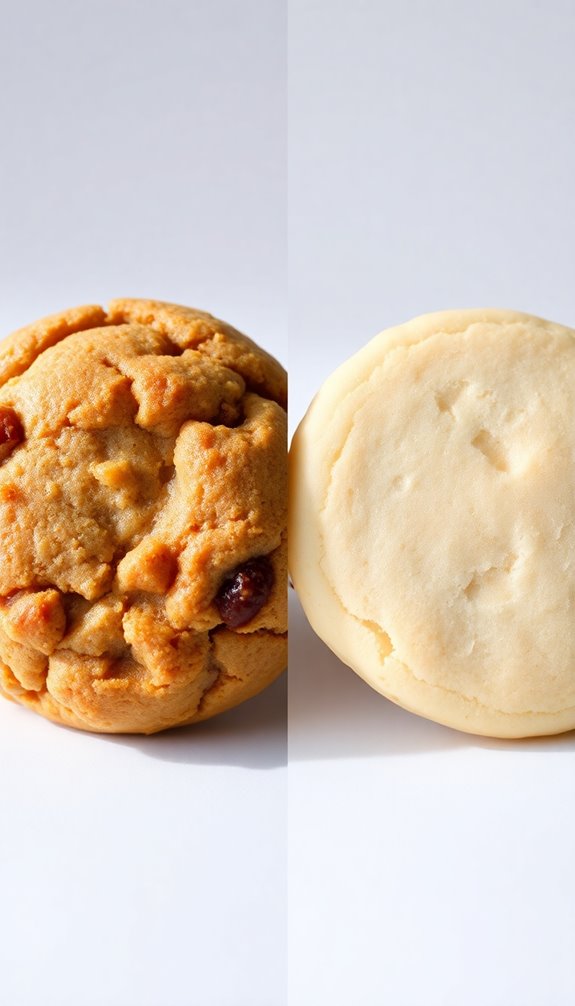
When you bake cookies, the type of sugar you choose can greatly impact their flavor.
Brown sugar adds a rich, caramel note, while white sugar contributes a cleaner sweetness.
Understanding these flavor differences can help you decide which sugar will best suit your cookie cravings.
Flavor Profile Comparison
The choice between brown sugar and white sugar can greatly impact the flavor of your cookies. Brown sugar adds rich, caramel-like taste nuances due to its molasses content, enhancing the depth of flavor. This makes it an excellent match for ingredients like chocolate or spices, creating a more complex cookie profile.
On the other hand, white sugar delivers a cleaner, straightforward sweetness that allows other flavors to shine through without distraction. If you’re looking for a cookie with a light, crisp texture and pure sweetness, white sugar might be your best bet.
Ultimately, considering ingredient compatibility is key; think about how each sugar interacts with other components to achieve your desired flavor outcome.
Sweetness Level Differences
While both brown sugar and white sugar provide sweetness, they differ in intensity and how they interact with other flavors in cookies.
In a sweetness comparison, brown sugar offers a more robust flavor, thanks to its molasses content, which can enhance the overall taste of your cookies. This added depth often appeals to those with a taste preference for richer, more complex flavors.
On the other hand, white sugar delivers a cleaner, straightforward sweetness that allows other ingredients, like chocolate or vanilla, to shine through.
Depending on your desired flavor profile, you might choose one over the other. Ultimately, experimenting with both can help you discover which sweetness level best suits your cookie cravings.
Tips for Using Sugar Substitutes in Cookie Recipes
Using sugar substitutes in cookie recipes can be a game-changer for those looking to reduce sugar intake without sacrificing flavor.
When choosing sugar alternatives, consider options like stevia, erythritol, or coconut sugar, which can enhance cookie healthiness. Remember that these substitutes often have different sweetness levels, so you might need to adjust the amounts. For instance, stevia is much sweeter than sugar, so use it sparingly.
Additionally, sugar alternatives can affect texture; for instance, cookies made with erythritol may be slightly drier. To keep your cookies chewy, consider blending sugar substitutes with a bit of brown sugar.
Experimenting with these tips can lead you to delicious, healthier cookies that still satisfy your sweet cravings!
Choosing the Right Sugar for Your Perfect Cookie Batch
Which type of sugar will give your cookies that ideal taste and texture? When it comes to cookie baking, the choice between brown and white sugar can make a huge difference.
Brown sugar adds moisture and chewiness, while white sugar gives your cookies a crispier edge. If you’re aiming for soft and gooey cookies, opt for brown sugar. For a lighter, crumbly texture, white sugar is your best bet.
Brown sugar brings moisture and chewiness, while white sugar creates a crispier edge—choose based on your desired cookie texture!
Don’t forget about sugar alternatives! They can also play a role in your cookie’s outcome. For example, using coconut sugar or agave can add unique flavors and textures.
Experimenting with different sugars lets you find the perfect balance for your cookie cravings. So, choose wisely and enjoy the delicious results!
Conclusion
When it comes to baking cookies, your choice of sugar can make all the difference. Did you know that cookies made with brown sugar can retain moisture up to 30% longer than those made with white sugar? This means you’ll enjoy chewier treats that stay fresh longer. Whether you prefer the rich flavor of brown or the crispness of white, understanding how each affects your cookies will help you create the perfect batch every time. Happy baking!