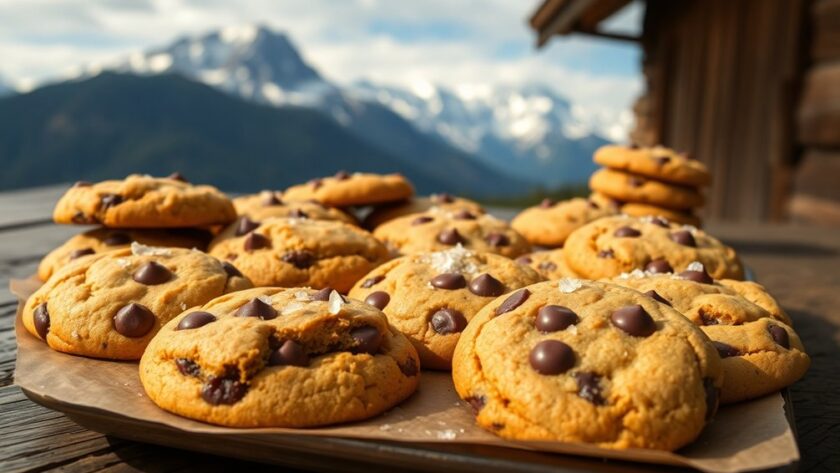
Baking at high altitude means adjusting your chocolate chip cookie recipe for the best results. Increase your flour by 1-2 tablespoons and reduce sugar slightly to maintain structure. Chill your dough for about 25 minutes to control spread, and extend your baking time by 1-2 minutes. Aim for pale cookies with set edges and slightly underdone centers. For more tips on achieving that perfect chewy texture, keep exploring the adjustments you can make.
A Perfect Cookie for High Altitude
When baking at high altitude, you’ll need to make some key adjustments to achieve that perfect cookie. For your chocolate chip cookies, start by increasing the flour by 1-2 tablespoons and reducing the sugar to prevent excessive spreading. Adding gluten-free flour can also help in maintaining the right texture for those who prefer gluten-free options. Additionally, consider using nutrient-rich flours such as almond or coconut flour for added health benefits.
Chilling the dough for at least one hour is essential; it controls how much the cookies spread while baking, resulting in a better texture. Consider adding cornstarch to enhance chewiness and maintain softness.
Using a mix of dark brown sugar and granulated sugar not only improves flavor but also adds moisture, thanks to the caramel notes from the brown sugar. Additionally, incorporating high-protein cookies can provide a nutritious boost to your baking, ensuring that you indulge without compromising your health goals.
Finally, remember to extend baking times by 1-2 minutes to guarantee your cookies are fully baked without becoming dry or crisp.
Ingredients
To create high-altitude chocolate chip cookies, you’ll need a handful of key ingredients that work together to guarantee a delicious result.
Start with 1 cup of softened butter, 1 cup of dark brown sugar, and 1/2 cup of granulated sugar for moisture and flavor balance. Incorporate 2 3/4 cups of all-purpose flour and 2 tablespoons of cornstarch to achieve that perfect chewy texture while ensuring stability at high elevations. Traditional desserts like Kransekake often rely on similar principles of ingredient balance for successful outcomes, much like the sponge cake layers in classic Italian desserts.
Don’t forget 1 teaspoon of salt and 1/2 teaspoon of baking soda—they’re essential for enhancing flavor and proper leavening. Add 2 eggs and 2 tablespoons of milk to keep your cookies soft.
For the chocolate, mix dark and milk chocolate chunks, reserving some for a beautiful topping. The chocolate chip cookie’s invention in 1938 by Ruth Graves Wakefield has paved the way for countless variations and adaptations of this beloved treat.
Instructions
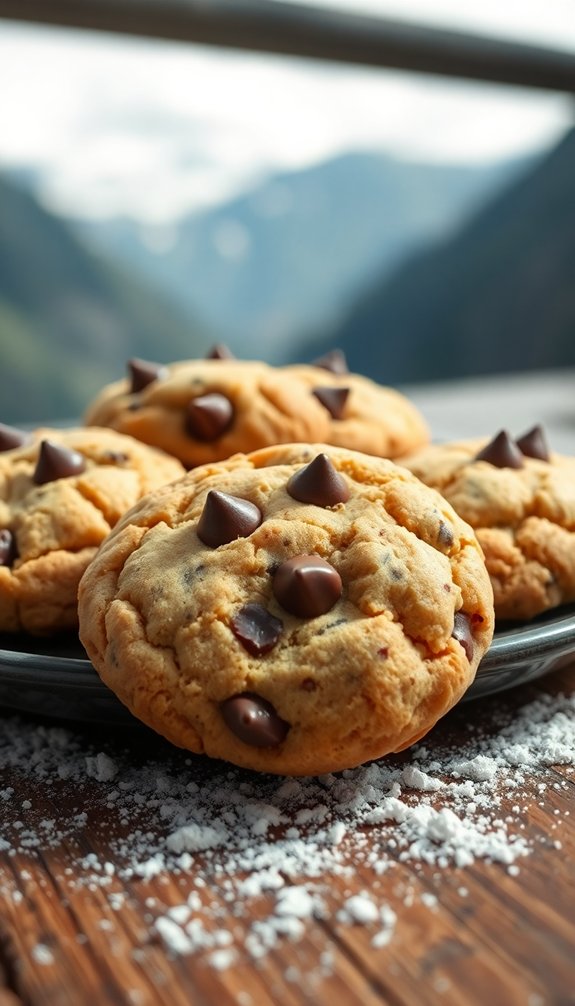
When you’re ready to bake, remember that chilling the dough is key for achieving the perfect cookie shape. This step helps control spreading, especially at high altitudes. Also, keep an eye on your baking time; you might need to adjust it based on your specific elevation for that ideal chewy texture. Additionally, using gluten-free ingredients can enhance the overall quality of your cookies while catering to those with dietary restrictions. To further improve flavor and texture, consider incorporating nutrient-dense snacks like vegan chocolate chips or nuts into your dough. Incorporating gluten-free flour options can provide a unique texture and flavor profile that elevates your cookie experience.
Chilling Dough Importance
Chilling your cookie dough is crucial for achieving the perfect balance of texture and flavor. When you refrigerate the dough for at least one hour, it helps control spread during baking, ensuring your cookies maintain their shape.
For high-altitude baking, chilling dough for exactly 25 minutes strikes the ideal balance of softness and spread. This step reduces the risk of flat cookies, which often result from excess moisture and sugar content.
Additionally, allowing the dough to rest enhances the flavors, creating a richer taste in your final cookies. Most importantly, chilled dough contributes to that desired chewy texture, making your cookies soft and enjoyable with every bite.
Baking Time Adjustments
Baking cookies at high altitudes requires some adjustments to make sure they come out perfectly. You might need to extend the baking time by 1-2 minutes to make certain your high altitude cookies are fully baked, especially in the center.
Keep a close eye on them, as lower air pressure can speed up the baking process. Aim for cookies that are pale with set edges and slightly underdone centers since they’ll firm up as they cool.
If you’re baking above 5,000 feet, reduce your baking powder or soda by 1/4 teaspoon per teaspoon to prevent excessive spreading.
Always test a small batch first to find the ideal baking time that works for your oven and altitude conditions.
Recipe Variations
You can easily customize your high-altitude chocolate chip cookies by experimenting with different chocolate types and adding nuts for extra crunch. Try incorporating espresso powder or seasonal flavors like crushed peppermint to elevate your cookie experience. Festive cookie decorations can also enhance the visual appeal of your creations. Adjusting flour and sugar levels will also help you achieve the perfect texture and spread. Additionally, consider using alternative sweeteners to make your cookies diabetic-friendly without sacrificing flavor. For a healthier twist, you can substitute refined sugar with natural sweeteners like honey or maple syrup to enhance both taste and nutrition.
Nut Variations
Nuts can elevate your high-altitude chocolate chip cookies by adding a delightful crunch and enhancing their flavor. Chopped pecans, walnuts, or macadamia nuts not only provide texture but also contribute unique taste notes.
Toasting the nuts before mixing them into the dough can intensify their flavor, giving you a richer experience. To keep the cookie balance, reduce the amount of chocolate chips slightly when adding nuts.
For a creative twist, try combining different nuts with crushed candies like peppermint or toffee; this will create a varied texture and taste in each bite.
Just remember to keep the total weight of added ingredients within recommended proportions to avoid issues with spreading and texture. Enjoy experimenting!
Chocolate Types
Choosing the right chocolate can truly transform your high-altitude chocolate chip cookies. Experimenting with different chocolate types can enhance flavor and texture.
Consider using a mix of dark, milk, and white chocolate for a delightful variety. Dark chocolate is particularly great due to its rich taste and lower sugar content, which helps prevent spreading.
Instead of standard chocolate chips, try chopped chocolate bars; they melt more evenly, giving your cookies a gooey center. For an added depth, include a touch of espresso powder to amplify the chocolate flavor without overpowering it.
Don’t forget to reserve some chocolate pieces to press into the tops of your cookies before baking—this adds an appealing finish and an extra burst of chocolate in every bite!
Flavor Enhancements
While experimenting with flavor enhancements can elevate your high-altitude chocolate chip cookies, there are several variations to contemplate that can truly make them stand out.
Try adding 1-2 teaspoons of espresso powder to deepen the chocolate flavor without overpowering it. Incorporating chopped nuts like pecans or walnuts not only adds delightful crunch but also enhances the overall flavor profile.
Don’t shy away from different types of chocolate—dark, milk, or white—each brings a unique taste experience. For a festive twist, mix in crushed peppermint candy or sprinkle it on top before baking.
Finally, a pinch of spices like cinnamon or nutmeg can introduce warmth, perfectly complementing the sweetness of your cookies. Enjoy experimenting!
Common Baking Challenges
Baking at high altitudes presents unique challenges that can frustrate even seasoned bakers. One common issue you’ll face is that cookies spread uncontrollably, turning into thin and flat discs instead of puffy delights.
This often happens due to too much sugar and too little flour, so you’ll need to reduce sugar and adjust flour proportions in your chocolate chip cookie recipes. Additionally, chilling your dough for too long can hinder proper spreading, while excess flour can lead to dense, dry cookies. Incorporating wholesome ingredients like oats can also help improve texture and flavor, while ensuring the right balance of flour and sugar creates a stable structure.
Don’t forget to extend your baking time by 1-2 minutes at elevations above 5,000 feet to achieve the right texture and doneness. Balancing fat content by using a mix of butter and shortening can help maintain cookie shape. For those with dietary restrictions, consider using gluten-free flour blends to ensure a great texture while accommodating different needs.
Tips for Freezing Chocolate Chip Cookies
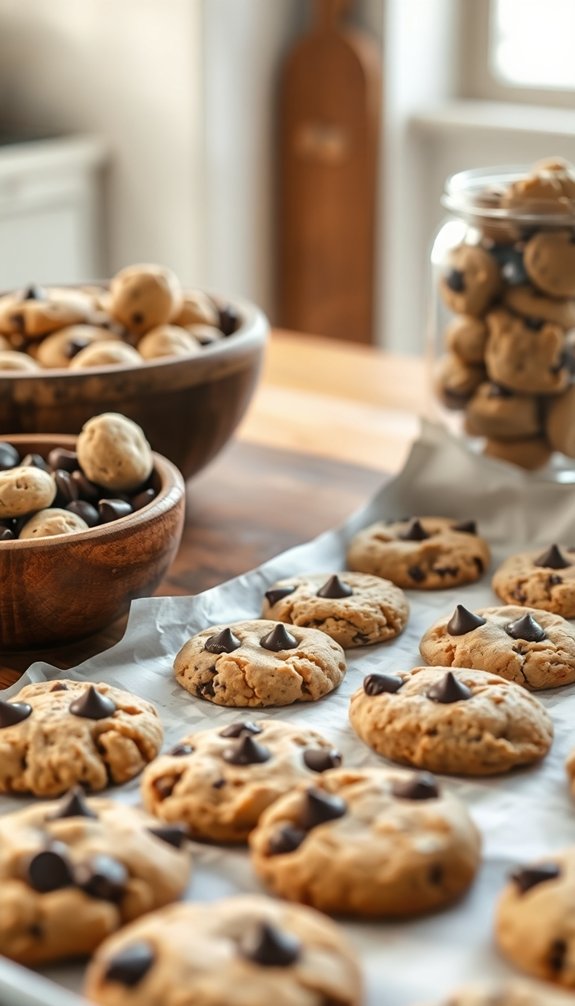
Freezing chocolate chip cookies is a simple way to enjoy fresh-baked treats anytime you crave them.
First, make sure your cookies are completely cool to prevent freezer burn. Place them in an airtight container or zip-top bag, ensuring you remove as much air as possible.
For best results, freeze cookie dough balls on a baking sheet before transferring them to bags; this allows you to bake them directly from the freezer.
When you’re ready to bake, remember to add an extra 1-2 minutes to the baking time. You can store your cookies in the freezer for up to 3-6 months, preserving their delicious flavor and texture.
For quick thawing, let frozen cookies sit at room temperature for 10-15 minutes before enjoying.
User Experiences and Success Stories
Those who’ve tackled high-altitude chocolate chip cookies often share inspiring stories of their baking triumphs.
Many users report success at elevations above 7,000 feet, where cookies stay soft and delicious despite the challenges.
Bakers from Colorado and New Mexico highlight effective adjustments, like reducing sugar and increasing flour, which prevent cookies from flattening.
Community members proudly share their adaptations, resulting in fluffy cookies that earn rave reviews from family and friends.
Users express gratitude for the recipe creator’s guidance on high-altitude baking, noting how chilling time and ingredient tweaks made all the difference.
Many find joy in returning to baking, as these adjustments restore their confidence and enthusiasm in the kitchen, transforming their cookie-making experience into a series of success stories.
Expert Baking Techniques
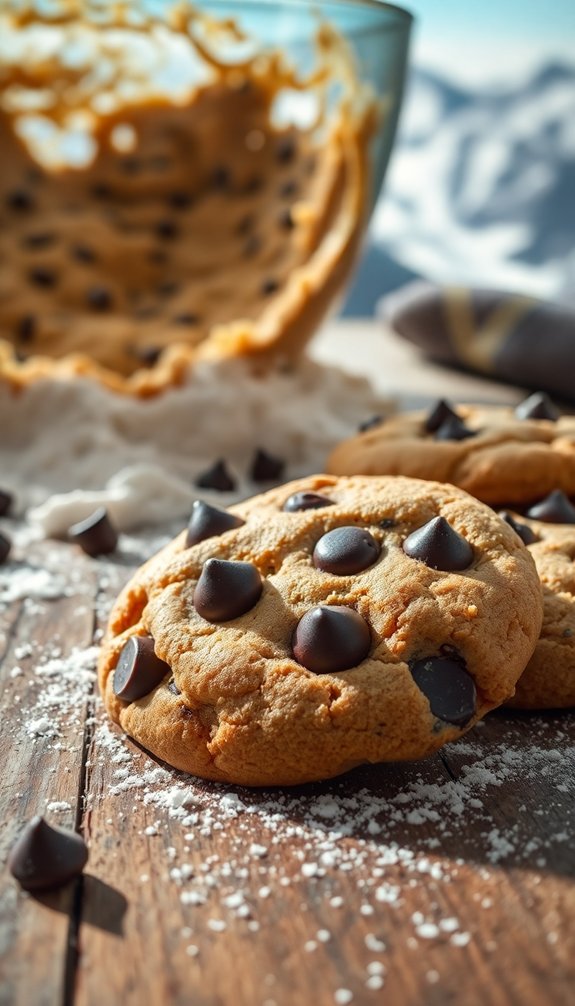
Many bakers have discovered that mastering high-altitude chocolate chip cookies requires specific techniques to achieve the best results.
Start by reducing sugar by 1-2 tablespoons and increasing flour by the same amount to prevent excessive spreading. Incorporating cornstarch into the dough is key for a chewy texture and helps keep your cookies soft.
Don’t skip chilling the dough for at least an hour; this controls spreading and enhances flavor. Remember to monitor baking times closely, as you may need to add 1-2 minutes at higher altitudes to reach that perfect texture.
Finally, using a mix of dark brown sugar and granulated sugar boosts moisture and richness, making your high-altitude chocolate chip cookies truly irresistible.
Conclusion
So, remember, baking high-altitude chocolate chip cookies is like climbing a mountain: it takes some preparation and adjustments, but the view from the top is worth it. Just like reaching the summit, with the right ingredients and techniques, you’ll achieve chewy, golden-brown cookies that melt in your mouth. So, roll up your sleeves, embrace the challenge, and enjoy the sweet rewards of your hard work. After all, every great baker has a mountain to conquer!