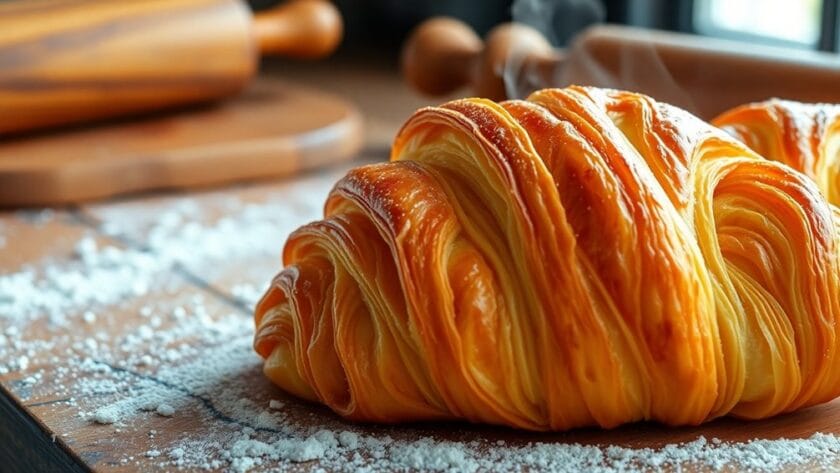
To craft authentic French croissants with flaky layers, start with high-quality ingredients like European-style butter and fresh yeast. Master the lamination technique by folding butter into rolled dough multiple times, ensuring proper chilling between each fold. Shape your croissants by rolling triangles and allowing them to proof until doubled in size. Bake at 400°F (200°C) until golden brown, and you’ll achieve that irresistible texture. Keep going, and you’ll uncover more tips to perfect your croissant-making skills!
Understanding the Basics of Croissant Making
Making croissants is a rewarding journey into the world of baking. To truly appreciate this flaky pastry, you should understand its rich history and cultural significance.
Originating in Austria, the croissant was inspired by the kipferl before it made its way to France, where it evolved into the beloved version we recognize today. As you immerse yourself in croissant making, you’ll uncover layers of tradition intertwined with French culinary artistry. Each fold and roll is a nod to centuries of craftsmanship, reflecting the pastry’s role in French culture as a symbol of indulgence and sophistication. Embracing this process not only enhances your baking skills but also connects you to a time-honored tradition cherished by many around the world. Additionally, understanding the difference between crescent dough and puff pastry can further enrich your appreciation of this intricate process, including the importance of lamination techniques for achieving that signature flaky texture. The butter layering technique is crucial for creating the desired flaky layers and contributes significantly to the overall texture and taste of the croissant.
The Importance of Quality Ingredients for Croissants
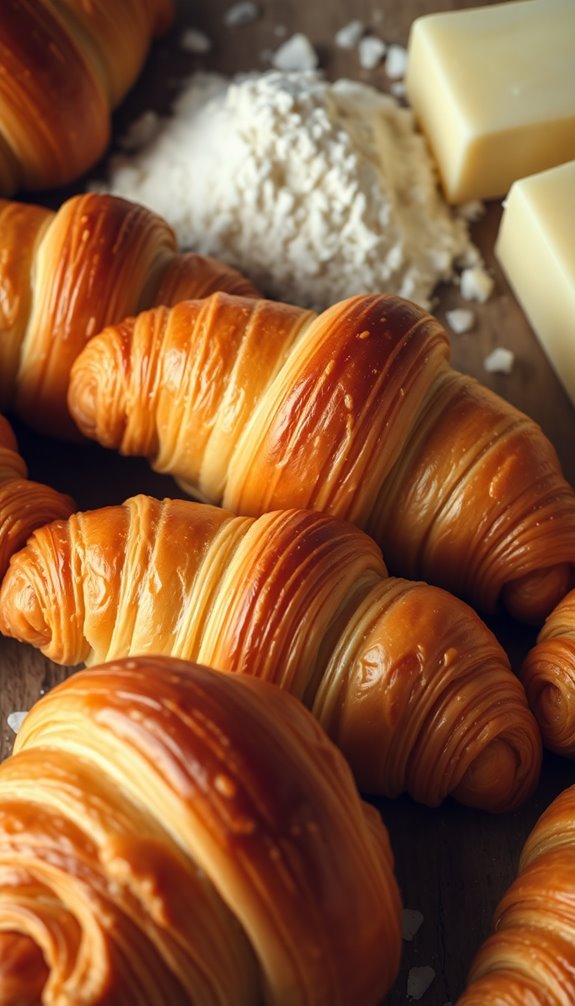
When you’re making croissants, the quality of your ingredients can make all the difference. Choosing the right flour, high-quality butter, and fresh yeast is essential for achieving that perfect flaky texture and rich flavor. Let’s explore how each of these elements plays a significant role in your croissant success. Additionally, the lamination process is crucial for creating the flaky layers that define a true croissant. Using high-quality European-style butters with at least 82% butterfat enhances both flavor and texture in your pastries. Moreover, using cold butter and milk helps maintain the ideal dough temperature, which is critical for proper lamination.
Flour Type Matters
To achieve the perfect croissant, selecting the right flour is essential. The flour protein content directly affects your dough’s structure and elasticity. A higher protein flour, like bread flour, provides strength, while lower protein flour, such as pastry flour, offers tenderness. Additionally, the laminated dough process used in croissant preparation highlights the importance of flour quality.
Consider flour types that balance protein and hydration for an ideal texture. Proper flour sourcing is vital; look for fresh, high-quality options to enhance flavor. Additionally, using fresh ingredients can elevate your baking experience and improve the final product. Don’t forget about flour storage—keep it in a cool, dry place to maintain its quality. If you’re feeling adventurous, try flour blending to create a unique blend that suits your taste.
Each choice you make will impact the flaky layers and overall success of your croissants. Happy baking!
Butter Quality Counts
While it may be tempting to use any butter for your croissants, the quality of the butter you choose plays an essential role in achieving that signature flaky texture and rich flavor. High-fat butter types, like European-style, are your best bet. They contain around 82% fat, which helps create those beautiful layers. Lower-fat butters might lead to a denser outcome.
Don’t overlook butter temperature, either. Cold butter is vital for laminating effectively; it keeps its structure while you fold it into the dough. If the butter warms up too much, it can blend into the dough, losing that flaky goodness you’re aiming for. Proper conditioning of the butter is critical for achieving flakiness in croissants.
Fresh Yeast Importance
Fresh yeast is a powerhouse ingredient that can make or break your croissant dough. Its benefits include faster fermentation and a richer flavor, giving your croissants that authentic taste you crave.
Unlike active yeast alternatives, fresh yeast offers a unique, vibrant lift to your dough, ensuring those flaky layers rise beautifully. When you mix fresh yeast into your ingredients, you’re setting the stage for a light and airy texture that’s hard to achieve with dried options.
Plus, it contributes to the overall complexity of flavor, making each bite irresistible. So, don’t skimp on this essential ingredient; the quality of your croissants hinges on it.
Invest in fresh yeast, and you’ll elevate your baking to a whole new level.
Mastering the Lamination Technique for Perfect Layers
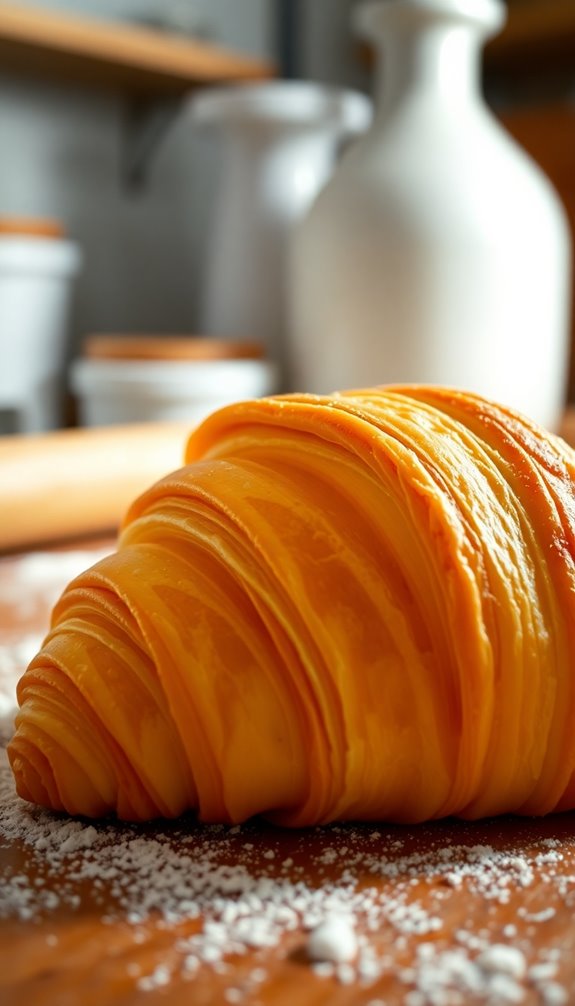
To achieve those flaky layers in your croissants, mastering the lamination technique is key.
You’ll need to focus on essential ingredients and follow a step-by-step process to get it just right.
Plus, we’ll highlight common mistakes so you can avoid them and create perfect croissants every time.
Essential Ingredients Overview
Creating the perfect croissant starts with understanding the essential ingredients that contribute to its flaky layers. You’ll want high-quality butter for that rich flavor, but if you’re seeking butter alternatives, options like margarine can work, though they won’t provide the same taste.
For yeast substitutes, you might try sourdough starter, which adds complexity. Proper dough hydration is essential; aim for a balance that keeps your dough pliable without being sticky. Don’t forget flavor enhancements like a touch of sugar or salt.
Mastering your rolling techniques will guarantee even layers, and adhering to recommended proofing times will help achieve that airy texture. Each element plays a significant role in crafting croissants that are both delicious and beautifully layered.
Step-By-Step Process
Mastering the lamination technique is essential for achieving those perfect flaky layers in your croissants. Start with your dough, rolling it out into a rectangle.
Place a cold, solid block of butter in the center and fold the dough over it, sealing the edges. Now, roll it out again to create layers, folding it in thirds. This process is key to the croissant history, as it creates the signature flakiness that varies regionally.
Repeat this folding and rolling process multiple times, chilling the dough in between to keep the butter firm. As you finish, shape your croissants and let them rise.
The result? Irresistible layers that pay homage to centuries of French baking tradition. Enjoy!
Common Mistakes Avoided
While perfecting the lamination technique, you might find yourself making common mistakes that can sabotage your croissant’s flaky layers.
Overmixing dough can lead to a tough texture, while improper folding prevents those beautiful layers from forming. Pay attention to the temperature; if it’s too warm or too cold, your butter won’t create the right effect.
Inadequate resting between folds is another pitfall—you need that time for the gluten to relax. Don’t overlook proofing; insufficient proofing means your croissants won’t rise properly.
Ultimately, the wrong baking time can ruin your hard work, either leaving them doughy or burnt. By avoiding these mistakes, you’ll get closer to that perfect, airy croissant you crave.
Step-by-Step Guide to Making Croissant Dough
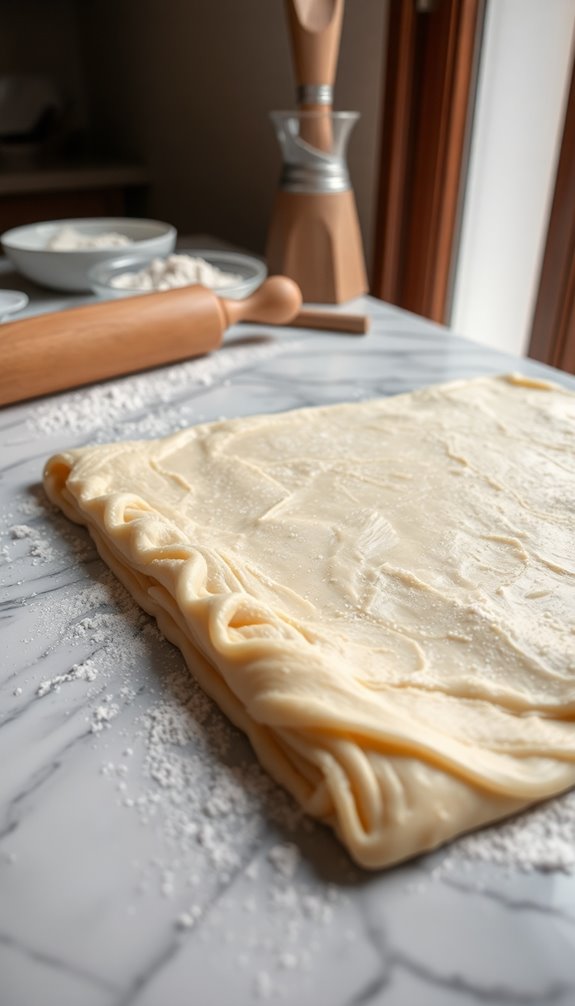
Making croissant dough might seem intimidating, but with a few simple steps, you can achieve bakery-quality results at home.
Start by mixing flour, water, yeast, sugar, and salt until combined. Knead the dough until smooth, then let it rest. This resting period is essential, as it helps develop gluten, a technique rooted in croissant history.
While traditional French croissants are iconic, remember that regional variations exist, offering unique twists.
Next, roll out the dough and incorporate cold butter, folding it multiple times to create those irresistible layers. Chill the dough between folds to maintain the butter’s firmness.
This attention to detail is what sets your croissants apart, ensuring they’ll be flaky and delicious when baked.
Shaping and Proofing Your Croissants Like a Pro
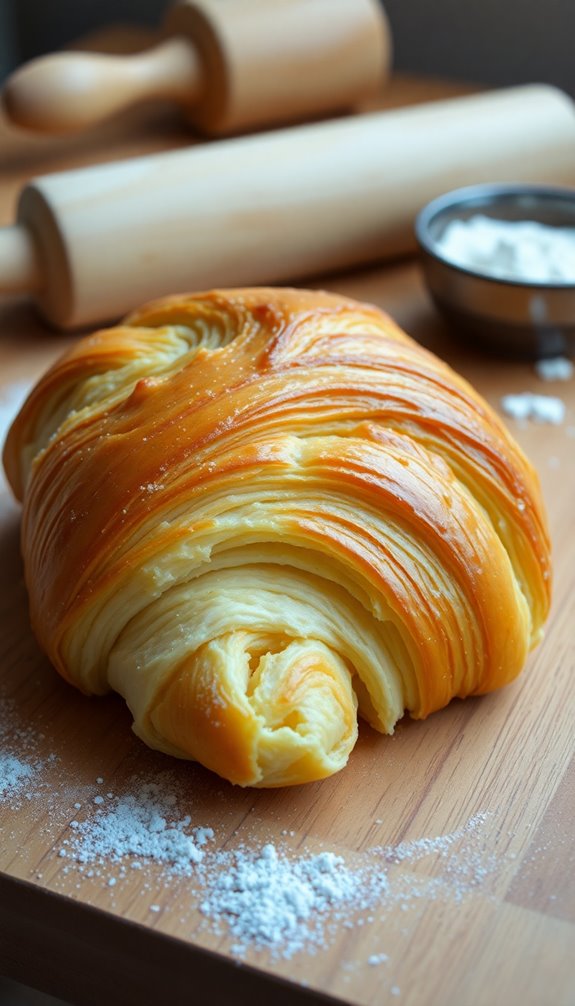
After you’ve created your croissant dough and let it rest, the next step is to shape and proof your croissants to achieve that perfect flaky texture.
Mastering these techniques is essential for a successful bake. Follow these steps:
- Roll Out: Lightly flour your surface and roll the dough into a large rectangle.
- Cut Triangles: Slice the dough into triangles for classic croissant shapes.
- Shape: Use proper shaping techniques by rolling from the wide end to the tip, tucking the tip underneath.
- Proof: Use gentle proofing methods, like letting them rise in a warm place, until they’ve doubled in size.
Baking Tips for Achieving Golden, Flaky Perfection
To achieve that perfect golden, flaky croissant, it’s essential to pay attention to your baking environment and techniques.
Start by preheating your oven to the right baking temperature; around 400°F (200°C) works wonders. This high heat helps create steam, which is vital for that flaky texture you crave.
Place your croissants on a parchment-lined baking sheet, ensuring they’ve enough space to expand. Bake until they’re beautifully golden brown, usually about 15-20 minutes. Keep an eye on them, as every oven varies!
For an extra touch, brush the tops with an egg wash before baking. This not only enhances color but also adds a lovely sheen.
With these tips, you’ll be well on your way to croissant perfection!
Troubleshooting Common Croissant-Baking Mistakes
Even the most experienced bakers can encounter hiccups when making croissants. To help you achieve flaky perfection, here are some common mistakes to watch for:
- Overproofing Issues: If your croissants puff up too much before baking, they might collapse in the oven. Keep an eye on proofing time; they should double in size, not triple.
- Dough Temperature: If your dough gets too warm during lamination, it can become unmanageable. Always keep your butter and dough cool to guarantee proper layering.
- Insufficient Lamination: Make sure to roll and fold your dough enough times to create those beautiful layers.
- Baking Temperature: A too-low oven temperature can lead to dense croissants. Preheat your oven to a high temperature for the best rise.
Conclusion
Now that you’ve mastered the art of croissant making, it’s time to enjoy the fruits of your labor. Picture biting into a warm, flaky croissant that shatters like glass, revealing those beautiful layers inside. With quality ingredients and a little practice, you’ll impress friends and family alike. So roll up your sleeves, embrace the process, and savor each buttery bite. Happy baking, and may your kitchen be filled with the delightful aroma of fresh croissants!