To avoid ruining your desserts, start by measuring ingredients accurately, as precision plays a vital role in baking success. Don’t skip preheating your oven, and always choose the right pan size for your recipe. Be mindful of mixing times—overmixing can toughen your baked goods. Keep an eye on baking times to prevent underbaking or overbaking. Finally, let flavors develop and adjust for humidity. You’ll uncover more essential tips that can elevate your baking game.
Not Measuring Ingredients Accurately
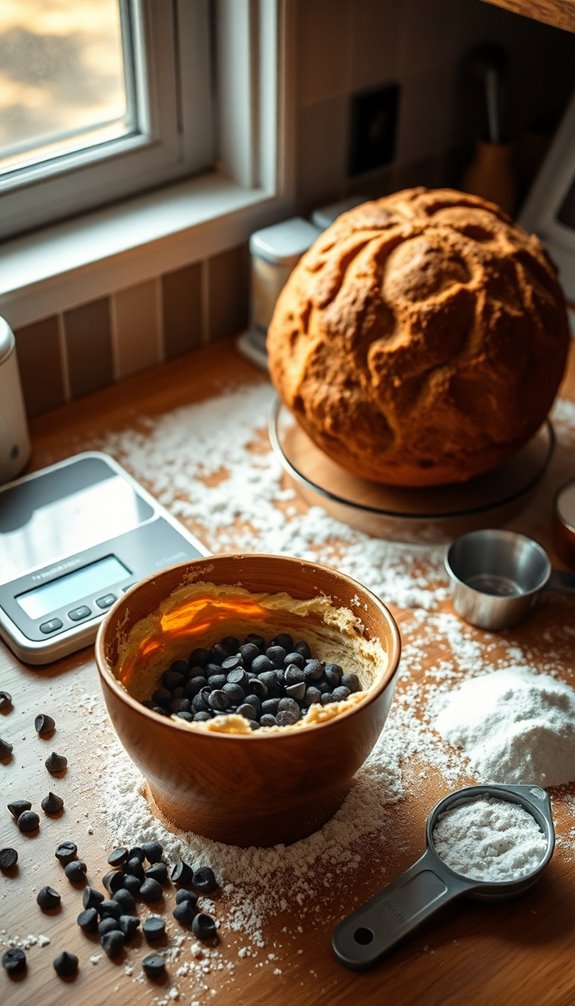
When you bake, measuring ingredients accurately is essential; if you don’t, your results can vary dramatically. Using the right measuring tools, like dry measuring cups for solids and liquid measuring cups for liquids, guarantees you get the correct amounts. Remember that ingredient conversions can also be tricky—what works for one recipe mightn’t for another. For instance, when substituting flour types, you might need to adjust the quantity. Even slight discrepancies can lead to cookies that spread too thin or cakes that don’t rise properly. To avoid these pitfalls, always level off dry ingredients and use a kitchen scale for precision. Taking the time to measure accurately will make a noticeable difference in your baking outcomes, especially when working with accurate flour measurement. Additionally, using the right type of measuring cups can help ensure that you achieve the correct ingredient ratios for optimal results. Using browned butter in your recipes can also enhance the flavor, making precise measurements even more critical.
Skipping the Preheating Step
When you skip preheating your oven, you’re setting yourself up for baking challenges. It can throw off your baking time and lead to uneven results. Let’s explore why preheating is an essential step you shouldn’t overlook. Proper preheating ensures that your cookies, such as classic chocolate chip cookies, bake evenly and achieve the desired texture and flavor. Additionally, starting with a properly heated oven helps to create the right texture by solidifying the fat quickly, which is crucial for maintaining cookie shape during baking. This is especially important when using bread flour for enhanced chewiness, as it relies on the right temperature to develop its structure effectively.
Importance Of Preheating Ovens
Although it might seem like a time-saver, skipping the preheating step can lead to disappointing baking results. Proper oven temperature is essential for achieving the desired texture and flavor of your desserts.
When you don’t preheat, the oven starts cold, causing your treats to bake unevenly. This can ruin delicate baking techniques, like achieving a perfect rise in cakes or crispness in cookies. Accurate measurements of ingredients are crucial to prevent issues with texture and consistency. Additionally, without proper oven temperature, baked goods may not spread as intended, resulting in denser textures.
Ingredients like baking soda and baking powder rely on precise temperatures to activate properly, so without preheating, you risk flat, dense results. Additionally, the almond sponge used in recipes like Opera Gateau requires a consistent temperature for that light, airy perfection.
To guarantee success, always allow your oven to reach the required temperature before placing your baked goods inside. Trust me; your desserts will thank you for it!
Effects On Baking Time
Skipping the preheating step can greatly alter baking times, leading to unpredictable results. When you don’t preheat your oven, your baked goods may not rise properly or cook evenly.
It’s essential to understand how this affects your baking, especially if you’re using baking temperature adjustments or recipe scaling techniques. Here are some effects of skipping preheating:
- Longer baking times may result in uneven textures.
- Your cake might sink in the middle.
- Cookies could spread too much or not at all.
- Bread may develop a dense crust.
- Muffins might turn out gummy inside.
Additionally, for recipes like Almond Extract Infused Oatmeal Cookies, the balance of flavors can be compromised if baking doesn’t start at the right temperature.
To guarantee success, always preheat your oven for the recommended time before baking. This simple step sets the stage for perfect desserts every time.
Common Misconceptions Explained
Why do so many home bakers believe they can skip preheating without consequences? This is one of the biggest baking myths out there.
Preheating your oven isn’t just a suggestion; it’s crucial for achieving the right texture and flavor in your desserts. When you skip this step, ingredients don’t interact properly.
For instance, baking powder needs heat to activate, while butter’s role in creating a fluffy texture is compromised if it doesn’t melt at the right temperature. If you start baking in a cold oven, you risk uneven baking and undercooked centers.
Always preheat to guarantee your ingredients perform their roles effectively and deliver the delicious results you’re aiming for. Don’t let misconceptions ruin your baking adventures!
Using the Wrong Pan Size
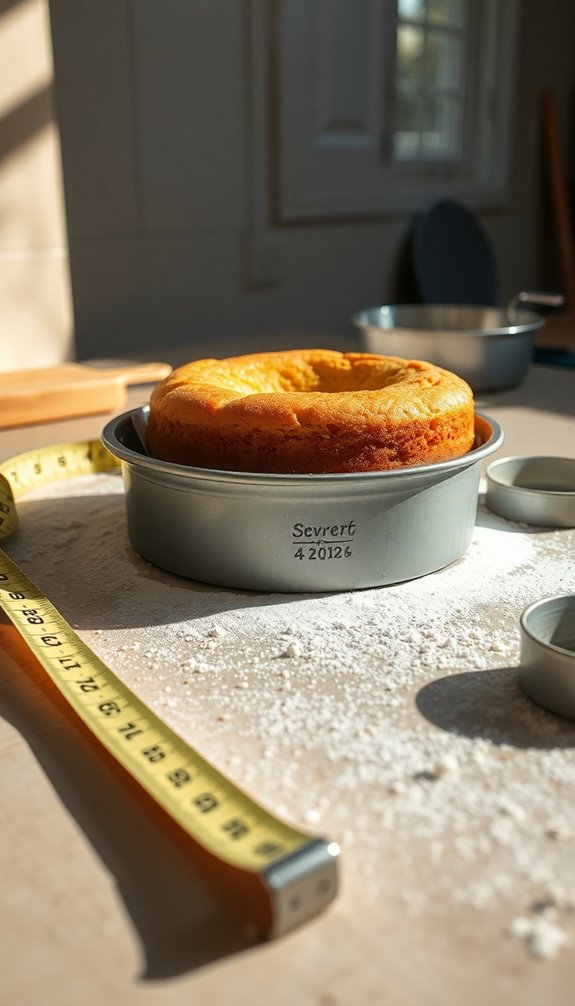
Using the wrong pan size can throw off your baking time and lead to uneven results.
If you choose a pan that’s too small or too large, you might find your cake undercooked or burnt.
It’s essential to adjust your recipe proportions accordingly to avoid these common pitfalls.
Impact on Baking Time
When you choose the wrong pan size, it can greatly affect your baking time and the final outcome of your dish. A smaller pan can lead to quicker baking, while a larger one may leave your dessert undercooked.
Here are some tips to help you navigate this issue:
- Always check your recipe for pan size recommendations.
- Adjust baking temperatures as needed: decrease for larger pans, increase for smaller ones.
- Monitor baking time closely, especially if you swap pans.
- Use a toothpick to test for doneness: it should come out clean.
- Be cautious with ingredient substitution tips, as they can also impact baking time.
Choosing the right pan size can save you time and guarantee delicious results!
Adjusting Recipe Proportions
If you don’t adjust your recipe proportions when switching pan sizes, you might end up with a dish that’s either over or underwhelming.
The size of your pan directly affects how your dessert cooks, so it’s essential to modify your ingredient ratios accordingly. For instance, if you’re using a smaller pan, you’ll need to reduce the amount of batter to prevent overflow and guarantee even baking.
On the other hand, a larger pan requires more batter to achieve the desired thickness. Always keep an eye on baking times too, as they can vary considerably with different sizes.
Overmixing Batter or Dough
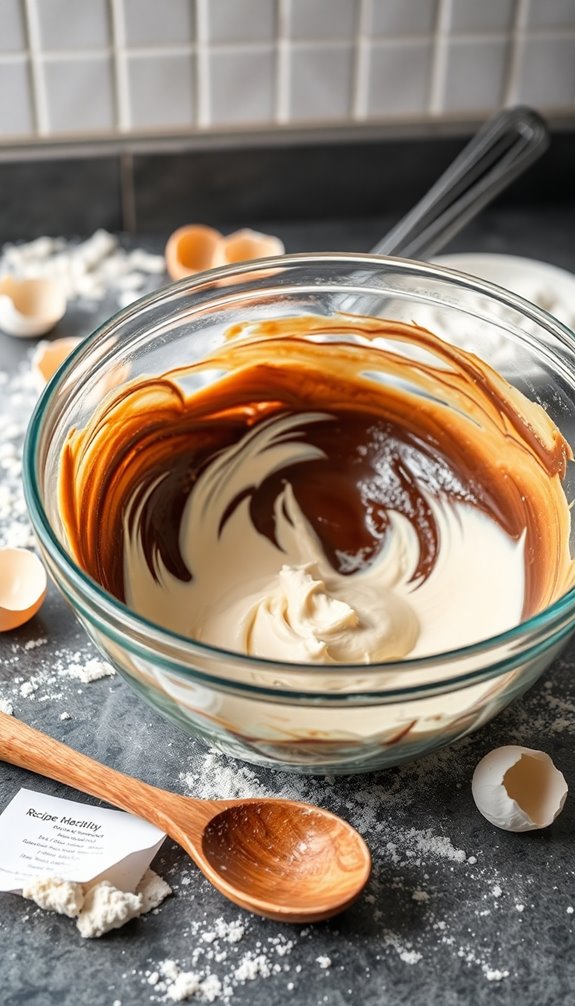
Although it might seem harmless to mix your batter or dough until it’s completely smooth, doing so can lead to tough and dense baked goods.
Overmixing develops gluten, which increases dough elasticity and negatively impacts your baking texture.
Here are some tips to prevent overmixing:
- Mix just until ingredients are combined.
- Use a rubber spatula for gentle folding.
- Stop mixing as soon as you see no dry flour.
- For muffins or quick breads, lumps are okay.
- Allow the batter to rest briefly before baking.
Underbaking or Overbaking
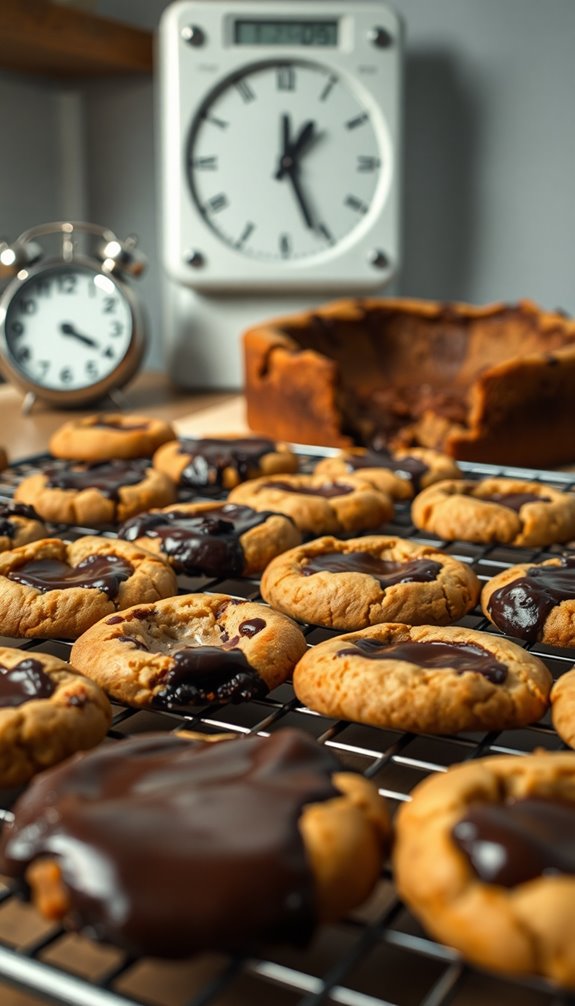
Whether you’re aiming for a perfectly baked cake or chewy cookies, underbaking or overbaking can ruin your efforts.
Getting the baking temperature right is vital; too low can leave your treats doughy and raw, while too high can dry them out or burn the edges. You’ll notice significant texture differences between a properly baked dessert and one that’s been mishandled.
Getting the baking temperature just right is crucial; too low results in doughy treats, while too high leads to dryness and burnt edges.
To avoid these pitfalls, always follow the recipe’s recommended baking time and temperature closely. Invest in an oven thermometer to guarantee accuracy, as many ovens can be off.
If you suspect underbaking, insert a toothpick; it should come out clean or with a few moist crumbs. For overbaking, keep a close eye in the last few minutes.
Your desserts will thank you!
Ignoring Ingredient Temperature
When you ignore ingredient temperature, you risk compromising the texture and flavor of your baked goods. Different recipes call for specific ingredient temperatures to guarantee ideal baking outcomes.
For example, cold butter won’t cream well, leading to dense cookies. Here are some common ingredients and their ideal temperatures:
- Butter: Should be at room temperature for creaming.
- Eggs: Use room temperature eggs for better emulsification.
- Milk: Warm milk helps activate yeast in bread dough.
- Flour: Sifting flour at room temperature can improve texture.
- Chocolate: Melted chocolate should cool slightly before mixing.
Paying attention to ingredient temperature can make a significant difference in your baking results, elevating your desserts from good to great!
Not Reading the Recipe Thoroughly
When you skip reading the recipe thoroughly, you risk missing important steps and ingredient roles.
Preparation is key in baking, and understanding how each component works together can make or break your dish.
Importance Of Preparation
Although many new bakers plunge into a recipe with excitement, failing to read it thoroughly can lead to avoidable mistakes. Proper preparation is essential for successful baking, so take time to focus on ingredient organization and recipe planning.
Here are some tips to help you prepare effectively:
- Read the recipe completely: Understand each step before starting.
- Gather all ingredients: Verify you have everything on hand.
- Measure ingredients accurately: Use the right tools for precision.
- Preheat the oven: This guarantees even baking from the start.
- Prepare your workspace: A clean, organized area can boost efficiency.
Understanding Ingredients’ Role
Understanding the role of ingredients is essential for successful baking. Each component in your recipe plays a specific part in the baking chemistry, affecting the texture, flavor, and overall outcome of your dessert.
For instance, flour provides structure, while sugar adds sweetness and moisture. If you skip or substitute ingredients without understanding their interactions, you might end up with a dense cake or flat cookies.
Reading the recipe thoroughly helps you grasp these ingredient interactions, ensuring you use them correctly. Pay attention to measurements and methods, as they’re vital for achieving the desired results.
When you respect the science behind baking, you’ll improve your skills and create desserts that impress. So, take the time to understand what each ingredient does!
Substituting Ingredients Improperly
Many beginner bakers make the mistake of substituting ingredients without considering their specific roles in a recipe. This can lead to poor ingredient consistency and disrupt the flavor balance.
Here are some common pitfalls to avoid:
- Using baking soda instead of baking powder: They’re not interchangeable; it alters texture.
- Swapping unsweetened cocoa for Dutch-process cocoa: This can change the acidity and flavor.
- Replacing all-purpose flour with whole wheat flour: It can make your dessert denser.
- Using margarine instead of butter: This affects taste and moisture levels.
- Substituting cream with milk: Your dessert may turn out less rich and creamy.
Always research substitutions to guarantee your baked goods come out as delicious as intended!
Forgetting to Grease or Line Pans
When you plunge into baking, forgetting to grease or line your pans can lead to disaster, as nothing’s more disappointing than a beautifully baked cake that stubbornly clings to the pan.
To avoid this, always follow some essential greasing tips: use butter, shortening, or non-stick spray to coat the pan generously.
For a more foolproof method, lining alternatives like parchment paper or silicone baking mats work wonders. Cut the paper to fit the base, and don’t forget to grease it slightly as well.
This simple step can save you from a messy cleanup and guarantee your baked goods release effortlessly.
Baking at the Wrong Altitude
Baking can become a tricky endeavor if you’re at a high altitude, as the lower air pressure affects how your ingredients behave.
To achieve sweet success, you need to make some altitude adjustments to your baking techniques. Here are a few tips to help you:
- Increase oven temperature by 15-25°F to help your baked goods rise properly.
- Reduce sugar by 1-2 tablespoons, which can help prevent excess browning.
- Decrease baking powder by 1/8 teaspoon per teaspoon to avoid over-leavening.
- Add more liquid to counteract evaporation; try an extra tablespoon or two.
- Adjust baking time, as items may cook faster at higher elevations.
With these tweaks, you’ll master high-altitude baking in no time!
Not Sifting Dry Ingredients
Even the simplest recipes can falter if you skip sifting your dry ingredients. Sifting isn’t just a fancy technique; it helps aerate flour and remove lumps, ensuring your baked goods rise properly.
Different flour types, like all-purpose or cake flour, may vary in texture and moisture, so sifting them can create a more consistent blend.
To sift effectively, you can use a fine-mesh sieve or a sifter, letting gravity do the work. If you’re in a rush, whisking your dry ingredients together can serve as a quick alternative, but it’s not quite as thorough.
Opening the Oven Door Too Often
Sifting your dry ingredients sets the stage for a successful bake, but once your batter is in the oven, it’s important to resist the urge to check on it too often.
Each time you open the oven door, you disrupt the oven temperature, which can lead to uneven baking. This can ruin your desserts and leave you frustrated.
To improve your baking techniques and avoid this mistake, keep these tips in mind:
- Use the oven light to check on progress.
- Set a timer to remind you when to check.
- Trust your recipe’s baking times.
- Rotate your pans only if necessary.
- Allow your desserts to cool in the oven after baking.
Stay patient, and your desserts will turn out beautifully!
Using Expired Leavening Agents
Using expired leavening agents can sabotage your baking efforts, as they lose their potency over time.
If you’re relying on expired baking powder or old yeast, your cakes and breads mightn’t rise as they should. Baking powder typically lasts about six months after opening, while dry yeast can last up to a year if stored properly.
Check the expiration dates on the packaging before you start baking. If you’re unsure about your yeast’s shelf life, you can test it by dissolving a bit in warm water with sugar; if it bubbles, it’s still good.
Don’t let expired leavening agents ruin your desserts—always use fresh ingredients for the best results.
Happy baking!
Not Monitoring Baking Time
When you’re baking, keeping an eye on the timer is essential.
Missing the right baking time can lead to undercooked or overdone treats, ruining your hard work.
Learn the signs of doneness to perfect your timing and achieve the best results.
Importance Of Baking Timers
A reliable baking timer is an essential tool in any kitchen, ensuring your creations come out perfectly every time.
Whether you’re a novice or an experienced baker, using the right baking timer types can make a significant difference. Here’s why setting timers is vital:
- Prevents overbaking or underbaking
- Helps in achieving consistent results
- Allows multitasking without losing focus
- Encourages precision in your recipes
- Reduces stress during the baking process
With various baking timer types available, from digital to smartphone apps, you can easily find one that suits your style.
Signs Of Doneness To Watch
While timers are helpful, knowing the signs of doneness in your baked goods is just as essential. Pay attention to the baking aromas wafting through your kitchen; a rich, inviting scent often indicates that your dessert is nearing completion.
For cakes, gently press the center with your finger; it should spring back without leaving an indentation. In the case of cookies, look for a golden-brown edge with a slightly soft center.
For brownies, a toothpick test works wonders—aim for a few moist crumbs sticking to it. Observing these dessert textures can save you from underbaking or overbaking.
Trust your senses, and you’ll master the art of perfectly baked treats!
Storing Ingredients Incorrectly
Many beginner bakers overlook the importance of proper ingredient storage, which can lead to disappointing results.
Understanding ingredient shelf life is essential for maintaining freshness and flavor. Using the right container types can make a significant difference in your baking success.
Here are some tips to help you store your ingredients correctly:
- Keep flour in an airtight container to prevent moisture.
- Store sugar in a cool, dry place to avoid clumping.
- Refrigerate eggs and dairy to extend their shelf life.
- Use glass or metal containers for spices to keep them potent.
- Label containers with dates to track freshness.
Not Following Cooling Instructions
Failing to follow cooling instructions can turn a promising bake into a disappointing mess. When you take your dessert out of the oven, it’s tempting to dig in right away, but that’s a mistake.
If you don’t use cooling racks, your treats can become soggy and lose their desired dessert texture. Instead of letting steam escape, they’ll trap moisture, leading to that dreaded sogginess.
By placing your cakes or cookies on cooling racks, you allow air to circulate, ensuring they cool evenly. This simple step preserves the integrity of your dessert, keeping it light and delicious.
Ignoring Kitchen Equipment Limitations
When you ignore the limitations of your kitchen equipment, you risk compromising your baked goods. Understanding kitchen tool limitations is essential for successful baking.
Using the wrong tools can lead to uneven mixing, incorrect temperatures, and ultimately, failed desserts. Confirm your equipment is compatible with your recipes by considering the following:
Using improper tools can result in uneven mixing and baking failures; ensure your equipment matches your recipes for the best results.
- Use a scale for precise measurements.
- Choose the right mixer for your batter’s consistency.
- Verify your oven temperature is accurate with an oven thermometer.
- Select bakeware that distributes heat evenly.
- Don’t overfill your pans to allow for proper rising.
Baking in a Humid Environment
Baking in a humid environment can throw a wrench in your plans, as excess moisture in the air affects ingredients and their behavior.
The humidity effects can lead to sticky doughs and overly moist batters, making it hard to achieve the perfect texture. To combat this, you’ll need to make some ingredient adjustments.
For instance, reduce the amount of liquid in your recipes or increase the flour slightly to absorb extra moisture. Also, consider adding a bit of cornstarch to your dry ingredients, which can help stabilize your batter.
Keep an eye on your baked goods while they’re in the oven, as they may require different baking times in humid conditions.
Happy baking!
Using the Wrong Type of Flour
Choosing the right type of flour is essential for achieving the desired texture and structure in your baked goods. Using the wrong flour can lead to disappointing results, so keep these tips in mind:
Selecting the appropriate flour is crucial for the perfect texture and structure in your baking endeavors.
- All-purpose flour is versatile but may not suit specific recipes.
- Bread flour has a higher protein content, perfect for yeast breads.
- Cake flour yields tender cakes due to its lower protein.
- Whole wheat flour adds nutrition but can make dense baked goods.
- Gluten-free and specialty flours require careful substitutions to maintain texture.
Remember to store your flour properly to avoid spoilage.
Understanding flour substitutions can help you adapt your recipes, ensuring you get the best outcome every time you bake!
Overloading Your Baking Sheet
Overloading your baking sheet can lead to uneven cooking and soggy results.
It’s crucial to know your baking sheet’s capacity to guarantee everything bakes evenly.
When you overcrowd, you risk ruining your hard work and delicious ingredients.
Impact on Baking Results
When you cram too many cookies or pastries onto a baking sheet, you risk uneven cooking and disappointing results. Overloading can lead to baking temperature variations that prevent your treats from rising properly.
The quality of your ingredients also suffers when they’re crowded, as they can’t interact as intended.
To avoid these issues, keep these tips in mind:
- Space cookies at least 2 inches apart
- Use multiple sheets if needed
- Rotate sheets halfway through baking
- Adjust baking time for larger batches
- Monitor for doneness to avoid overbaking
Recommended Baking Sheet Capacity
A well-organized baking sheet can make a significant difference in your results, so it’s crucial to understand its capacity. Overloading your baking sheet can lead to uneven baking and soggy bottoms.
Different baking sheet types, like half-sheet and quarter-sheet pans, have recommended sizes that dictate how much you should place on them. For instance, a half-sheet pan (18×13 inches) is perfect for cookies, while a quarter-sheet (9×13 inches) works better for smaller batches.
Always leave space between items to allow for proper air circulation and even heat distribution. If you find yourself with too many items, consider baking in batches instead. This way, you’ll guarantee perfectly baked treats every time.
Not Allowing for Flavor Development
Although it might seem tempting to rush through the baking process, not allowing for flavor development can lead to bland results.
To achieve a delicious dessert, you need to focus on flavor layering and ingredient infusion. Here are some tips to enhance your baking:
- Let dough or batter rest: This allows flavors to meld and deepen.
- Use high-quality ingredients: Fresh, flavorful components make a big difference.
- Incorporate spices and extracts: These can elevate the taste profile considerably.
- Consider marinating fruits: Allowing fruits to soak in sugar or liqueur brings out their natural sweetness.
- Experiment with textures: Different textures can enhance the overall flavor experience.
Take your time, and your desserts will thank you with rich, vibrant flavors!
Conclusion
Baking can feel like a delicate dance, where every step matters. By avoiding these common mistakes, you’ll elevate your desserts from ordinary to extraordinary. Remember, precision is key, just like a musician hitting the right notes. So, take the time to measure accurately, preheat properly, and choose the right ingredients. With a little practice and attention to detail, you’ll create treats that not only taste amazing but also impress everyone around you. Happy baking!