

Crescent rolls and croissants differ mainly in their dough preparation and ingredients. Crescent rolls use simpler dough with baking powder for a quick rise, resulting in a soft, pillowy texture. Croissants, on the other hand, are made with a more complex, buttery dough that undergoes a lamination process, creating flaky layers. These differences lead to varied flavors and textures, making each pastry unique. Curious to learn more about their ingredients and culinary uses? Keep exploring!
What Are Crescent Rolls and Croissants?
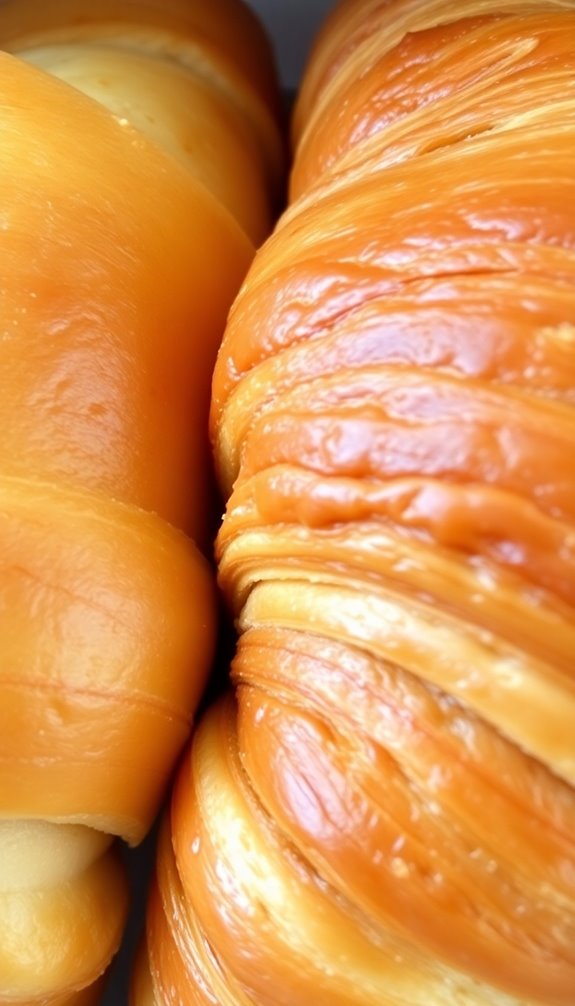
Crescent rolls and croissants are both delicious pastries that often confuse people due to their similar shapes.
You mightn’t know that the crescent roll has roots in the 19th century, linked to Austrian kipferl, while croissants trace their origins to the same period in France. The croissant, inspired by the kipferl, became a staple in French bakeries, known for its buttery layers and flaky texture. Interestingly, croissants require lamination to achieve their signature flakiness, while crescent rolls are typically made with a simpler dough that’s less flaky but still soft and pillowy. Crescent rolls have a subtler butter flavor compared to croissants, which enhances their versatility in various dishes.
Crescent rolls, on the other hand, are typically made with a simpler dough that’s less flaky but still soft and pillowy. Interestingly, while croissants are classified as pastries, crescent rolls are considered bread, showcasing their distinct preparation processes. As you enjoy these tasty treats, remember their unique histories: one hails from Austria and the other from France, each bringing its own flair to the world of pastries.
The Key Ingredients of Crescent Roll Dough

When it comes to making crescent roll dough, the key ingredients play an essential role in achieving that soft and pillowy texture.
To start, you’ll need all-purpose flour, which provides structure, along with baking powder for leavening. Don’t forget the salt; it enhances flavor. You’ll also want to include sugar to add a hint of sweetness and encourage browning.
The star of the show is butter, which creates a rich flavor and contributes to the dough texture. Additionally, high-quality ingredients can elevate the overall taste of your crescent rolls. Furthermore, using yeasted dough helps in achieving that soft, chewy bite characteristic of crescent rolls. Finally, milk or water is necessary to bring everything together. Additionally, incorporating chilled European-style butter can enhance the richness of the layers in your dough.
The Key Ingredients of Croissant Dough
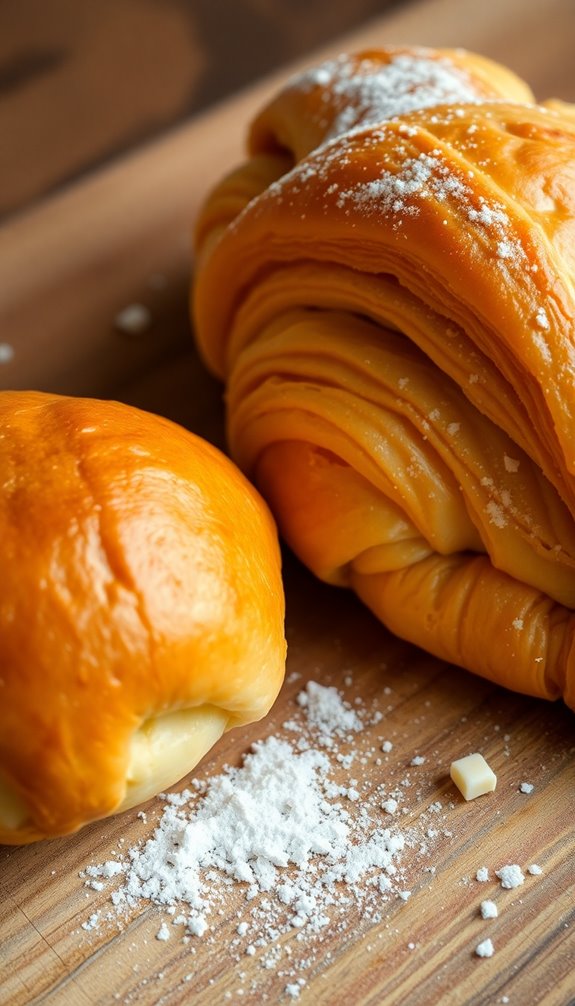
When you make croissants, it’s essential to understand the key ingredients that create their flaky texture. You’ll find yourself weighing the pros and cons of using butter versus margarine, as each brings a different flavor and quality to the dough. Proper management of butter packet is essential for even layering and flakiness in the croissant dough. Additionally, using high-quality European-style butters with at least 82% butterfat enhances the overall richness and texture of the croissants. The meticulous lamination process is crucial for achieving the signature flaky layers that croissants are known for. Let’s break down what you need for that perfect croissant.
Essential Ingredients Breakdown
Although both crescent rolls and croissants share a flaky texture, the key ingredients that make up croissant dough are essential for achieving their unique flavor and structure.
The primary ingredient is flour, specifically a high-protein flour that helps develop gluten, giving the croissant its chewy texture.
You’ll also want to take into account dough hydration; the right balance of water can make or break your dough. This hydration level impacts how well the dough layers and rises in the oven.
Additionally, a small amount of sugar enhances the flavor and browning, while salt brings out the dough’s overall taste.
Using these essential ingredients correctly will guarantee your croissants have that signature lightness and buttery richness. Understanding the laminated dough process is crucial for achieving the perfect croissant texture.
Butter vs. Margarine Debate
The choice between butter and margarine can greatly impact the quality of your croissant dough. If you opt for butter, you’ll enjoy its rich flavor and the flaky texture it provides, thanks to the high fat content.
Butter benefits include a natural taste that elevates the overall experience of your croissants. On the other hand, using margarine can lead to some drawbacks.
While it’s often cheaper and spreads easily, margarine lacks the depth of flavor and can create a denser dough. Additionally, margarine’s hydrogenated oils can affect the final texture, resulting in a less desirable pastry.
For the best croissants, stick with butter—it’s worth the extra effort and expense for that authentic, flaky delight.
How Crescent Roll Dough Is Made
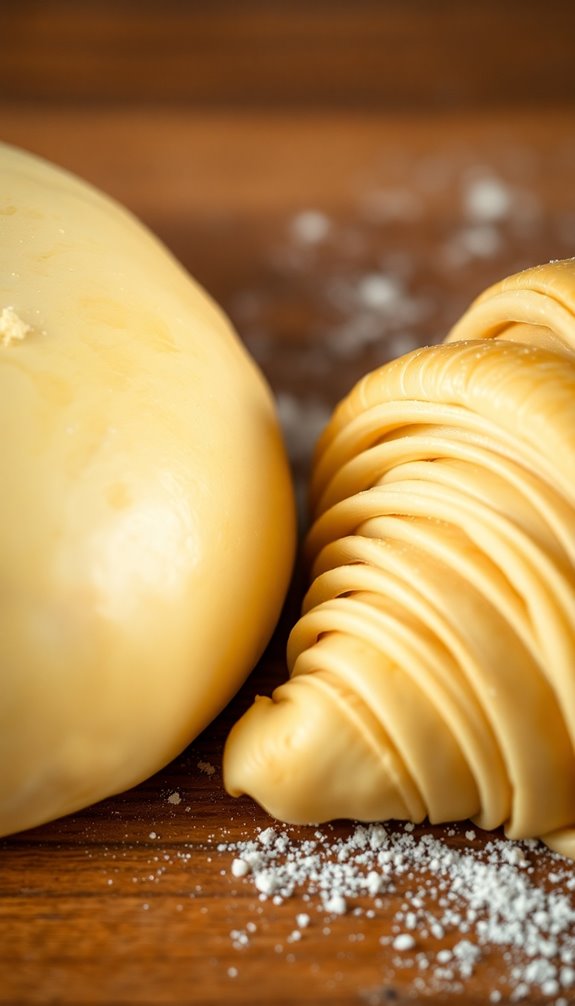
Crescent roll dough is made through a straightforward yet precise process that starts with combining basic ingredients like flour, water, yeast, and butter. You’ll begin by activating the yeast in warm water, then mixing it with the dry ingredients.
Once combined, knead the dough until it’s smooth and elastic.
Knead the dough until it achieves a smooth and elastic texture for the perfect crescent roll.
Next, use specific dough preparation methods to let the dough rise until it doubles in size. After this, you’ll roll it out using rolling techniques to create thin layers. This step is essential, as you’ll want to cut the dough into triangles.
Finally, roll each triangle tightly to form the classic crescent shape before baking. The result is a flaky, soft roll that’s perfect for any meal.
How Croissant Dough Is Made
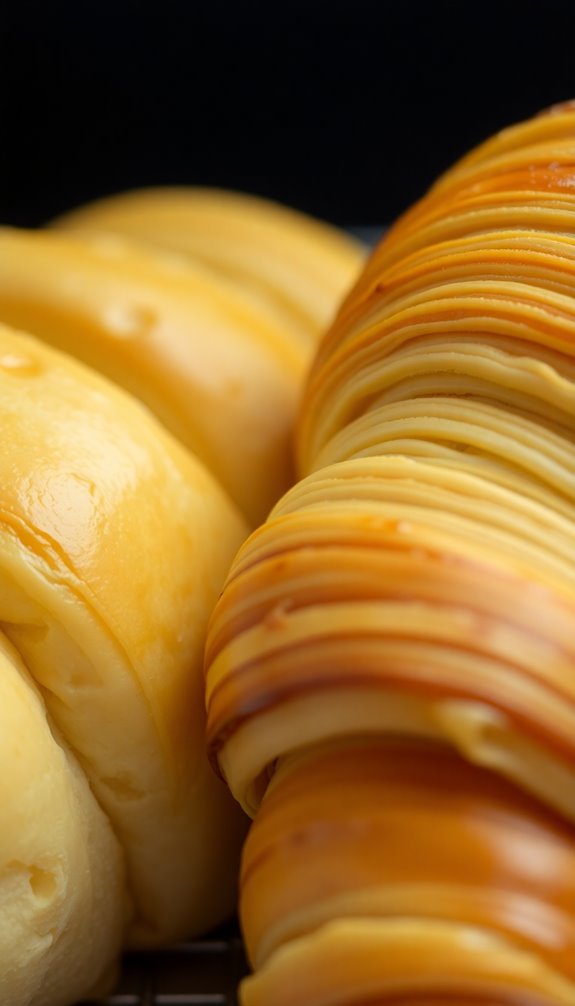
To create croissant dough, you start with a similar foundation of flour, water, yeast, and butter, but the process requires an essential technique called lamination. This involves folding cold butter into the dough multiple times, creating layers that give croissants their signature flaky texture.
After mixing your ingredients, allow the dough to undergo fermentation; this step is vital as it develops flavor and structure. As the dough ferments, the yeast produces gases, causing it to rise.
Once fermented, you’ll roll out the dough and incorporate the butter, folding it repeatedly to achieve those delicate layers. The result? A beautifully layered dough that, when baked, transforms into a light and airy croissant with that perfect croissant texture you crave.
The Role of Yeast in Crescent Rolls vs. Croissants
While both crescent rolls and croissants rely on yeast for their rise, the role it plays in each is quite distinct.
In crescent rolls, yeast activation occurs during the initial mixing phase, allowing the dough to rise quickly. This results in a soft, fluffy texture that’s perfect for immediate baking. The dough fermentation process is simpler and faster, making crescent rolls a convenient option for home bakers.
In contrast, croissants require a longer fermentation period, allowing the yeast to develop deeper flavors. The dough rises slowly, creating a more complex taste and texture.
This difference in yeast activation and fermentation contributes to the unique qualities of each pastry, highlighting the importance of yeast in creating the desired final product.
Understanding the Lamination Process in Croissants
Understanding the lamination process in croissants is essential for achieving that signature flaky texture. This technique involves rolling and folding dough layers with butter, creating thin sheets that puff up during baking. Here’s how you can master it:
- Prepare the Dough: Start with a rich yeast dough that’s well-kneaded and chilled.
- Incorporate the Butter: Use cold, pliable butter, placing it in the center of the dough for even lamination.
- Roll and Fold: Execute a series of turns—rolling out and folding the dough to create multiple layers.
- Chill Between Steps: Refrigerate the dough between laminations to keep the butter firm, ensuring distinct layers.
Following this lamination technique will elevate your croissants to a whole new level of flakiness and flavor.
Flavor Profiles: Crescent Rolls vs. Croissants
When you compare crescent rolls and croissants, you’ll notice distinct differences in their dough ingredients and overall flavor profiles.
Crescent rolls tend to have a sweeter, more buttery taste, while croissants offer a rich, flaky texture with a hint of nuttiness.
Understanding these variations can help you choose the perfect pastry for your next meal or snack.
Dough Ingredients Comparison
The dough ingredients in crescent rolls and croissants create distinct flavor profiles that set these pastries apart.
While both use similar base components, their variations lead to unique tastes. Here’s a quick comparison:
- Butter Content: Croissants use more butter, giving them a rich flavor, while crescent rolls may use margarine or less butter, resulting in a lighter taste.
- Leavening Agents: Crescent rolls often incorporate baking powder, creating a quicker rise; croissants rely on yeast for a deeper flavor.
- Flour Types: All-purpose flour is common in both, but croissants may use bread flour for added structure.
- Sugar Levels: Crescent rolls tend to be slightly sweeter, often due to ingredient substitutions that enhance their flavor.
Understanding these dough variations helps you appreciate each pastry’s unique qualities.
Taste and Texture Differences
Flavor profiles in crescent rolls and croissants highlight their unique taste experiences.
When you bite into a crescent roll, you’re met with a buttery, slightly sweet taste sensation, complemented by a soft, pillowy texture experience. It’s perfect for pairing with savory dishes or enjoying on its own.
In contrast, croissants offer a more complex, flaky texture, with layers that create a delightful crunch. Their rich, buttery flavor provides a more indulgent experience, often enhanced by a hint of nuttiness from the toasted crust.
While crescent rolls are comforting and familiar, croissants elevate your palate with sophistication. Each has its charm, making them both essential in the world of baked goods.
Culinary Uses: When to Choose Each Pastry?
How do you decide between crescent rolls and croissants for your dish? Both pastries offer culinary versatility, but their uses can differ markedly. Here are some serving suggestions to help you choose:
- Breakfast Options: Use croissants for elegant breakfast sandwiches or serve crescent rolls with jam.
- Appetizers: Crescent rolls work great for stuffed appetizers, like cheese or sausage, while croissants shine in sophisticated hors d’oeuvres.
- Salads and Soups: Serve crescent rolls as a comforting side to hearty soups, whereas croissants can elevate a light salad with their flaky texture.
- Desserts: Croissants can be transformed into indulgent desserts, like bread pudding, while crescent rolls can be filled with sweet fillings for easy treats.
Choose wisely based on your dish’s needs!
Tips for Perfecting Your Crescent Rolls and Croissants
To make the best crescent rolls and croissants, you need to focus on achieving the right dough consistency.
It’s also essential to master your baking techniques for that perfect golden finish.
With a few tips, you can elevate your pastries to a whole new level.
Perfecting Dough Consistency
Achieving the perfect dough consistency is essential for both crescent rolls and croissants, as it directly impacts the final texture and rise of your baked goods. Here are some tips to help you perfect your dough:
- Dough Hydration: Aim for a hydration level of about 60-65% for crescent rolls and 65-70% for croissants. This balance helps achieve that desirable flakiness.
- Mixing Techniques: Use gentle folding methods for croissants to maintain air pockets, while crescent rolls can handle a more vigorous mixing.
- Temperature Control: Keep your ingredients cool to prevent butter from melting into the dough.
- Resting Periods: Allow the dough to rest between stages to relax gluten and improve elasticity.
Follow these guidelines, and you’ll be well on your way to perfect dough!
Mastering Baking Techniques
While mastering baking techniques may seem intimidating, it’s crucial for creating the perfect crescent rolls and croissants. Start by focusing on dough hydration; the right moisture level guarantees a flaky texture. Experiment with adding water gradually, aiming for a soft but not sticky dough.
Next, pay attention to fermentation timing. Allow your dough to rise adequately; this step develops flavor and structure. Too little fermentation can lead to dense rolls, while over-proofing can cause collapse.
When you roll out your dough, use even pressure to maintain layers, and chill it frequently to keep the butter firm.
With these techniques in hand, you’ll be well on your way to baking delicious crescent rolls and croissants that impress!
Conclusion
In the world of pastries, crescent rolls and croissants each offer a unique experience. While crescent rolls are soft and buttery, perfect for a quick snack, croissants boast flaky layers that require skill and patience to create. Choosing between them isn’t just about taste; it reflects your culinary goals. Whether you opt for the simplicity of crescent rolls or the artistry of croissants, both can elevate your meals, reminding you that sometimes, the simplest pleasures hold the greatest joy.