
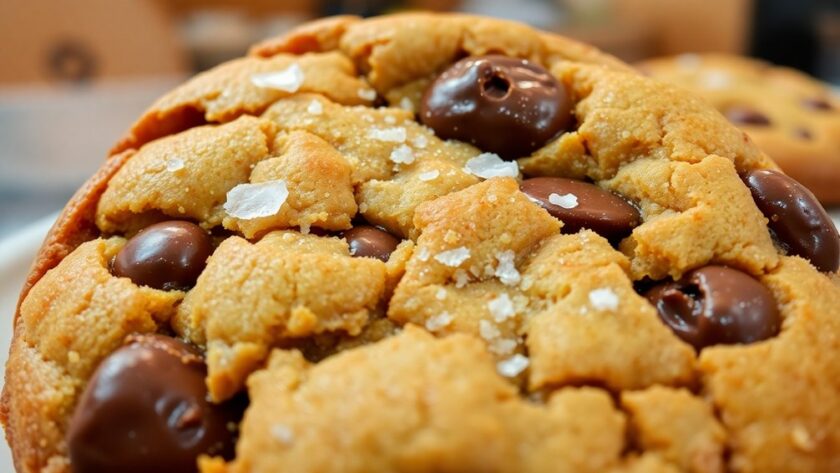
Brown sugar’s key to chewy cookies lies in its moisture-retaining properties. When you use it, the cookies become softer and more tender. The molasses in brown sugar adds rich flavor and helps keep your baked goods moist, preventing them from becoming dry or crumbly. By balancing your sugars, you can achieve that perfect chewy texture. Curious about optimizing your cookie recipes and other sugar types? There’s a lot more to discover!
The Role of Sugar in Cookie Texture
When you bake cookies, the type of sugar you choose plays a crucial role in determining their texture.
Brown sugar adds moisture due to its hygroscopic nature, making your cookies chewier. Unlike granulated sugar, brown sugar contains molasses, which enhances tenderness and keeps your cookies moist. The use of gluten-free ingredients allows for a variety of cookie recipes that can still maintain a delicious chewy texture. In fact, the original recipe for chocolate chip cookies from Ruth Graves Wakefield highlighted the importance of using quality ingredients, including sugar, to achieve the perfect cookie consistency.
When you substitute granulated sugar for brown sugar, you’ll notice a denser, chewier outcome thanks to the increased moisture content. Additionally, brown sugar reacts with baking soda to produce carbon dioxide, leading to thicker cookies that maintain that delightful chewiness.
Its compact nature also affects gluten development, creating fewer air pockets during creaming. This is similar to how high protein cookies provide a balance of ingredients that contribute to their unique textures and flavors.
Types of Sugar: Understanding Their Differences
Understanding the different types of sugar is essential for achieving the perfect cookie. Granulated sugar, being 99% pure sucrose, promotes a crisp texture and contributes to cookie spread due to its lower moisture levels.
On the other hand, light brown sugar contains about 95% sucrose and adds a subtle molasses flavor, resulting in a softer cookie. Dark brown sugar, with its higher molasses content, offers a richer caramel flavor and creates a chewier texture. Using healthier sweeteners can further enhance the taste and nutritional value of your cookies. Additionally, incorporating sugar-free vegan options can provide delicious alternatives for those monitoring their sugar intake.
Combining light and dark brown sugars can enhance flavor and moisture retention, leading to that ideal chewy cookie you crave. When substituting sugars in your recipes, keep in mind their moisture levels and flavor contributions to guarantee you get the desired outcome. Additionally, the use of vegan substitutes in cookie recipes can also influence texture and flavor, making it essential to consider these options when baking.
Impact of Granulated Sugar on Cookies
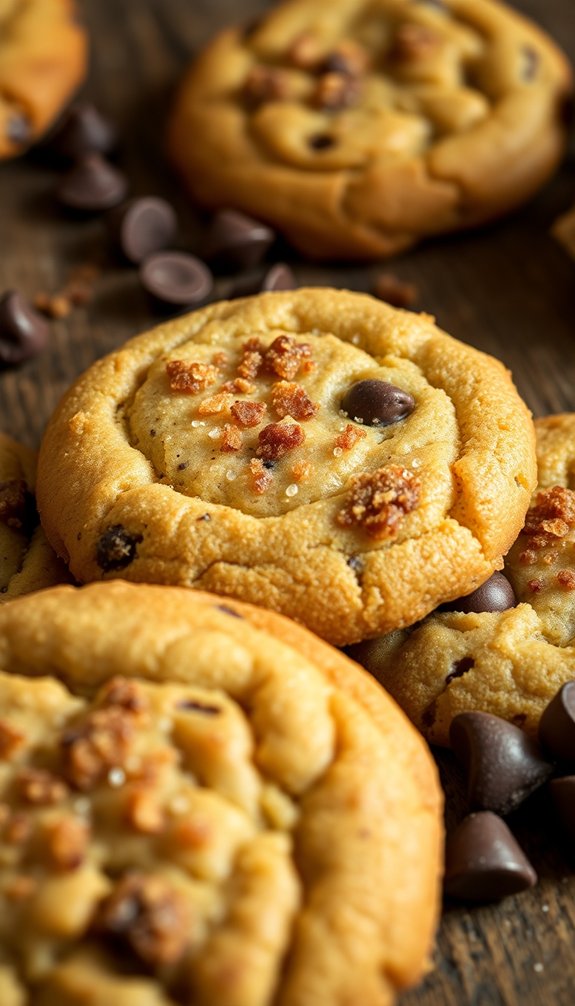
Cookies tend to come out thinner and crispier, thanks to granulated sugar’s lower moisture retention. This can create a lighter, airy feel, but it may also mean sacrificing some of the rich flavors and chewiness that brown sugar offers. Additionally, incorporating gluten-free flour can also impact the overall texture and flavor of the cookies, especially for those with dietary restrictions. The right type of flour can enhance the cookie’s structure and contribute to a more satisfying chew. To achieve a richer flavor and added moisture, consider using mashed bananas or unsweetened applesauce as substitutes for some of the sugar.
Sugar’s Role in Texture
While many bakers love the rich flavor of brown sugar, granulated sugar plays an essential role in shaping the texture of cookies. Granulated sugar has less moisture, which results in cookies that are crispier and less chewy than those made with brown sugar.
When you use granulated sugar, your cookies tend to spread more during baking, creating a taller, less dense result. They often appear paler and lack the depth of flavor that brown sugar’s molasses adds.
Additionally, granulated sugar helps aerate the dough during the creaming process, contributing to a lighter texture. However, this can lead to thinner cookies, contrasting with the thicker, chewier texture that brown sugar provides.
Spread vs. Thickness
Granulated sugar greatly influences the spread and thickness of cookies, often leading to a crispier texture. Here’s how it impacts your baking:
- It inhibits gluten development, resulting in thinner cookies.
- Cookies made with only granulated sugar tend to be taller and puffier.
- The lack of molasses means less caramelization, affecting color and flavor depth.
- A high proportion of granulated sugar can sacrifice chewiness, as it doesn’t retain moisture like brown sugar.
- Combining granulated and brown sugar strikes a balance for both spread and thickness, giving you those chewy, visually appealing cookies you crave.
The Benefits of Light Brown Sugar
Light brown sugar offers a delightful twist to your cookie baking, thanks to its unique composition. With about 95% sucrose and a touch of molasses, it adds both moisture and a subtle caramel flavor to your treats. This type of sugar is known for its role in creating chewy textures in baked goods, which is essential for achieving the perfect cookie.
Because of its hygroscopic nature, light brown sugar attracts and retains moisture better than granulated sugar, leading to soft, chewy cookies. When you use it in your recipes, you’ll notice that it contributes to a desirable chewy texture while preventing excessive spreading during baking.
Plus, it enhances the overall flavor profile, providing balanced sweetness that complements other ingredients perfectly. Just substitute granulated sugar with light brown sugar in a 1:1 ratio, and you’ll enjoy cookies that are rich, tender, and reminiscent of homemade goodness. Additionally, using gluten-free options can further improve the texture and health benefits of your cookies, ensuring everyone can indulge in gluten-free treats without compromise. Incorporating high-protein ingredients in your cookie recipes can also elevate their nutritional value, making them suitable for athletes and active individuals.
Exploring Dark Brown Sugar in Baking
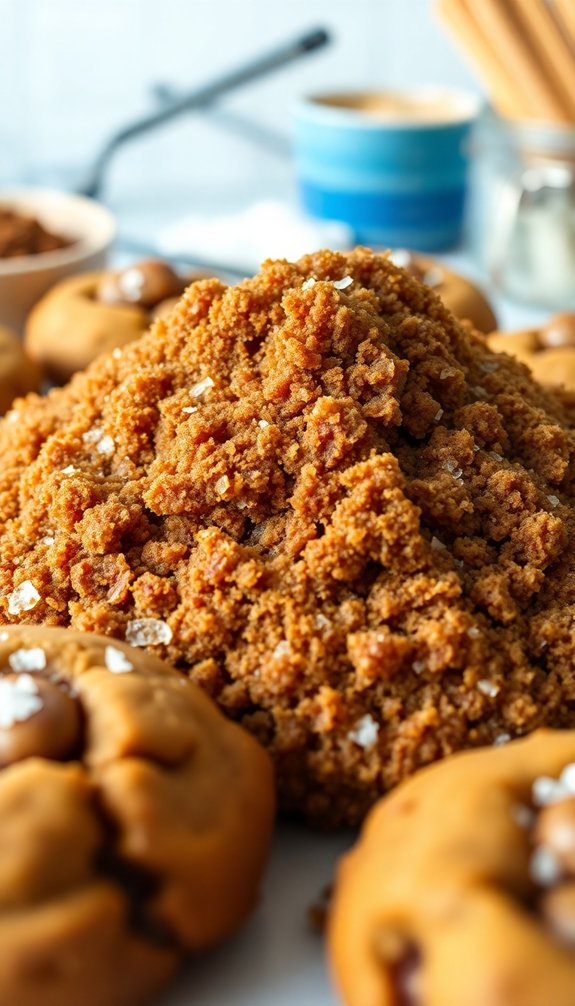
When you use dark brown sugar in your baking, you’re not just adding sweetness; you’re enhancing flavor depth and creating a richer taste. Its higher moisture content helps keep your cookies chewy, making each bite delightful. Plus, the unique texture and consistency you achieve can elevate your baked goods to a whole new level. Additionally, the combination of gluten-free flours with dark brown sugar can lead to a perfect balance of sweetness and nuttiness in your cookies. The rich flavor profile created by dark brown sugar mirrors the evolution of cheesecake through history, showcasing how ingredients can transform a dish into something extraordinary. Using gluten-free options in your recipes can further enhance the overall health benefits of your cookies, allowing you to enjoy your treats without compromising on dietary needs.
Flavor Depth Enhancement
While many bakers may reach for light brown sugar, opting for dark brown sugar can truly enhance the flavor depth of your cookies. Here’s how:
- Higher molasses content adds a richer, complex flavor profile.
- Caramelization during baking creates a pronounced sweetness with a slight bitterness.
- Dark brown sugar contributes to a chewier texture, thanks to its moisture-retaining properties.
- Cookies often achieve a darker color, resembling upscale bakery treats.
- Flavor notes of butterscotch and caramel elevate the overall taste experience.
Moisture Retention Benefits
Using dark brown sugar in your cookie recipes greatly boosts moisture retention, which is key to achieving that perfect chewy texture.
With its higher molasses content, dark brown sugar absorbs more moisture during the baking process, ensuring your chewy cookies remain soft and tender. This hygroscopic nature helps prevent them from becoming dry or crumbly, creating a delightful balance between crispness and chewiness.
By replacing granulated sugar with dark brown sugar, you enhance the dough’s density, allowing it to hold moisture better. The caramelization and Maillard reaction from the molasses not only contribute to flavor complexity but also reinforce that coveted chewy texture in your final baked goods.
Texture and Consistency Impact
Dark brown sugar not only enhances moisture retention but also considerably impacts the texture and consistency of your cookies. By incorporating it into your baking, you’ll achieve a delightful chewiness that elevates your treats.
Here’s how dark brown sugar transforms your cookies:
- Adds moisture for a denser, chewier texture
- Enhances flavor with rich caramel undertones
- Reacts with baking soda, creating a thicker cookie
- Keeps cookies soft compared to using granulated sugar
- Helps maintain shape while providing a chewy consistency
When you choose dark brown sugar, you’re ensuring your cookies have the perfect chewy texture, making every bite a delicious experience.
Balancing Sugar Ratios for Optimal Chewiness
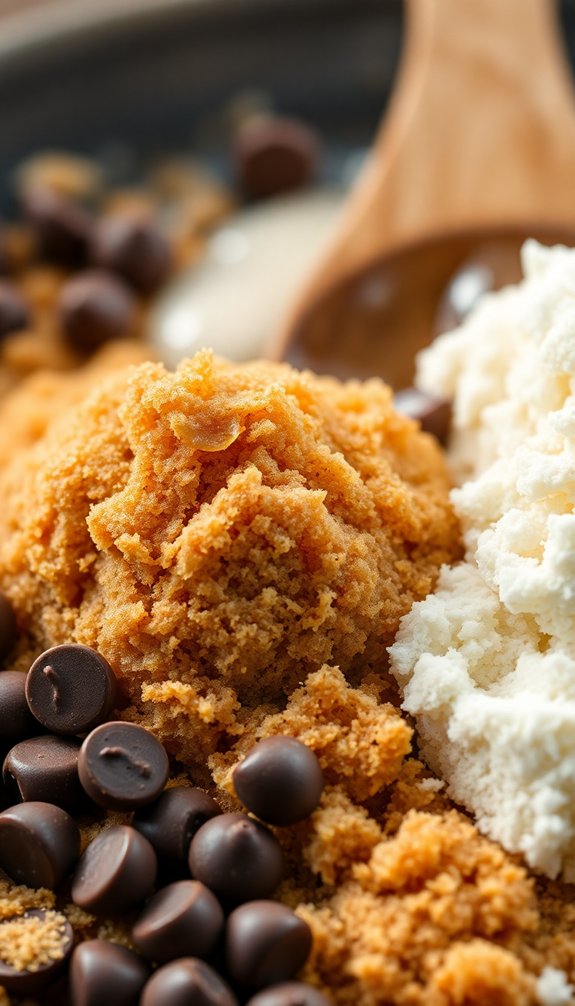
To achieve the perfect chewy cookie, you need to master the art of balancing sugar ratios. A good starting point is a combination of 50% brown sugar and 50% granulated sugar.
This mix creates a well-rounded chewy texture, as brown sugar retains moisture while granulated sugar adds crispness. By increasing the brown sugar content, you’ll enhance chewiness and create a fudgier center, thanks to its molasses content.
On the other hand, more granulated sugar can yield a crisper edge. Fine-tuning these sugar ratios is essential; too much brown sugar may lead to excessive spread, while too much granulated sugar can result in dryness.
Experiment with these ratios to find your ideal cookie balance!
Tips for Achieving the Perfect Cookie Texture
To get that perfect cookie texture, pay close attention to your sugar ratios and baking time.
A mix of granulated and brown sugar will give you the right balance of spread and chewiness.
Keep an eye on your cookies in the oven to avoid overbaking and guarantee they stay soft and delicious.
Sugar Ratios Matter
While experimenting with cookie recipes, you’ll quickly discover that the ratio of brown sugar to granulated sugar plays an essential role in determining texture.
Here are some key points to keep in mind:
- A 50/50 sugar ratio typically yields the best balance of flavor and chewiness.
- Higher brown sugar content creates chewier cookies due to its moisture-retaining properties.
- Cookies made with only granulated sugar will be crispier and less chewy.
- Adjusting sugar ratios affects spread; granulated sugar promotes spreading, while brown sugar adds structure.
- For the ultimate chewy cookies, aim for at least 50% brown sugar, as its molasses content enhances both chewiness and flavor depth.
Mastering these sugar ratios is vital for creating your perfect cookie!
Monitor Baking Time
Getting the sugar ratios right is just the beginning of cookie perfection; monitoring baking time is equally important for achieving that ideal texture.
To make chewy cookies, keep a close eye on the oven during the last few minutes of baking. Typically, you’ll want to bake them for about 10-12 minutes at 350°F (180°C), but this can vary based on the dough’s size and thickness.
To check for doneness, gently press the top of a cookie; it should feel set yet still soft. Once baked, let them cool on the baking sheet for a few minutes before transferring to a wire rack. This helps maintain moisture while allowing the cookies to firm up just right.
Common Issues With Sugar Substitutions
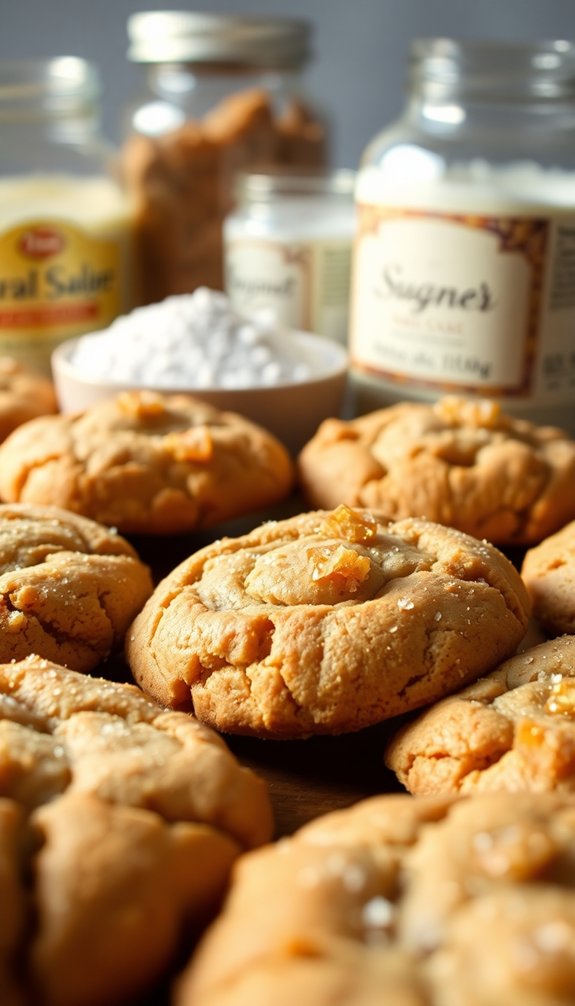
When you substitute brown sugar for granulated sugar in cookie recipes, you might encounter several common issues that can affect the final product.
These sugar substitutions can lead to unexpected results, so it’s essential to be aware of the following:
- Increased moisture content can create a chewier texture.
- Adjusting liquid ingredients may be necessary to prevent excessive spreading.
- Cookies may taste less sweet but richer due to brown sugar’s caramel notes.
- Dark brown sugar can deepen flavor but alter cookie spread and texture.
- Monitor baking times closely, as cookies with brown sugar may need shorter durations to avoid dryness.
Enhancing Flavor With Sugar Variations
To enhance the flavor of your cookies, consider experimenting with different sugar variations.
Brown sugar contains molasses, which adds moisture and rich caramel and butterscotch notes. If you want to deepen the flavor, try using dark brown sugar; its higher molasses content makes cookies taste more complex and less sweet.
For a balanced flavor, combine light and dark brown sugar in equal parts; this will retain moisture while providing a delightful sweetness.
When you substitute granulated sugar with brown sugar, cookies become chewier and softer due to brown sugar’s hygroscopic nature.
Storage and Freezing Tips for Brown Sugar Cookies
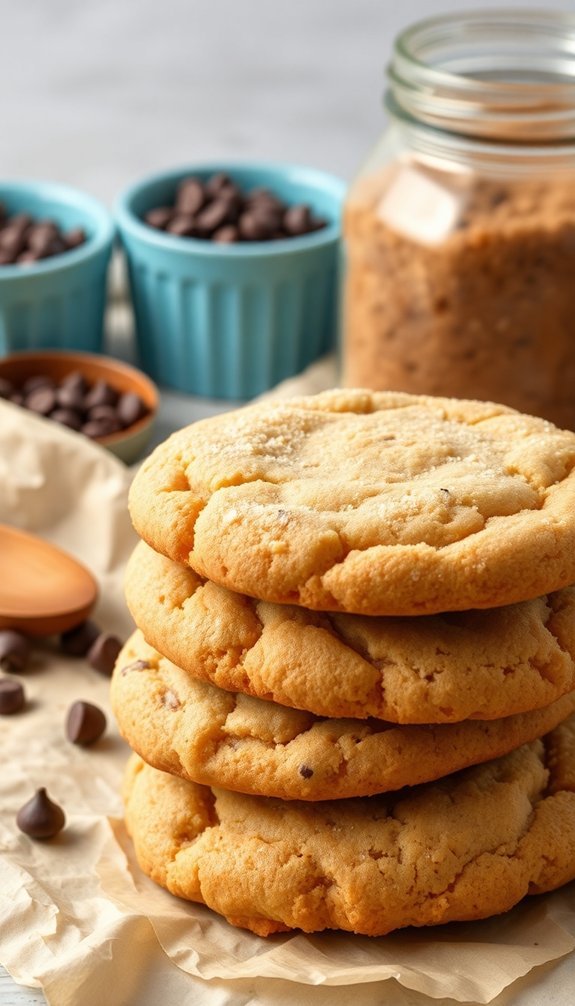
Brown sugar cookies not only offer a rich flavor but also come with the advantage of easy storage and freezing options.
To keep your cookies fresh and delicious, consider the following tips:
- Freeze cookies after baking or portioning for later enjoyment.
- Roll dough balls in sugar before freezing for enhanced flavor and appearance.
- Store frozen cookies in a Ziploc bag to maintain texture and prevent freezer burn.
- Thaw cookies and bake at a slightly lower temperature to preserve chewiness and moisture.
- For up to a week, keep baked cookies in an airtight container at room temperature to maintain their softness.
With these storage and freezing tips, you can always have delicious brown sugar cookies on hand!
Conclusion
So, if you thought brown sugar was just a fancy way to sweeten your cookies, think again! It’s the secret weapon for that chewy goodness you crave. Granulated sugar? That’s so last season. Embrace the caramel notes and moisture of brown sugar, and you’ll never look back. Remember, a cookie without brown sugar is like a party without cake—just sad and a little boring. So, go ahead, load up on the brown and bring on the chewy!