

A kolache is a delightful pastry with Czech roots, filled with sweet or savory goodies like fruit, cheese, or sausage. Brought to Texas by Czech immigrants, it became a cherished comfort food that symbolizes community and heritage. Traditional kolaches have a buttery, yeast-based dough, while modern ones may include cream cheese. You can easily make these at home or find them at local bakeries. Stick around, and you’ll discover their fascinating history and our favorite recipe!
The Origins of Kolaches
Kolaches have a rich history that dates back to Czech traditions, and if you trace their journey, you’ll find they were brought to America by Czech immigrants in the mid- to late-1800s.
Settling primarily in Texas, these immigrants introduced the pastry, which means “little piece,” to their new communities. Initially reserved for special occasions in Europe, kolaches became a beloved comfort food, symbolizing Czech Heritage in America. The traditional desserts made by these immigrants often featured ingredients like fruit and cheese, which are still popular in kolache fillings today. This evolution mirrors the way mincemeat pie has adapted over centuries while retaining its cultural significance.
With over 250 Czech communities in Texas, these pastries quickly became staples at community gatherings, church bazaars, and family celebrations. Their cultural significance is celebrated annually at the Kolache Festival in Burleson County, where you can indulge in this delicious tribute to tradition and togetherness. Additionally, the making of kolaches often involves nostalgic desserts that bring families together, further enhancing their role in community bonding.
Traditional and Modern Variations
With their deep roots in Czech culture, kolaches have taken on new forms in America, blending tradition with innovation. Traditional kolaches feature a rich, buttery dough made from a yeast mixture that undergoes multiple risings, ensuring a light texture. In contrast, modern variations often incorporate cream cheese into the dough, creating a different flavor profile. The introduction of cream cheese in desserts has parallels in other culinary traditions, showcasing the adaptability of classic recipes. The use of gluten-free flour in some modern variations ensures that everyone can enjoy these delightful pastries.
Classic fillings like apricot and prune have evolved into savory kolaches filled with sausage and cheese, known as klobasniky. You’ll also find unique flavors such as PB&J or brisket kolaches at select bakeries. Toppings have diversified too, with traditional crumb toppings now accompanied by poppy seed filling and various fruit mixtures, reflecting local tastes while still honoring the essence of kolacky. Additionally, the incorporation of tropical flavors like coconut and pineapple in modern sweets showcases the culinary creativity inspired by traditional recipes.
How to Make Kolaches at Home

If you’re ready to bring the delightful taste of kolaches into your kitchen, the process is both rewarding and enjoyable.
Start by combining yeast, warm milk, sugar, and flour in a bowl. Let this mixture rise until doubled in size.
Next, add egg yolks, melted butter, and salt to create your dough recipe. Gradually mix in more flour until smooth, then let the dough rise again. Gluten-free ingredients can also be used to create a healthier version of kolaches if desired, incorporating alternatives like almond flour for added nutrition.
Shape it into balls and create an indentation for your filling. For a sweet treat, use cooked and mashed fruits, or for a savory option, blend a cheese filling.
Place the kolaches on baking sheets and bake at 350°F until golden brown, typically around 15 minutes.
Incorporating proper mixing techniques will ensure your dough achieves the right consistency for perfect kolaches.
Enjoy them fresh for the best flavor!
Where to Find the Best Kolaches
After mastering how to make kolaches at home, it’s time to explore where you can find some of the best versions of these delightful pastries.
Head to small-town bakeries like Czech Stop in West, Texas, or Hruska’s Store & Bakery in Ellinger for quality and variety. You’ll find traditional flavors like apricot, cherry, and sweet cheese that often sell out quickly, especially on weekends. Traditional Julekage is a similar festive option that is enriched with dried fruits and nuts, perfect for holiday gatherings. Consider swapping ingredients for healthier versions, like using almond flour or oats, to boost the nutritional value of your festive treats.
For unique offerings, check out Batch Craft Beer & Kolaches in Austin, where you can indulge in creative options like PB&J kolaches.
Don’t forget to try savory kolaches, or klobasniky, filled with sausage, cheese, and jalapeño. Arrive early to snag these baked goods before they disappear!
Cultural Significance and Community Celebrations
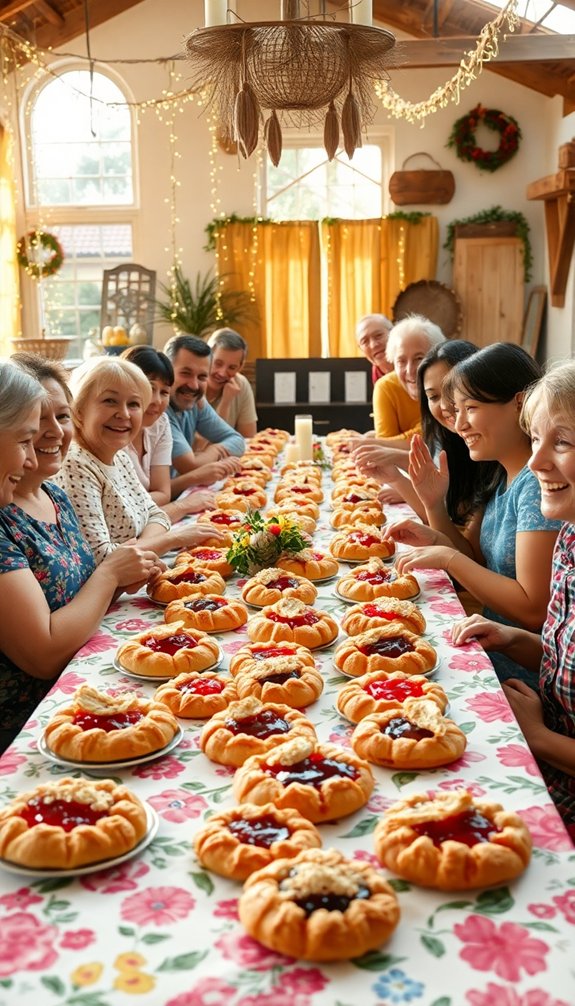
Kolaches hold a cherished place in the hearts of many, reflecting the rich cultural heritage of Czech immigrants in Texas and beyond. These delightful Czech pastries symbolize comfort and community, especially during celebrations. You’ll find that kolaches play an essential role in local culture through:
- Kolache Festival: This annual event in Burleson County brings together baking competitions and community gatherings, showcasing Czech traditions.
- Church Bazaars: Kolaches are a staple at church events, reinforcing shared cultural identity among residents, similar to how Southern pies bring comfort and joy to gatherings. The vibrant decorations often resemble those found in festive sugar cookie recipes, enhancing the visual appeal of these treats.
- Local Bakeries: Many establishments in the Texas Hill Country serve these treats, celebrating their Czech roots.
From poppy seed fillings to fruit preserves, kolaches unite people, making every bite a taste of heritage and community. The cultural significance of British puddings serves as a reminder of how desserts can reflect and preserve community traditions.
Conclusion
In the end, kolaches are more than just pastries; they’re a delicious bridge connecting cultures and generations. Just like the way a family gathers around the kitchen table, sharing stories and laughter, these sweet treats bring people together. Whether you’re indulging in a traditional fruit-filled version or experimenting with modern flavors, each bite tells a story of heritage and warmth. So, roll up your sleeves and create your own kolaches; you might just bake up a new family tradition.