
When converting 50 grams of granulated sugar to cups, you’ll find it’s about 1/4 cup. It’s important to measure accurately, as slight differences can affect your baked goods’ texture and sweetness. If you’re using packed brown sugar or powdered sugar, the measurements vary; packed brown sugar is also around 1/4 cup, while powdered sugar is roughly 1/3 cup. Keep following to uncover more tips on precise measurements and achieve perfect baking results.
Understanding Sugar Measurements
When it comes to baking, how do you guarantee your sugar measurements are spot on? Understanding sugar measurements is essential because they directly impact the sweetness, texture, and structure of your baked goods.
For example, 50 grams of granulated sugar equals about 1/4 cup, weighing approximately 1.8 ounces. When measuring, always use the “scoop and level” method to prevent compacting your sugar and secure accuracy. The chocolate chip cookie phenomenon illustrates how precise measurements can enhance the overall success of a recipe. Additionally, substituting sugar with honey can not only improve flavor but also boost the nutritional value of your baked goods.
Remember, different types of sugar have varying weights; packed brown sugar weighs more than granulated sugar, while powdered sugar weighs around 60 grams per 1/4 cup. Additionally, the evolution of cheesecake showcases how ingredient variations can alter a dessert’s overall flavor and texture, emphasizing the importance of precise measurements in baking.
Converting Granulated Sugar to Cups
Converting granulated sugar to cups is a straightforward process that can help you achieve perfect measurements in your baking.
When you’re measuring granulated sugar, remember that 50 grams is roughly equivalent to 1/4 cup, since 1 cup of granulated sugar weighs about 200 grams. This is important because accurate measurements contribute to the success of baking recipes that require precise ingredients. Additionally, using natural sweeteners can enhance the flavor while reducing refined sugar in your baked goods.
To guarantee accuracy, use the “scoop and level” method with your measuring cups; this prevents compacting the sugar, which can lead to miscalculations.
Keep in mind that granulated sugar is lighter than brown sugar, which weighs about 220 grams per cup when packed.
For the best results, using a digital scale to measure 50 grams of sugar will enhance your baking conversions and consistency in your recipes. Additionally, using gluten-free flour options can lead to healthier baking outcomes without sacrificing taste.
Granulated Sugar Weight and Volume
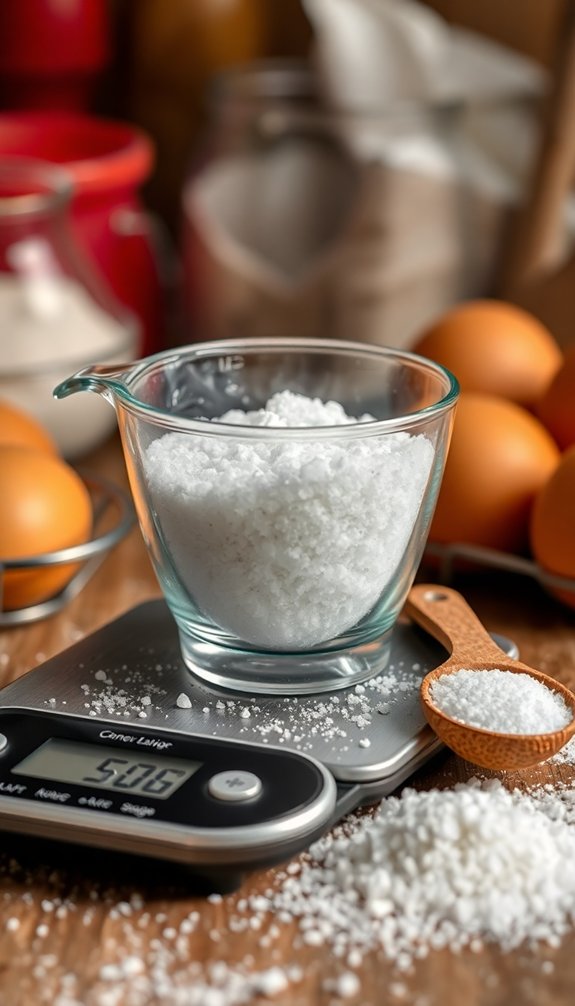
Understanding the relationship between granulated sugar‘s weight and volume is essential for successful baking. When you measure granulated sugar, keep these points in mind:
- 50 grams of granulated sugar is about 1/4 cup.
- A full measuring cup of granulated sugar weighs roughly 200 grams.
- Always scoop and level your sugar with a measuring cup—don’t pack it down.
- Accurate measurements are vital; even slight errors can alter your baked goods’ texture and sweetness. Additionally, using the right pie crust techniques can significantly enhance the overall quality of your baked goods, as precision in measurements helps achieve a flaky texture in crusts. The proper cream cheese frosting can also elevate your desserts, adding a delightful tang that complements sweetness.
Other Types of Sugar Measurements
Now that you’ve got a handle on granulated sugar, let’s look at how to measure brown sugar and other types.
Remember, brown sugar needs to be packed to get an accurate measurement, while powdered sugar can be tricky due to its lightness. Additionally, using alternative sweeteners like stevia or erythritol can be a great way to reduce sugar content in your baking. Incorporating gluten-free flour can also help create delicious baked goods for those with dietary restrictions. For a nutritious twist, consider adding high-protein cookies to your snack options, which can aid in muscle recovery and provide a satisfying treat. Using a digital scale can simplify these conversions and guarantee your baking turns out just right.
Granulated Sugar Conversions
When baking, knowing how to convert granulated sugar to other types can make a big difference in your results.
Accurate measuring is key, and using a digital scale is highly recommended for precision. Here’s a quick reference for common conversions:
- Granulated Sugar: 50 grams = approximately 1/4 cup (1.8 ounces)
- Packed Brown Sugar: 50 grams = roughly 1/4 cup, similar in density to granulated sugar
- Powdered Sugar: 50 grams = about 3.3 tablespoons, highlighting its finer texture
- Granulated vs. Brown Sugar: These can often be used interchangeably in recipes, giving you flexibility
Understanding these conversions helps you achieve perfect baking results every time.
Brown Sugar Measurements
Brown sugar measurements can sometimes be tricky, but getting them right is crucial for your baking success. When you need 50 grams of packed brown sugar, it’s roughly equivalent to 1/4 cup, as 1 cup weighs about 220 grams.
To measure accurately, pack the brown sugar firmly into your measuring cups. Unlike granulated sugar, brown sugar has molasses, which adds moisture and influences its weight and volume.
If you’re out of brown sugar, you can substitute by adding 1 tablespoon of molasses for each cup of granulated sugar to mimic the flavor.
For the best results, always use a digital scale, as it guarantees precise measurements and prevents inconsistencies in your baking.
Tips for Accurate Sugar Measurement
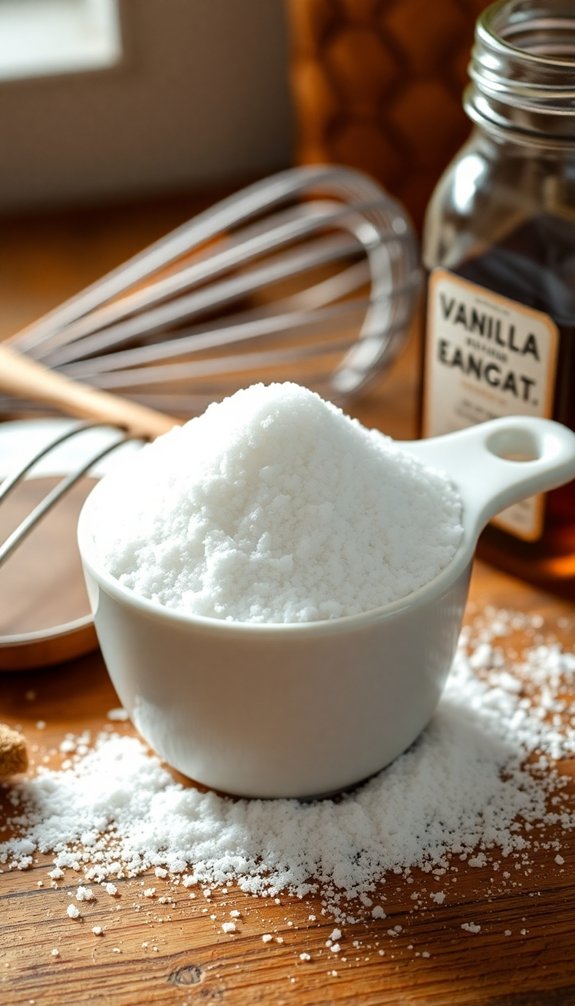
When it comes to measuring sugar accurately, using the scoop and level technique is key for granulated and powdered sugars. For brown sugar, don’t forget to pack it firmly into the measuring cup for the right amount. And if you really want to guarantee precision, a digital scale is your best friend in the kitchen. Additionally, consider using low-sugar alternatives to enhance your baking while reducing overall sugar intake. Incorporating nutritious ingredients such as almond flour can provide a healthier base for your baked goods, as these ingredients contribute higher fiber content that promotes improved digestion and sustained energy levels.
Scoop and Level Technique
One effective way to guarantee accuracy in your sugar measurements is by using the “scoop and level” technique. This method helps you avoid packing sugar into your measuring cup, which can lead to excess sugar in your recipe.
Follow these simple steps for precise measurements:
- Scoop the sugar gently with your measuring cup.
- Avoid packing it down; let it sit loosely.
- Level off the top with a straight edge, like a knife or spatula.
- Double-check your measurement against a scale if possible.
Measuring Brown Sugar Properly
Accurate measurement of brown sugar is essential for achieving the right flavor and texture in your baked goods. When measuring packed brown sugar, always scoop it into your measuring cup with a spoon.
Then, press it down firmly with the back of the spoon to eliminate air pockets, ensuring an accurate measurement. Remember, 1 cup of packed brown sugar weighs about 220 grams, so if you need to convert 50 grams, that’s roughly 1/4 cup.
Once packed, level off the top of the measuring cup with a straight edge to avoid excess sugar, which can alter your recipe’s outcome. You can use light or dark brown sugar interchangeably, but keep in mind that dark brown sugar has a richer flavor due to more molasses.
Use a Digital Scale
For precise baking results, using a digital scale is a game-changer. It guarantees that your measurements of granulated sugar are accurate, vital for achieving the right texture and flavor in your baked goods.
Here’s how to make the most of your digital kitchen scale:
- Tare the Scale: Place your bowl on the scale and reset it to zero before weighing your ingredients.
- Weigh Sugar Directly: Add granulated sugar until you reach the desired weight, avoiding the mess of multiple containers.
- Understand Weight Conversion: Remember, 50 grams of sugar is roughly 1/4 cup, helping you convert measurements easily.
- Eliminate Variations: Weighing your ingredients prevents issues like compaction or overfilling that can come with measuring cups.
Common Baking Measurements
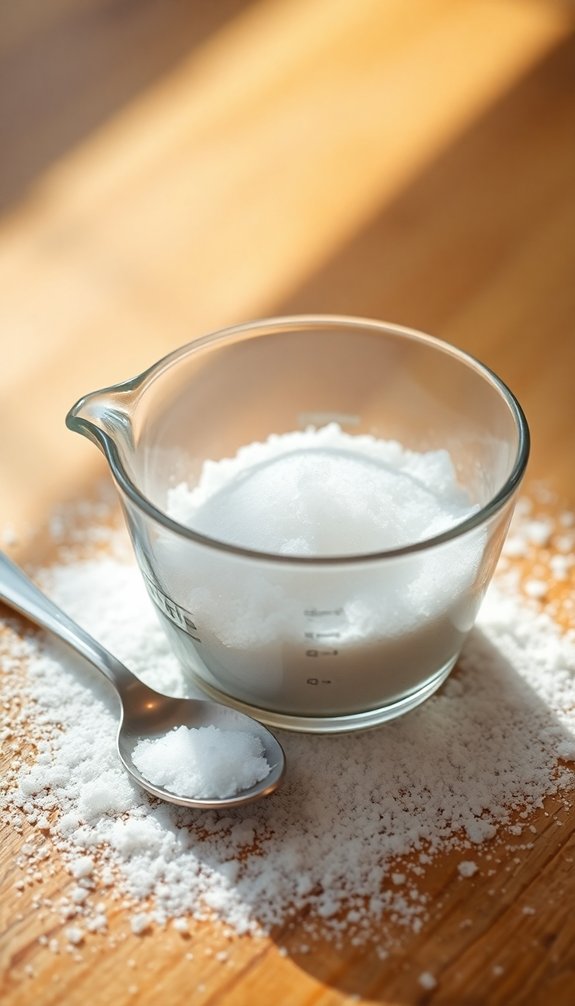
Baking often requires precise measurements to guarantee your treats turn out just right. When measuring sugar, you’ll find that 50 grams of granulated sugar is about 1/4 cup, as a cup of granulated sugar weighs roughly 200 grams.
It’s essential to scoop the sugar into your measuring cup and level it off with a flat edge for accuracy. Keep in mind that different types of sugar can vary in weight; for example, 50 grams of packed brown sugar is also around 1/4 cup, while powdered sugar measures about 1/3 cup for the same weight.
To achieve the best results, consider using a digital kitchen scale for measuring sugar and other ingredients accurately. Happy baking!
Importance of Weighing Ingredients
When you weigh your ingredients, you’re setting yourself up for success in the kitchen.
Weighing ingredients, like sugar, guarantees you get accurate measurements, which is crucial for perfect textures and flavors in your baked goods.
Here are four reasons why it matters:
- Consistency: Using weight, like 50 grams for sugar, eliminates discrepancies caused by packing or density variations.
- Precision: An accurate measurement helps you follow recipes correctly, especially for critical ingredients like sugar.
- Success Rate: Familiarizing yourself with common ingredient weights can reduce recipe failures.
- Better Baking: Knowing how much is in a cup of flour or sugar enhances your baking skills.
Ultimately, precise measurements lead to delicious results every time!
Using a Digital Scale for Precision

Achieving accuracy in your measurements is easier than ever with a digital scale at your side. By using a scale, you can precisely measure baking ingredients like sugar, ensuring that 50 grams converts to about 1/4 cup without error.
Digital scales often feature a tare function, allowing you to zero out the container’s weight before adding your ingredients for exact measurements. This method reduces discrepancies caused by packing density, which can affect your baked goods’ texture and flavor.
Plus, switching between grams and ounces is quick and easy, eliminating the need for cumbersome conversion charts. Consistently using a digital scale in your baking routine guarantees reliable results, leading to perfect treats every time.
Conclusion
Now that you’ve got the hang of converting 50g of sugar to cups, you’re well on your way to baking success. Remember, precision is key—like a well-tuned clock! Whether you’re using granulated sugar or experimenting with other types, always aim for accuracy. With a digital scale in hand, you can measure with confidence and whip up delicious treats every time. So, preheat that oven and let your baking adventure begin!