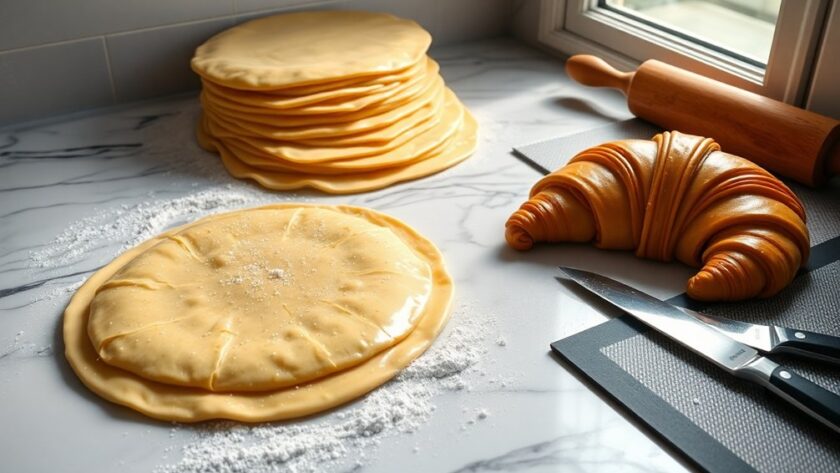
Laminated dough is your ticket to flaky, bakery-quality pastries at home. Start with essential ingredients like flour, cold butter, and fresh yeast. Mix and knead your dough thoroughly, then refrigerate overnight to enhance flavor and maintain butter integrity. Master the lamination technique by keeping everything cold and rolling evenly for perfect layers. You can explore sweet and savory fillings to elevate your pastries. Stick around, and you’ll uncover more secrets to achieve amazing results!
Understanding Laminated Dough
When you immerse yourself in the world of laminated dough, you’ll discover that it’s all about creating those delicate, flaky layers that make pastries irresistible.
To start, gather your ingredients together, including flour, yeast, milk, sugar, salt, honey, and butter. A stand mixer can help you combine these components efficiently, ensuring a smooth dough.
The key to lamination lies in the process of rolling and folding the dough with cold butter, forming multiple thin layers. Remember to chill the dough between folds to maintain the butter’s solidity, which is essential for achieving that sought-after flakiness. The proper mixing techniques are vital for achieving desired dough consistency.
Proper kneading and resting develop gluten, giving your dough the structure it needs to rise beautifully during baking.
Enjoy the art of pastry-making!
Essential Ingredients for Success
Creating laminated dough is an intricate process that hinges on choosing the right ingredients. Start with 250 grams of all-purpose flour, as it provides the structure you need.
You’ll also need 120 grams of all-fat milk, 30 grams of sugar, and 5 grams of salt to enhance flavor and control yeast activity. Don’t forget 10 grams of fresh yeast for fermentation and 10 grams of honey for sweetness and browning.
The quality of butter is essential—use 150 grams of cold butter to achieve those flaky layers. Remember, the proper ratios and handling of these ingredients are critical for the desired lamination. Additionally, keeping butter cold is crucial for achieving a flaky texture in your dough.
The quality of butter is vital; opt for 150 grams of cold butter to create those irresistible flaky layers.
Finally, line your baking sheets with parchment paper to prevent sticking and guarantee a perfect finish.
Mixing and Kneading Techniques
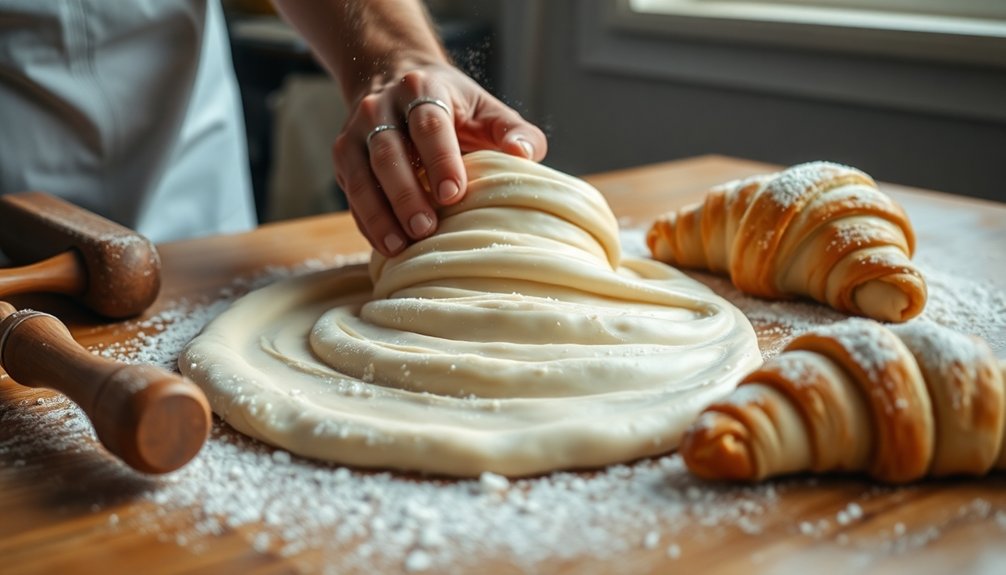
Master the art of mixing and kneading to set the foundation for your laminated dough. Start by combining 250 grams of all-purpose flour using 10 grams of honey, 10 grams of fresh yeast, 5 grams of salt, 120 grams of all-fat milk, 30 grams of sugar, and 50 grams of butter in a bowl.
Knead the mixture on low speed for about 5 minutes until it’s homogeneous, then ramp it up to medium speed for an additional 15 minutes to develop gluten. To check for readiness, roll the dough into a ball and gently stretch it until it becomes transparent without tearing.
Once it’s ready, shape the dough, cover with cling wrap, and refrigerate overnight for ideal results. This process is similar to creating the traditional Scandinavian dessert Kransekake, which also requires precise technique and attention to detail. Let me know how it turns out!
The Importance of Refrigeration
Refrigeration plays an essential role in your laminated dough, keeping the butter cold and firm for those perfect layers. Additionally, proper chilling dough techniques help maintain the integrity of the dough structure and prevent the butter from melting prematurely during the rolling process.
Temperature Control Benefits
When you’re working with laminated dough, keeping the ingredients cool is vital for achieving that perfect flaky pastry texture. Refrigeration helps maintain a stable temperature, preventing unwanted temperature fluctuations that could compromise your dough.
By keeping the dough cold, you guarantee the butter doesn’t melt into it, creating distinct layers for that light and airy feel. Additionally, a temperature range of 4-8 degrees Celsius slows down yeast activity, allowing for better flavor development without the risk of over-proofing.
Chilling the dough between folds is essential, as it allows the gluten to relax, making rolling and shaping easier. Regular refrigeration intervals, about every 30 minutes, preserve the integrity of your butter layers, enhancing the overall structure of your pastries.
Dough Consistency Improvement
To achieve the ideal dough consistency for laminated pastries, chilling the dough is indispensable, as it helps the gluten relax and enhances manageability.
By maintaining a proper dough hydration balance, you guarantee that the dough remains pliable without becoming sticky. Refrigeration solidifies the butter, preventing it from melting into the dough during rolling, which is essential for distinct layers.
After each turn, resting the dough in the fridge for at least 30 minutes allows it to firm up, critical for keeping its structure. Proper cooling intervals also prevent overworking the dough, which can lead to tough pastries.
Keeping your refrigerator at 4-8 degrees Celsius optimizes yeast fermentation effects, achieving the right rise and flavor in your pastries.
Flakiness and Layering
Achieving a flaky and layered texture in pastries hinges on the proper use of refrigeration throughout the lamination process. Keeping your dough cold is crucial; it solidifies the butter, preventing it from melting into the dough, which guarantees those distinct layers form during baking.
Use layering techniques effectively by allowing your dough to rest in the refrigerator for at least 30 minutes between folds. This promotes gluten relaxation and aids in rolling out without resistance. Chilling also maintains the ideal temperature for achieving flaky pastry textures.
Proper refrigeration intervals create the necessary air pockets that expand during baking, resulting in light, airy pastries. Consistently working with cold ingredients minimizes the risk of overworking, keeping your layers delightfully flaky.
Mastering the Lamination Process
To master the lamination process, you need to pay close attention to your dough’s temperature and technique. Keeping your ingredients cold helps maintain the butter’s shape, which is key to creating those flaky layers. Plus, practicing even rolling guarantees consistent thickness, leading to perfectly baked pastries. Additionally, precision in soaking the layers with syrup can enhance flavor and moisture in your final product.
Importance of Dough Temperature
Temperature plays a pivotal role in the lamination process of pastries. Keeping your dough between 4-8 degrees Celsius is vital for the right consistency and elasticity. This temperature guarantees that the cold butter, ideally 150 grams, remains firm, creating distinct layers without melting into the dough.
Proper dough hydration, along with precise ingredient ratios, enhances your final product. Remember to refrigerate the dough for 30 minutes between turns; this allows the gluten to relax and keeps the butter firm.
Monitoring the dough temperature throughout kneading and rolling is essential—too much warmth can compromise your layers. Employing effective fermentation techniques will also contribute to a flaky, bakery-quality pastry.
Happy baking!
Techniques for Even Rolling
Maintaining the right temperature is just the start—mastering the rolling technique elevates your laminated dough to the next level.
Begin with proper surface preparation; flour your work area generously to prevent sticking and guarantee smooth rolling. When you roll out the dough, focus on even pressure and keep your rolling pin moving to maintain consistent thickness. This promotes dough elasticity, allowing your layers to rise beautifully.
Regularly check your dough’s dimensions against the butter to confirm complete coverage. For the book fold, align the edges precisely to avoid gaps.
Don’t forget to refrigerate the dough between turns for at least 30 minutes, keeping that butter cold and ready to create those flaky layers you crave.
Rolling and Turning for Flakiness
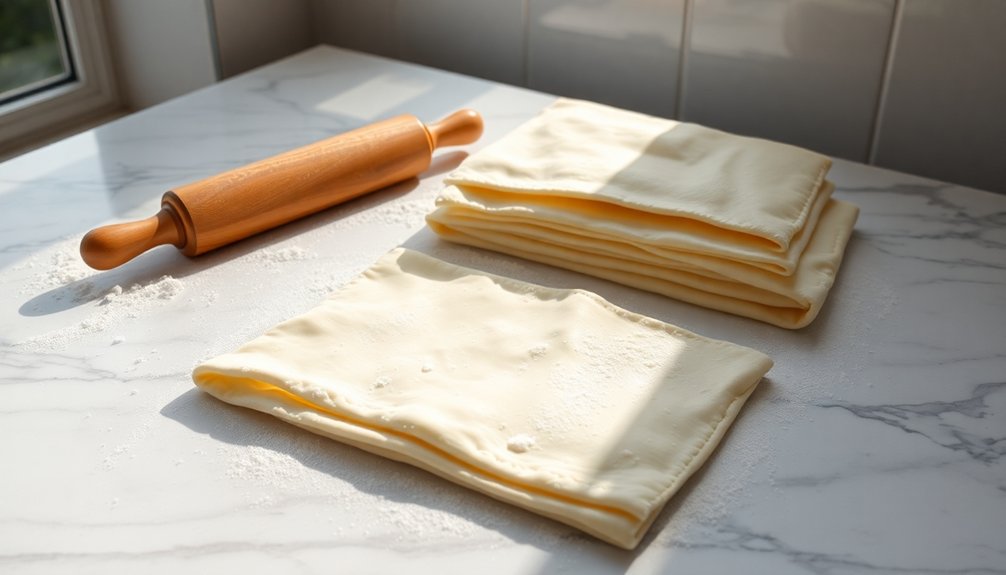
While achieving the perfect flakiness in laminated dough may seem challenging, mastering the rolling and turning technique is key.
Start by rolling out the dough to three times its width before performing a single turn. This guarantees even layers of dough and butter, which are essential for that flaky texture.
During the folding process, brush off excess flour to maintain dough elasticity and prevent tough layers. After each turn, refrigerate the dough for 30 minutes; this helps relax the gluten and keeps the butter cold.
Consistently apply these rolling methods and turning techniques, usually performing between 3 to 6 turns, to develop the desired flaky texture in your pastries. Additionally, consider incorporating high-quality chocolate into your pastry for an enhanced flavor experience.
Tips for Perfecting Your Dough
To perfect your laminated dough, start with fresh ingredients, particularly yeast, which plays a crucial role in achieving a good rise and that sought-after flaky texture.
Begin your laminated dough journey with fresh ingredients, especially yeast, for optimal rise and irresistible flakiness.
Here are some tips to help you along the way:
- Knead properly: Knead your dough for 20 minutes, starting on low speed for 5 minutes, then increasing to medium to develop the gluten structure effectively.
- Maintain cold butter: Use cold butter rolled to 150 grams to guarantee layers remain intact during lamination.
- Mind the flour: Brush off excess flour while rolling and folding to avoid dry dough and ensure even layering.
- Chill between turns: Refrigerate your dough for at least 30 minutes between turns to keep the butter solid, crucial for that flaky texture. Additionally, remember that almond sponge cake can serve as a delightful base for various pastries, adding a unique flavor and texture.
Creative Uses for Laminated Dough
Laminated dough isn’t just for classic pastries; you can get really creative with it!
Imagine croissants filled with your favorite ingredients, puff pastry desserts that wow your guests, or savory pinwheel rolls perfect for any occasion. Additionally, consider using whimsical and sweet animal cookies as a playful twist on traditional shapes and flavors, elevating your baking with these inventive uses!
Croissants With Fillings
If you’re looking to elevate your croissant game, filling them with a variety of delicious ingredients can turn an already delightful pastry into a gourmet experience.
Here are some fantastic croissant fillings to explore:
- Sweet Options: Try chocolate, almond paste, or fruit preserves for a delightful surprise in every bite.
- Custard: Add creamy custard before rolling for a rich and decadent flavor.
- Savory Combinations: Use ham and cheese, ensuring fillings aren’t too wet to keep your croissants flaky.
- Gourmet Cheeses: Experiment with brie or goat cheese for a sophisticated twist.
Always allow your filled croissants to proof properly before baking for the best texture.
Enjoy your baking adventure!
Puff Pastry Desserts
Filled croissants are just one delicious way to use laminated dough, but puff pastry desserts open up a whole new domain of culinary creativity.
With puff pastry variations, you can whip up delights like fruit tarts, éclairs, and mille-feuille that showcase the dough’s versatility. Elevate your desserts by using seasonal fruit fillings, chocolate ganache, or pastry cream for exciting flavor combinations.
The magic happens when you achieve that perfect lamination, allowing your pastries to rise beautifully in the oven. To add a polished touch, use decorative topping techniques like glazing with egg wash or dusting with powdered sugar.
You can even shape your puff pastry into spirals or pinwheels for added flair. Enjoy experimenting!
Savory Pinwheel Rolls
Savory pinwheel rolls offer a delightful twist on traditional laminated dough recipes, making them a perfect choice for appetizers or snacks. You can customize them with a variety of savory fillings.
Here are some baking tips to guarantee success:
- Choose your fillings: Try pesto, cheese, or cooked meats for a flavorful base.
- Chill the dough: Keep the laminated dough cold before assembly to maintain those flaky layers.
- Roll it right: Aim for a thickness of about 1/4 inch to guarantee even cooking.
- Bake correctly: Place sliced rolls cut-side up on a tray and bake at 200°C (400°F) for 15-20 minutes until golden brown.
Explore different pinwheel variations to impress your guests!
Troubleshooting Common Issues
When you encounter issues while working with laminated dough, recognizing the signs early can save you time and frustration.
If your dough is too sticky, it might need more flour; make sure you flour your work surface and rolling pin to prevent sticking.
If the butter melts into the dough, it indicates the butter temperature is too warm—always use cold butter and work in a cool environment.
A lack of rise could mean your yeast isn’t fresh; expired yeast can ruin your dough’s activation.
For dense pastries, aim for at least three full folds to create those flaky layers.
Finally, make sure the dough is rolled out evenly and that the butter is uniformly distributed to avoid uneven layers. Additionally, properly measured dry ingredients are vital for achieving the right texture and rise in cookies, which is also applicable when making laminated pastries.
Elevating Your Pastry Game
Mastering laminated dough opens up a world of possibilities for elevating your pastry game.
To truly impress, consider implementing these tips:
- Stay on Trend: Explore current pastry trends, like innovative flavor pairings such as dark chocolate and sea salt or raspberry and almond.
- Quality Ingredients: Always use high-quality ingredients, including all-purpose flour and cold butter, to achieve the best texture.
- Perfect Your Technique: Knead your dough thoroughly for about 20 minutes and refrigerate after each turn to maintain distinct layers.
- Experiment: Don’t be afraid to try unique fillings and shapes—think pistachio rolls or savory options—to add your personal touch.
With the right baking tools and techniques, you’ll create pastries that rival your favorite bakery! Also, consider incorporating espresso-infused layers for a sophisticated touch, reminiscent of classic French pastries like opera cake.
Conclusion
Now that you’ve unraveled the secrets of laminated dough, it’s time to put your newfound skills to the test. Just like that time you discovered a hidden talent for baking, you’ll find that creating flaky pastries is just as rewarding. Remember, practice makes perfect, so don’t be discouraged by a few mishaps along the way. Embrace the journey, and soon enough, you’ll be enjoying bakery-quality treats right from your own kitchen. Happy baking!