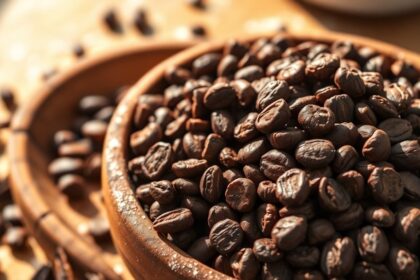
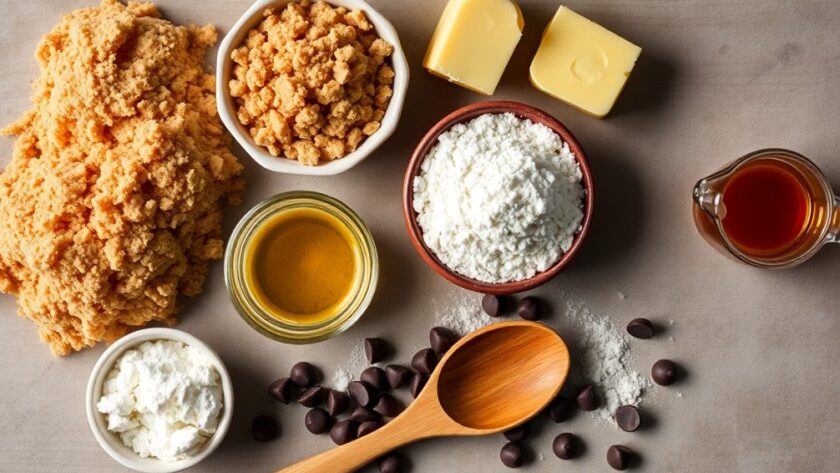
You can easily make chocolate chip cookies without vanilla extract by using substitutes like maple syrup or honey in equal amounts. If you want a hint of nuttiness, try almond extract at half the amount. Melted butter and egg yolks create a rich flavor and chewy texture, while adding corn starch guarantees a soft cookie. For more tips on perfecting your cookies, you might find some surprises just around the corner!
Chocolate Chip Cookie Recipe (Without Vanilla Extract)
If you're craving classic chocolate chip cookies but don't have vanilla extract on hand, you're in luck! You can whip up a delicious batch using simple substitutes.
For a tasty twist, try replacing the vanilla with an equal amount of maple syrup or honey. If you prefer a nutty flavor, use almond extract at half the quantity. Chocolate chip cookies have become a beloved dessert across the nation, making them a great choice for any baking occasion. Gluten-free flour can also be used as a base for those with dietary restrictions.
This cookie recipe yields cookies with crisp edges and a chewy middle, thanks to melted butter and brown sugar. Don't forget to add an extra egg yolk to enhance tenderness. Additionally, consider incorporating dark chocolate chips for antioxidants and rich flavor.
Bake at 375 degrees for 10-12 minutes until the edges are golden brown, ensuring your chewy cookie is perfect without vanilla.
Store them in an airtight container for lasting freshness!
Vanilla Flavor
Chocolate chip cookies are delightful on their own, but the addition of vanilla flavor takes them to another level. Derived from the pods of vanilla orchids, vanilla flavor enhances the overall taste and aroma of your baked goods.
While pure vanilla extract offers a rich, complex flavor profile, you might need a substitute. Maple syrup works perfectly as a one-to-one substitute, bringing its own sweet notes, and it is also a great option for sugar-free vegan cookie recipes that cater to diabetics.
If you prefer something unique, almond extract adds a nutty essence but should be used sparingly—about half the amount of vanilla extract—to avoid overpowering the cookies.
Just steer clear of imitation vanilla flavoring, as it lacks the depth required to create that authentic, delicious taste in your treats. Using natural sweeteners like maple syrup not only enhances flavor but also adds nutritional benefits to your cookies.
Vanilla Extract Substitutions
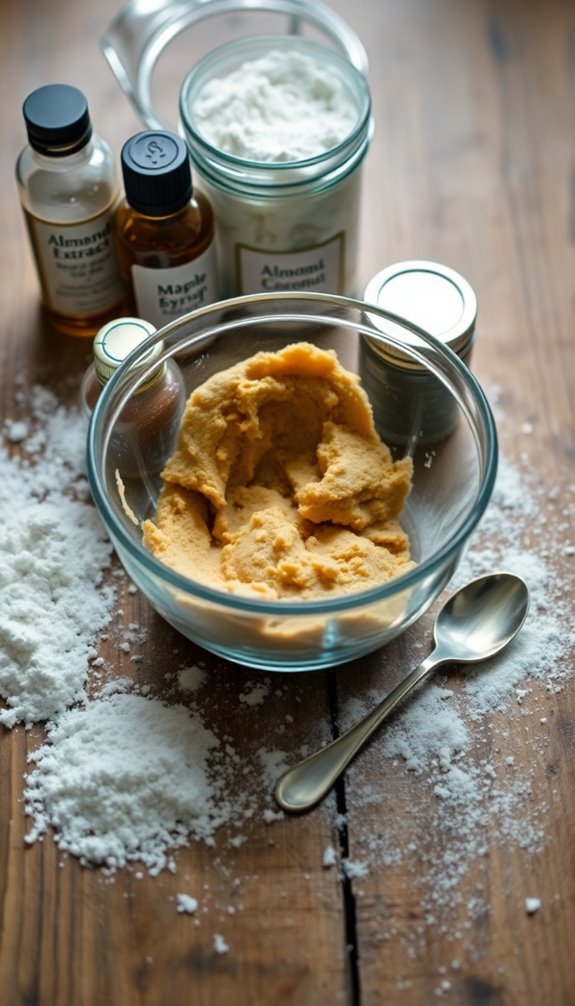
Wondering what to use when you're out of vanilla extract? You've got several great substitutes for vanilla that can enhance your baked goods' flavor.
Almond extract offers a stronger flavor, so use half the amount called for in your recipe. If you prefer something boozy, try bourbon, brandy, or rum in equal parts; they'll add depth to your cookies. Incorporating high-protein ingredients into your cookie recipes can further enhance their nutritional value. Additionally, using low-sugar alternatives can help you create treats that align with health goals.
Strong spices like cinnamon or cardamom can work too, but start with just a pinch to avoid overpowering your dish.
Finally, if you're baking chocolate cookies, a dash of instant coffee or espresso powder can elevate the flavor profile beautifully. Additionally, consider using unique flavor combinations like matcha or peppermint to create festive and exciting cookies.
Each of these options will keep your cookies delicious without missing that vanilla extract!
Maple Syrup
Maple syrup serves as a fantastic substitute for vanilla extract, bringing its own unique sweetness to your baked goods. When you're baking cookies, using maple syrup can enhance the flavor profile while adding a subtle maple touch.
Keep in mind these key points:
- Use pure maple syrup for the best flavor; imitation versions lack depth.
- Replace one teaspoon of vanilla extract with one tablespoon of maple syrup.
- Expect a slight texture change due to the syrup's liquid consistency.
- It's a cost-effective option that adds a delightful twist to your cookie recipe. Additionally, its rich flavor can be reminiscent of traditional desserts that often celebrate unique ingredient combinations. Moreover, maple syrup is a natural sweetener that can contribute to the nutritional benefits of your cookies. It pairs well with gluten-free options to create delicious treats that cater to various dietary needs.
Honey
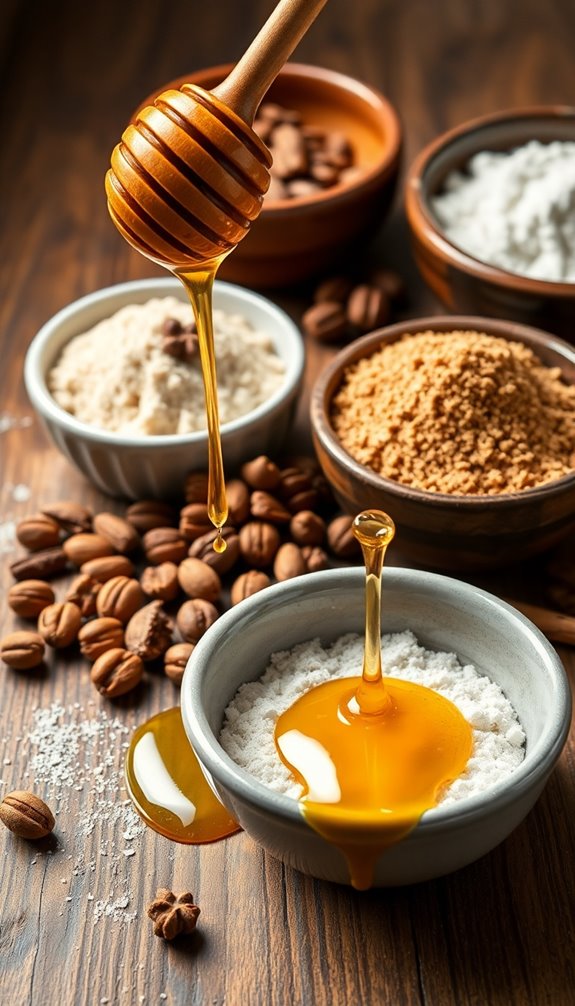
Honey adds a delightful twist to your cookies when you swap it for vanilla extract. As a substitute for vanilla, use 1 tablespoon of honey for every 1 teaspoon of vanilla.
This natural sweetener introduces a distinct floral sweetness that enhances the overall flavor profile of your baked goods. Keep in mind that honey is sweeter than vanilla extract, so you might want to cut back on other sweeteners to maintain balance. Additionally, using pure honey will provide the best depth of flavor, unlike imitation products. The moisture content in honey can also make your cookies more chewy and moist, giving them a unique texture you'll love. Moreover, incorporating natural sweeteners into your baking not only elevates the taste but also contributes essential nutrients and antioxidants to your cookies. Honey also pairs well with nutty flavor profiles found in almond flour cookies, creating a deliciously rich treat. This synergy of flavors can elevate your cookies to gourmet status, making them a standout dessert at any gathering.
Try it out; you might just discover a new favorite!
Almond Extract
Almond extract packs a powerful punch of flavor, much stronger than vanilla, so you'll want to use only half the amount in your recipes. Its nutty profile can really elevate your cookies, especially when you're looking for something a bit different. Just remember to stick with pure almond extract for the best results and consider how it interacts with other flavors, especially in chocolate treats. Additionally, Earl Grey tea can provide a unique and aromatic twist to your cookie recipes.
Flavor Comparison to Vanilla
While some bakers might be hesitant to substitute almond extract for vanilla, doing so can actually elevate your cookie recipes. The distinct nutty flavor of almond extract adds a unique twist to your baked goods, especially those featuring chocolate or fruit.
Here are a few reasons to reflect on this flavorful swap:
- Almond extract is more potent than vanilla, so use half the amount.
- It enhances the taste profile of cookies, complementing flavors like chocolate and citrus.
- The nutty flavor can bring out the richness in your recipes.
- It's versatile and works well in various cookie styles.
Keep in mind, though, that those with nut allergies should steer clear of almond extract.
Usage Tips and Ratios
If you're looking to enhance your cookie recipes without vanilla extract, understanding the right usage and ratios for almond extract is essential.
This go-to substitute for vanilla is about twice as potent, so you should use half the amount called for in your recipe. For example, if a recipe requires 1 teaspoon of vanilla extract, replace it with just 1/2 teaspoon of almond extract.
This nutty flavor can elevate your cookie dough balls, especially in recipes that pair well with almonds or chocolate.
However, be cautious with your measurements; too much almond extract can easily overpower other flavors.
Stick to these usage tips and ratios, and you'll create delicious cookies that delight!
Vanilla Powder
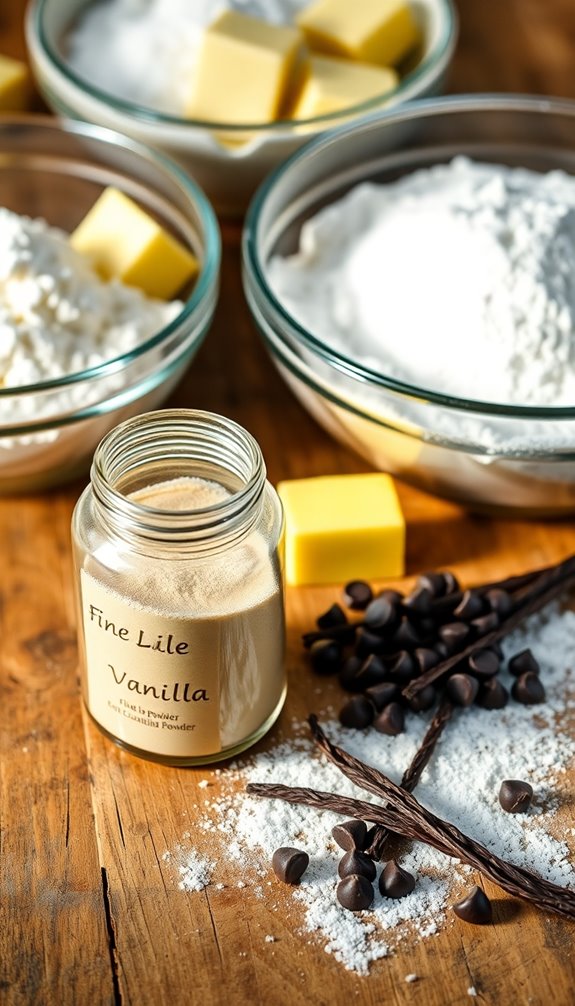
Vanilla powder serves as an excellent alternative to vanilla extract, packing a concentrated burst of flavor without the added liquid.
This versatile substitute offers a rich flavor that enhances your baked goods beautifully.
Here's why you should consider using vanilla powder:
- It's made from ground vanilla beans, ensuring a robust taste.
- Use it in a 1:2 ratio: 1 teaspoon of vanilla powder replaces 2 teaspoons of vanilla extract.
- Vanilla powder is alcohol-free, perfect for non-alcoholic recipes.
- Store it in a cool, dark place to maintain its potency.
Vanilla Paste
Vanilla paste is a concentrated blend of vanilla bean seeds and liquid, giving your baked goods a richer flavor and attractive specks.
You can easily swap it for vanilla extract in your recipes using a 1:1 ratio, but expect a more intense vanilla taste.
Let's explore how to use vanilla paste effectively in your cookie creations!
What Is Vanilla Paste?
For those looking to elevate their baking, vanilla paste offers a concentrated burst of flavor that combines the rich essence of vanilla bean seeds with a syrupy base. This makes it an excellent substitute for vanilla extract, allowing you to enhance your recipes with an intense vanilla flavor.
Here are some key benefits of using vanilla paste:
- Rich, aromatic taste
- Visual appeal from vanilla bean seeds
- Alcohol-free alternative to extracts
- Typically requires less quantity for the same flavor impact
When you choose vanilla paste, you're not just adding flavor; you're transforming your baked goods into something extraordinary.
Usage in Baking Recipes
Using vanilla paste in your baking recipes can truly elevate your treats. This concentrated form of vanilla offers a rich flavor and delightful texture, thanks to the tiny vanilla seeds.
When you're substituting vanilla extract with vanilla paste, you can use a straightforward 1:1 ratio—just swap 1 teaspoon of extract for 1 teaspoon of paste. This makes it easy to incorporate into your favorite recipes.
Vanilla paste shines in desserts where visual appeal matters, like frostings or creamy custards, as those specks of vanilla enhance presentation. Plus, its intense flavor often means you can use less paste, giving your baked goods a gourmet touch.
With vanilla paste, you're sure to impress your family and friends!
Ingredients for Chocolate Chip Cookies (without Vanilla Extract)
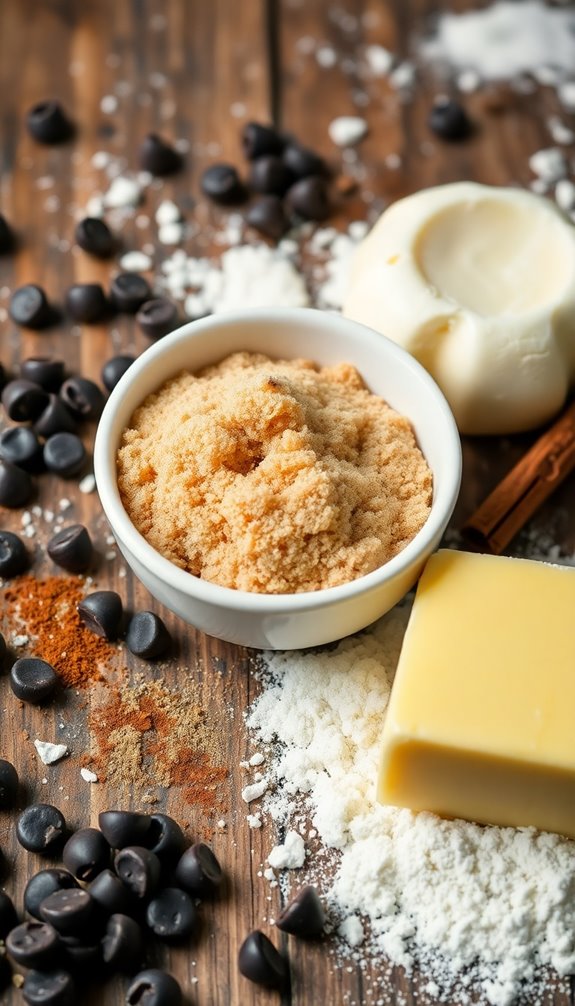
When whipping up a batch of chocolate chip cookies without vanilla extract, you'll need a few key ingredients to guarantee they turn out delicious.
This cookie recipe focuses on maintaining rich flavor and chewy texture with the right sugars and fats. Here's what you'll need:
- All-purpose flour
- Baking powder
- Brown sugar
- Granulated sugar
Melted unsalted butter and eggs are essential for binding and moisture. Brown sugar enhances the cookie's softness, while granulated sugar adds that delightful crispness.
If you want an extra boost in tenderness, consider adding an extra egg yolk. Feel free to substitute vanilla with maple syrup or almond extract for a unique twist that preserves the classic chocolate chip cookie essence.
[DIRECTIONS]:
Brown Sugar vs. White Sugar
When it comes to baking cookies, the type of sugar you choose can make a big difference in both texture and flavor.
Brown sugar adds moisture and a deeper taste, giving your cookies a chewy bite, while white sugar contributes to a crispier finish.
Understanding how these sugars interact in your recipe helps you create the perfect cookie every time.
Texture Differences Explained
While both brown and white sugar are common in cookie recipes, they create distinctly different textures that can greatly affect your baking results.
Brown sugar, with its molasses content, results in a soft, chewy texture, while white sugar tends to produce a crispier edge.
Here's how they compare:
- Brown sugar adds moisture, leading to denser cookies.
- White sugar creates a fluffier, cake-like texture.
- Melting butter enhances chewiness with brown sugar.
- A mix of both sugars balances chewiness and crispness.
The ratio of brown to white sugar is key; more brown sugar means a softer, moister cookie, while a predominance of white sugar yields a drier, crisper result.
Adjust accordingly for your desired texture!
Flavor Profile Comparison
Understanding the flavor profiles of brown and white sugar is essential for perfecting your cookie recipe.
Brown sugar contains molasses, which not only adds a rich caramel flavor but also enhances moisture-retaining properties, resulting in chewier cookies. This richness contrasts with the neutral sweetness of white sugar, which contributes to a lighter, crisper texture.
When you use both sugars, you create a balanced flavor profile; brown sugar brings depth while white sugar provides straightforward sweetness. Adjusting the ratio of brown to white sugar can dramatically alter your cookies' overall flavor and texture.
If you want softness, lean towards brown sugar, but for a crisper bite, white sugar is your go-to. Experimenting with these will lead to delicious results!
Melted Butter
Melted butter is a game-changer in cookie baking, especially when you're aiming for that perfect chewy texture. It helps distribute fat more evenly throughout the dough, resulting in cookies with crisp edges and a soft, chewy center.
Plus, using melted butter enhances the flavor, thanks to the toasty aroma released during melting.
Here are some key points to remember:
- Let melted butter cool slightly before adding it to the sugar mixture.
- Expect a denser dough that spreads less while baking.
- Flatter cookies might result, which can be desirable.
- This technique works wonders for chocolate chip cookies.
Egg Yolks
Egg yolks play an essential role in enhancing your cookie's texture, making them tender and chewy.
By adding an extra yolk, you're not just boosting moisture but also enriching the flavor.
Plus, their nutritional benefits can elevate your cookies beyond just a sweet treat.
Enhancing Cookie Texture
Boosting the texture of your cookies can be as simple as adding an extra egg yolk to the dough. This small addition works wonders in enhancing cookie texture, especially in soft chocolate chip cookies.
Egg yolks contribute fat and moisture, leading to a richer flavor and a satisfying mouthfeel. They also improve dough structure, giving you a uniform bake.
When adding that extra yolk, keep these tips in mind:
- Balance with the right amount of flour
- Aim for a tender, chewy center
- Enjoy contrasting crisp edges
- Experiment with different recipes
Nutritional Benefits of Yolks
Many people overlook the nutritional power of egg yolks, but they're packed with essential nutrients that can benefit your health.
Each egg yolk contains vitamins A, D, E, and K, plus B vitamins like B12 and folate, which support energy metabolism. With about 55 calories and 4.5 grams of healthy fats, egg yolks provide a dense source of energy.
These healthy fats, mainly monounsaturated and saturated, promote heart health and hormone production. Plus, egg yolks are rich in choline—vital for brain health—offering around 147 mg per yolk.
They also contain antioxidants like lutein and zeaxanthin, which help protect your eyes from age-related issues. Incorporating egg yolks into your recipes boosts both flavor and nutrition!
Corn Starch
Corn starch plays an essential role in achieving the perfect cookie texture. By incorporating corn starch into your cookie dough, you can create a soft cookie that melts in your mouth. It reduces gluten formation, leading to a tender and crumbly texture that's hard to resist.
Here are some key benefits of using corn starch in your cookies:
- Enhances overall mouthfeel
- Promotes a softer cookie
- Acts as a thickening agent
- Suitable for gluten-free recipes
When you're ready to bake, consider using about 1 to 2 tablespoons of corn starch per cup of flour. This simple addition can transform your cookies, making them delightfully chewy and irresistibly delicious!
Instructions for Making Chocolate Chip Cookie Dough
To make delicious chocolate chip cookie dough, start by preheating your oven to 375 degrees Fahrenheit and lining your baking sheets with silicone mats or parchment paper.
Melt unsalted butter and let it cool slightly. Cream the butter with brown sugar and granulated sugar until it's light and well combined.
In a separate bowl, whisk together all-purpose flour, baking powder, corn starch, and salt. Beat in the eggs and an extra yolk into the creamed mixture for added tenderness.
Gradually incorporate the dry ingredients until just mixed. Finally, fold in the chocolate chips.
Measure out ¼ cup of cookie dough for each cookie and place them onto your prepared baking sheets for even baking.
Enjoy your creation!
Conclusion
So, you've got your chocolate chip cookie dough ready, but you're missing vanilla extract. Don't sweat it! With these clever substitutes, your cookies can still be a hit. Just imagine that first bite—warm, gooey, and bursting with flavor. Will the maple syrup add a surprising twist? Or will the honey bring a delightful richness? The moment you pull them from the oven, you'll wonder why you ever thought you needed vanilla in the first place. Get ready for a delicious surprise!