
Last updated: · By Claire Dawson
The history of chocolate chip cookies begins in the 1930s at the Toll House Inn in Whitman, Massachusetts, where Ruth Graves Wakefield published a chocolate chip cookie recipe in 1938. Her version stirred chopped semi-sweet chocolate into a butter-based dough, and the recipe spread through her cookbook and a 1939 agreement with Nestlé. This article explains how the cookie was invented, what sources confirm, and where popular stories go beyond the evidence.
Key Takeaways
- Ruth Graves Wakefield published the chocolate chip cookie recipe in 1938, and a Framingham State University library blog states that the 1938 edition of her recipe book was the first to include it.
- Wakefield co-owned the Toll House Inn in Whitman, Massachusetts, where the cookie was first served.
- The popular story says she chopped a Nestlé semi-sweet chocolate bar expecting it to melt, but the same library blog argues she deliberately invented the cookie.
- In 1939 Wakefield sold rights to her recipe and the Toll House name to Nestlé, and Nestlé supplied her with chocolate for the rest of her life.
- Nearly nine decades after its 1938 debut, the chocolate chip cookie remains one of the most recognized home-baked treats in the United States.
Who Invented the Chocolate Chip Cookie?
Ruth Graves Wakefield, co-owner of the Toll House Inn, is credited with inventing the chocolate chip cookie in 1938. She added chopped semi-sweet chocolate to a cookie dough, and the result became the first widely published chocolate chip cookie recipe. Her biography is documented by the Lemelson-MIT Program’s profile of Ruth Wakefield.
The Toll House Inn was a restaurant and inn that served home-style meals, and its desserts drew customers who asked for recipes. That demand is part of why the cookie spread so quickly beyond one dining room. Wakefield’s recipe was printed for home bakers, which gave her version a life far beyond the inn.
What Made the Toll House Cookie Different?
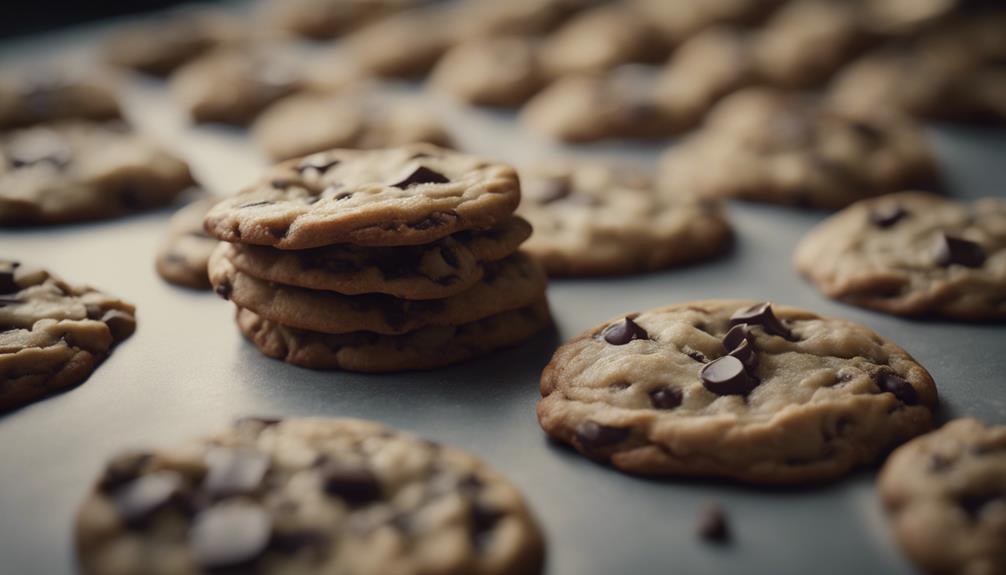
Earlier cookies often used nuts, raisins, or chocolate in powdered or melted forms. Wakefield’s innovation was using pieces of solid semi-sweet chocolate that softened in the oven but kept their shape, creating pockets of melted chocolate throughout the cookie. That texture is the defining feature of the chocolate chip cookie today.
Was the Chocolate Chip Cookie an Accident?
The popular answer is that Wakefield made the cookie by accident, but sources disagree on that point. The accident story says she expected the chopped chocolate to melt into the dough, and instead the pieces held their shape. The Framingham State University library blog argues that she deliberately invented the cookie rather than stumbling into it.
The Popular Accident Story
The accident version is the one most often repeated in cookbooks, magazines, and museum displays. It makes a good story, and it explains why the chocolate pieces look so distinct in the finished cookie. However, it rests largely on retellings rather than a primary account that every historian accepts.
The Case for Deliberate Invention
The Framingham library blog takes the opposite view, arguing that Wakefield chose to add the chocolate on purpose. Because the blog is a secondary source, it should be read as one interpretation rather than settled fact. Still, it shows that the accident story is contested, not established.
How Do the Common Claims Compare With the Evidence?
Several claims about the cookie’s origin are repeated widely, but they vary in how well sources support them. The table below separates what the cited sources document from claims that remain unverified.
| Common claim | What the sources say | Verdict |
|---|---|---|
| Wakefield accidentally created the cookie | Popular retelling; the Framingham library blog argues she deliberately invented it | Disputed |
| The recipe was first published in 1938 | The Framingham blog says the 1938 edition of her recipe book was the first to include it | Supported by one source |
| Nestlé acquired the recipe and Toll House name in 1939 | The Sugar Association and Lemelson-MIT both describe the 1939 arrangement | Supported |
| Soldiers during World War II spread the cookie worldwide | Not documented in the sources reviewed for this article | Unverified |
What Was the 1939 Deal With Nestlé?
In 1939 Wakefield sold the rights to her recipe and the Toll House name to Nestlé. In return, she received a lifetime supply of Nestlé chocolate. The Sugar Association’s history of the cookie reports that the recipe first appeared in Wakefield’s 1938 cookbook and was intended to accompany ice cream, and it notes the 1939 sale of rights. Because that source is funded by the sugar industry, use its details with care and check them against independent accounts.
The Lemelson-MIT profile adds that the agreement let Nestlé print the Toll House cookie recipe on its packaging. That printed recipe carried the cookie from a single Massachusetts inn into kitchens across the country. Nestlé’s packaging became one of the most important ways the recipe reached home bakers.
Why the Deal Mattered
The agreement turned a local dessert into a national product identity. Once the recipe was printed on Nestlé packaging, the chocolate chip cookie no longer depended on a single restaurant’s reputation. The Toll House name became shorthand for the cookie itself.
What Wakefield Received
Wakefield’s compensation was unusual: rather than a large lump sum, she was given a lifetime supply of chocolate. Sources describe this as the core of the arrangement, though the exact financial terms are not detailed in the sources reviewed here.
How Did the Chocolate Chip Cookie Spread Across America?
The chocolate chip cookie spread through printed recipes, cookbooks, and packaging, which let home bakers make it with ingredients from their own pantry. The recipe required only standard baking staples plus a bar of semi-sweet chocolate, so it could be reproduced almost anywhere. That simplicity helped it move from one inn to millions of kitchens.
The Role of Printed Recipes
Printed recipes made the cookie replicable without a trained chef. Each new cookbook or package label introduced the recipe to readers who had never tasted it. Over time, the printed version became the standard that bakers compared their own results against.
How Have Chocolate Chip Cookies Evolved Since 1938?
Chocolate chip cookies have evolved through changes in sugar, fat, mix-ins, and dietary adaptations, while keeping the basic idea of dough studded with chocolate. Many modern versions change the sugar ratio to alter chewiness, or add ingredients that create new flavors. The core structure of the cookie has stayed remarkably consistent.
Popular Variations
- Oatmeal chocolate chip: Rolled oats add chew and a nutty, toasty flavor.
- Peanut butter chocolate chip: Peanut butter adds richness and a softer crumb.
- Sea salt or espresso: A pinch of flaky salt or espresso powder sharpens the chocolate flavor.
- Gluten-free and vegan: Flour and egg swaps make the cookie accessible to people with dietary restrictions.
Sugar choice also changes the final cookie. Brown sugar adds moisture and a deeper flavor, so the balance between light and dark brown sugar can shift chewiness noticeably. You can compare those differences in our guide to light vs. dark brown sugar in chocolate chip cookies.
Why Did the Chocolate Chip Cookie Become an American Icon?
The chocolate chip cookie became an American icon because it combined simple ingredients, easy printed recipes, and a flavor most people already liked. It also became tied to comfort and home baking, which gave it emotional weight beyond its ingredients. Historians have continued to document that story in books and collections.
Carolyn Wyman’s 2014 book The Great American Chocolate Chip Cookie Book is held in the Smithsonian Libraries and Archives catalog as a history and cookbook covering the cookie’s invention. Its presence in a national research collection shows how seriously the cookie’s origins are now studied.
A Symbol of Home Baking
The cookie appears in everything from bakery cases to grocery shelves and ice cream flavors. That ubiquity keeps it familiar, and familiarity keeps it popular. For many bakers, the first batch they ever made was this cookie.
How Do You Bake a Classic Chocolate Chip Cookie Today?
To bake a classic chocolate chip cookie today, use room-temperature butter, measure flour carefully, and chill the dough if the cookies spread too much. Use a mix of chopped chocolate and chips for varied melt pockets. Bake until the edges are golden and the centers look slightly underdone.
Checklist for a Classic Batch
- Measure flour by spooning it into the cup and leveling it, not by scooping.
- Cream butter and sugar until the mixture looks light and fluffy.
- Use semi-sweet chocolate, chopped or in chips, to match the original style.
- Scoop dough onto a lined sheet with space between each cookie.
- Chill the dough for 30 minutes if your kitchen is warm.
- Pull the cookies when the edges set but the centers still look soft.
If your batch comes out wrong, the cause is usually one of a few common errors. Our guide to common chocolate chip cookie mistakes and fixes walks through the most frequent problems. Cookies that spread too thin are covered in detail in our article on why chocolate chip cookies go flat and how to fix it.
Frequently Asked Questions
Who really invented the chocolate chip cookie?
Ruth Graves Wakefield is credited with inventing the chocolate chip cookie at the Toll House Inn in Massachusetts. Her recipe was published in 1938, and sources identify her as the creator. Some accounts debate whether the invention was accidental or deliberate.
Did Ruth Wakefield get paid for her recipe?
Wakefield sold rights to her recipe and the Toll House name to Nestlé in 1939. She received a lifetime supply of Nestlé chocolate as part of the arrangement. The sources reviewed for this article do not list a cash payment.
Why is it called a Toll House cookie?
The cookie takes its name from the Toll House Inn, the Massachusetts restaurant and inn where Wakefield developed and served it. When Nestlé acquired the rights in 1939, it used the Toll House name on its packaging. That name is why many people still call the cookie a Toll House cookie.
Is the accident story true?
The accident story is a popular retelling, but it is not universally accepted. The Framingham State University library blog argues that Wakefield deliberately invented the cookie. Readers should treat the accident version as one contested account.
Did soldiers spread the chocolate chip cookie during World War II?
Some popular accounts credit wartime soldiers with spreading the cookie, but the sources reviewed for this article do not document that claim. It should be treated as unverified lore. The better-documented story centers on the 1938 recipe and the 1939 Nestlé deal.
Why do chocolate chip cookies spread flat?
Cookies spread when the dough is too warm, too wet, or has too much sugar or butter relative to flour. Measuring flour correctly and chilling the dough usually helps. For a detailed fix list, read our guide on why chocolate chip cookies go flat.
Conclusion
The history of chocolate chip cookies is a story that begins with Ruth Graves Wakefield in 1938 and was shaped by the 1939 Nestlé agreement. The accident legend is popular, but sources dispute it, and some wartime claims remain unverified. The cookie endured because its recipe was simple, widely printed, and easy to make at home.